
Can you drill a square hole in metal? Yes, you can, but it’s not as straightforward as drilling a round hole. Drilling a perfect square in metal requires specialized tools and techniques beyond a standard drill press. This guide will walk you through the methods used in metalworking and metal fabrication to achieve this precise shape.
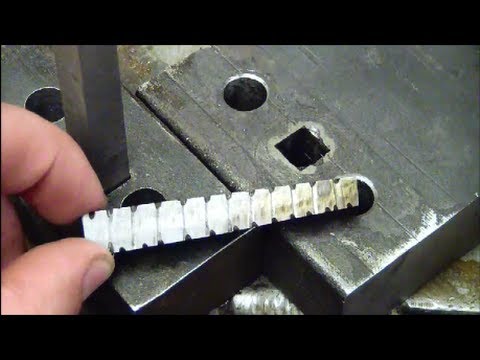
Image Source: i.ytimg.com
The Challenge of Square Holes
Drilling, by its very nature, produces round holes. The rotating cutting tool, typically a twist drill bit, removes material in a circular pattern. Creating a square requires removing material from four straight sides and sharp corners, which a standard drill bit cannot do. Therefore, achieving a square hole in metal involves a series of steps or the use of dedicated drilling techniques that simulate the action of a square punch.
Why Would You Need a Square Hole?
Square or rectangular openings are crucial in various applications:
- Mechanical Assemblies: Many shafts, gears, and fittings are designed with square profiles for positive locking or torque transfer.
- Fasteners: Some specialized bolts and nuts require square housings.
- Electrical Components: Junction boxes and control panels often have square knockouts for conduits.
- Artistic and Decorative Metalwork: Creating unique designs or features.
- Tooling and Fixturing: Many jigs and fixtures incorporate square features for alignment.
Methods for Creating Square Holes in Metal
Achieving a precise square hole in metal is a common task in machining. Several methods can be employed, each with its advantages and ideal applications.
1. Using a Mortising Attachment or Square Punch
This is the most direct method for creating a square hole, especially when you need a clean, precise result. A mortising attachment is essentially a hollow chisel that works in conjunction with a drill press.
How a Mortising Attachment Works
A mortising attachment consists of two main parts:
- The Chisel: A hollow, square-shaped cutting tool with a sharp edge.
- The Drill Bit: A spiral drill bit that fits inside the hollow chisel.
When the drill press is operated, the drill bit spins and clears out the bulk of the material within the square outline. Simultaneously, the reciprocating action of the chisel, guided by the press’s quill, cuts the four square sides and corners, removing the waste material and forming the clean square shape.
Steps for Using a Mortising Attachment:
- Setup: Attach the mortising attachment to your drill press. Ensure it’s securely fastened and aligned vertically. Insert the appropriate size drill bit into the chisel.
- Material Placement: Securely clamp your metal workpiece to the drill press table. Use a sturdy vise or clamps to prevent any movement.
- Marking: Accurately mark the center of your intended square hole on the workpiece.
- Drilling the Pilot Hole: Lower the spinning drill bit to the marked center. Drill a pilot hole of a diameter slightly smaller than the width of the square you want. This pilot hole will help guide the mortising chisel.
- Mortising: Position the chisel over the pilot hole. Lower the quill, allowing the spinning drill bit to clear material and the chisel to cut the sides.
- Advancing the Cut: For larger holes, you will need to make multiple passes. Advance the chisel incrementally, moving the workpiece slightly between cuts (typically 1/8″ to 1/4″ depending on the material and chisel size). Ensure each pass is aligned with the previous one to create continuous straight sides.
- Cleaning: After cutting, use a brush or compressed air to remove any metal shavings.
- Finishing (Optional): If a perfectly smooth finish is required, you might need to use a file or a reaming tool to deburr the edges.
Considerations for Mortising:
- Material Thickness: This method is most effective on materials of moderate thickness. Very thin metal may deform, and very thick metal might require multiple passes and a powerful drill press.
- Tool Sharpness: The chisel must be kept very sharp for clean cuts. Dull chisels will tear the metal and produce rough edges.
- Drill Press Power: A sturdy drill press with sufficient power is essential, especially when working with harder metals.
2. Using a Milling Machine
A milling machine is a versatile tool specifically designed for shaping metal. It is the preferred method for achieving high precision and clean square holes in a professional metal fabrication environment.
How a Milling Machine Works
Milling machines use rotating cutting tools (end mills) to remove material. For square holes, specific types of end mills and machining strategies are used.
Methods with a Milling Machine:
- End Milling: This is the most common method.
- Tooling: A square end mill or a standard flat-end mill can be used. A square end mill has flat edges that can cut directly into corners.
- Process:
- Setup: Mount the workpiece securely on the milling machine table, often using a vise.
- Centering: Use an edge finder or dial indicator to accurately locate the center of the desired square hole.
- Plunge/Drill: If using a flat-end mill, you might start by plunging it into the center of the area. Alternatively, you can drill a pilot hole.
- Milling Strategy: Program or manually control the milling head to move in a square pattern. The end mill is fed into the material, removing metal along the perimeter of the square.
- Step-Over: For efficient material removal, the end mill is stepped over from the center outwards or along the lines of the square. The size of the step-over determines the finish and the number of passes required.
- Finishing Passes: One or more finishing passes with a smaller step-over and slower feed rate are often used to achieve a smooth and accurate final dimension.
- Slotting with a Slotting Head: Some milling machines can be equipped with a slotting attachment. This attachment imparts a reciprocating motion to a cutting tool, allowing it to cut slots or square shapes efficiently. It functions similarly to a mortising attachment but with greater control and precision.
Considerations for Milling:
- Machine Capability: Requires access to a milling machine (manual or CNC).
- Tooling: Specific end mills are needed. Carbide end mills are generally preferred for their hardness and ability to withstand high temperatures.
- Operator Skill: Operating a milling machine requires a degree of skill and knowledge of cutting parameters (speed, feed rate, depth of cut).
- Coolant: Using a cutting fluid or coolant is highly recommended to keep the tool and workpiece cool, extend tool life, and improve the surface finish.
3. Wire EDM Machining (Electrical Discharge Machining)
Wire EDM is a non-contact hole cutting process that uses electrical sparks to erode metal. It is exceptionally precise and can create intricate shapes, including perfect square holes, in virtually any conductive material, regardless of its hardness.
How Wire EDM Works
A thin, continuously moving wire (typically brass or copper) acts as an electrode. The wire is fed through the workpiece, and a precisely controlled electrical spark occurs between the wire and the metal. This spark vaporizes a tiny amount of material from both the wire and the workpiece. By controlling the path of the wire, any shape can be accurately cut.
Process for Square Holes:
- Setup: The workpiece is submerged in a dielectric fluid (usually deionized water). The wire is threaded through the workpiece and tensioned.
- Programming: The desired square shape is programmed into the CNC controller.
- Cutting: The wire is guided along the programmed path, eroding the metal. The dielectric fluid flushes away the eroded particles and cools the cutting area.
- Multiple Passes: For highly precise square holes with sharp corners, the EDM process often involves multiple passes. The first passes rough out the shape, and subsequent passes refine the edges and dimensions.
Considerations for Wire EDM:
- Accessibility: Wire EDM machines are specialized industrial equipment.
- Material Conductivity: The workpiece must be electrically conductive.
- Cost: This is generally a more expensive method compared to mechanical machining, but it offers unparalleled precision.
- No Tool Wear: The wire is consumed, but the process doesn’t involve the mechanical wear associated with cutting tools in milling or drilling.
4. Broaching
Broaching is a machining process that uses a toothed cutting tool (a broach) to remove material in a single pass. Broaches are designed with progressively larger teeth, allowing them to cut to the final shape and size. For square holes, a square broach is used.
How Broaching Works
A square broach has teeth shaped to cut out the material, progressively widening and deepening the square hole with each pass. The broach is pushed or pulled through a pre-drilled or punched hole that is slightly smaller than the desired square.
Process for Square Holes:
- Pre-drilling: A round hole is drilled or punched in the workpiece, sized appropriately to allow the broach to start cutting.
- Broach Setup: The broach is either pushed through the workpiece using a hydraulic press or a dedicated broaching machine, or pulled through using a pull-type broaching setup.
- Cutting: The broach is passed through the pre-drilled hole. The teeth on the broach shave off thin layers of metal, forming the square shape.
- Extraction: Once the broach has passed completely through the workpiece, the square hole is formed.
Considerations for Broaching:
- Specialized Tooling: Requires a specific square broach for each desired size. Broaches are expensive.
- Material Limitations: Best suited for softer to medium-hard metals. Hardened steels can be difficult to broach.
- Press Required: Needs a strong hydraulic press or a dedicated broaching machine.
- Surface Finish: Generally produces a good surface finish.
5. Using a Square Punch and Die (Stamping)
This method is ideal for creating square holes in sheet metal, especially when producing them in high volumes. It’s a form of stamping and is closely related to die casting in principle, where a shaped die is used to form the metal.
How Punch and Die Works
A punch and die set consists of:
- Punch: A tool with a square profile that is pushed through the metal.
- Die: A hardened block with a matching square hole (die cavity) that the punch passes through.
When force is applied, the punch enters the die cavity. The sharp edges of the punch and the die shear the metal, creating the square opening.
Process for Square Holes:
- Die Set: The die is mounted in a press, and the punch is mounted in the ram of the press.
- Material Placement: Sheet metal is positioned between the punch and the die.
- Stamping: The press is actuated, driving the punch through the metal and into the die.
- Ejection: The punched-out slug is typically ejected from the die.
Considerations for Punch and Die:
- Sheet Metal: Primarily used for sheet metal applications.
- Tooling Cost: Custom punch and die sets can be expensive to design and manufacture.
- Force Required: Significant force is needed, usually provided by a mechanical or hydraulic press.
- Hole Quality: The quality of the hole edges depends on the sharpness of the punch and die, the clearance between them, and the material properties.
6. Hand Filing and Chiseling (Manual Method)
For very small batches, prototypes, or situations where specialized machinery is unavailable, a skilled craftsman can create a square hole using manual tools. This is the most labor-intensive method and requires significant skill to achieve accurate results.
How Manual Filing and Chiseling Works
This process involves a combination of drilling, chiseling, and filing.
Process:
- Drilling: Drill a series of overlapping round holes within the area of the desired square. The number and size of these holes will depend on the size of the square and the material.
- Chiseling: Use sharp metal chisels (flat chisels) to carefully chip away the remaining material between the drilled holes and to form the straight sides of the square.
- Filing: Use various types of files (flat files, square files, needle files) to clean up the edges, remove burrs, and achieve the final dimensions and straightness of the square.
- Measuring and Checking: Constantly check the dimensions and squareness using calipers and a machinist’s square.
Considerations for Manual Methods:
- Skill Intensive: Requires a high level of craftsmanship and patience.
- Time Consuming: Very slow compared to automated or semi-automated methods.
- Accuracy: Achieving high accuracy and perfectly straight sides can be challenging.
- Material: Best for softer metals and smaller holes.
Choosing the Right Method
The best method for creating a square hole in metal depends on several factors:
| Factor | Mortising Attachment | Milling Machine | Wire EDM | Broaching | Punch & Die | Manual Filing |
|---|---|---|---|---|---|---|
| Precision | High | Very High | Extremely High | High | Medium to High | Low to Medium |
| Material Thickness | Medium | Wide Range | Wide Range | Medium | Thin | Thin to Medium |
| Volume | Low to Medium | Medium to High | Low to High | Medium to High | Very High | Very Low |
| Cost of Setup | Medium | High | Very High | High | Very High | Low |
| Tooling Cost | Medium | High | Low (consumable) | Very High | Very High | Low |
| Speed | Medium | Medium to High | Medium | High | Very High | Very Low |
| Material Type | Most metals | Most metals | Conductive | Most metals | Sheet Metal | Most metals |
What is the most common way to make a square hole?
For general metal fabrication and machining shops, using a milling machine with an end mill is the most common and versatile method for creating square holes of various sizes in different materials. When high precision and sharp corners are paramount, or when working with very hard materials, Wire EDM is often employed. For high-volume sheet metal production, punch and die stamping is the standard.
Can I drill a square hole with a standard drill bit?
No, you cannot drill a square hole with a standard drill bit. Standard drill bits are designed to create round holes. Attempting to create a square hole with a standard drill bit would involve drilling multiple overlapping holes and then cleaning up the edges with files or chisels, which is not an efficient or precise method for creating a true square.
Safety Precautions
Working with metal and machining tools always requires strict adherence to safety protocols:
- Eye Protection: Always wear safety glasses or a face shield.
- Clothing: Wear close-fitting clothing. Avoid loose sleeves or jewelry that could get caught in machinery.
- Gloves: Wear sturdy work gloves when handling metal to protect against sharp edges.
- Machine Guards: Ensure all machine guards are in place and functioning correctly.
- Tool Sharpness: Use sharp cutting tools. Dull tools can lead to increased force, potential tool breakage, and accidents.
- Secure Workpiece: Always clamp your workpiece securely. A loose workpiece can be thrown by the cutting tool, causing injury.
- Read Manuals: Familiarize yourself with the operating manuals for all tools and machinery.
FAQ
Q1: What is the smallest square hole I can make in metal?
The smallest square hole you can reliably make depends heavily on the method and tooling used. With Wire EDM, you can create extremely small and precise square holes, often measured in micrometers. In machining with a milling machine, the limit is determined by the smallest available end mill, which can be as small as 0.020 inches (0.5 mm) or less, though cutting such small features requires specialized setups and great care.
Q2: How do I ensure the corners of my square hole are perfectly sharp?
Achieving perfectly sharp internal corners in metal machining is inherently difficult because the cutting tool (e.g., an end mill) has a radius.
* Wire EDM: This method excels at creating sharp corners.
* Milling: To get as close as possible to sharp corners using a milling machine, you would use a square end mill and potentially perform a “corner cleanup” pass with a very small radius cutter or a specialized corner-rounding tool. Some advanced milling strategies might also achieve this.
* EDM Machining is the go-to for razor-sharp corners.
Q3: Can I make a square hole in very hard metals like tool steel?
Yes, you can make square holes in very hard metals.
* Wire EDM is exceptionally suited for this, as it cuts without mechanical stress and can process hardened materials effectively.
* Milling machines can also cut hardened steels, but it requires very robust machines, specialized carbide tooling designed for hard milling, and slower cutting speeds.
* Broaching becomes very difficult or impossible in severely hardened steels.
Q4: What is the difference between drilling and hole cutting?
Drilling specifically refers to the process of creating a round hole using a rotating drill bit. Hole cutting is a broader term that encompasses all methods of creating openings in material, including drilling, milling, sawing, punching, laser cutting, waterjet cutting, and EDM. Creating a square hole falls under the broader category of hole cutting, but not drilling in the traditional sense.
Q5: Is die casting used to create square holes?
Die casting itself is a process of forming molten metal into a mold. While a mold cavity can be designed with square protrusions to create square holes in the cast part, die casting is not a method for creating a square hole in an existing piece of metal. It’s about forming the shape during the casting process. The question is about modifying existing metal, not forming it from molten material.