
Carpenter bees drill holes to create nests for their young. What is a carpenter bee, and why do they drill holes? Carpenter bees are large, solitary bees that resemble bumblebees. However, unlike bumblebees, which nest in the ground or cavities, carpenter bees bore into wood to create their homes. They are attracted to unfinished, unpainted, or weathered wood. The process of drilling is primarily done by the female bee, who possesses strong mandibles for this purpose. The male carpenter bee, while territorial and known to be aggressive, cannot sting and does not participate in the drilling.
This guide will delve deep into the mechanics of how carpenter bees drill, the signs of their activity, the damage they can cause, and effective strategies for carpenter bee control and prevention. Understanding this process is key to managing a carpenter bee infestation and protecting your property.
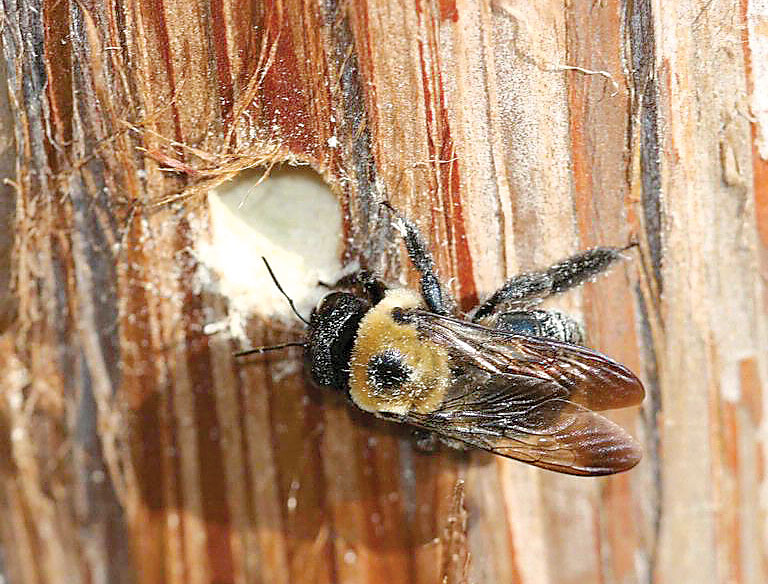
Image Source: secure.caes.uga.edu
The Carpenter Bee’s Woodworking Tool: Mandibles
The primary tool carpenter bees use for drilling is their powerful set of mandibles. These are the large, pincer-like mouthparts located on either side of their mouth.
- Structure: Carpenter bee mandibles are strong, chitinous structures. They are serrated or toothed along the inner edge, providing a grip and a cutting action.
- Function: The female bee uses these mandibles to chew through wood. She essentially gnaws and scrapes away wood fibers to create tunnels.
- Action: The bee will grip the wood with her mandibles and then use a combination of chewing and grinding motions. She then pushes the wood dust (known as “frass”) out of the hole.
The Drilling Process: Step-by-Step
The drilling of a carpenter bee nest is a meticulous process undertaken by the female. It’s not a random act of destruction; it’s a purposeful creation of a home for her offspring.
- Site Selection: The female bee looks for suitable wood. This is typically unfinished, unpainted, weathered, or soft wood. They prefer surfaces that are smooth enough to allow them to start drilling without too much initial effort. Areas like eaves, decks, fences, and wooden siding are common targets.
- Starting the Hole: The bee begins by chewing a small, circular opening. This initial hole is usually about half an inch in diameter.
- Tunnel Excavation: Once the initial entry point is established, the bee excavates a tunnel that runs parallel to the grain of the wood. These tunnels can be quite long, often extending up to 6 inches, and sometimes even longer.
- Creating Cells: Inside the main tunnel, the female bee will create smaller chambers or “cells.” Each cell will house a single egg and a provision of pollen and nectar, which will serve as food for the developing larva.
- Frass Ejection: As the bee drills, she expels wood dust and shavings out of the entrance hole. This fine sawdust is a tell-tale sign of carpenter bee activity. It often accumulates directly below the entrance hole.
- Entrance Management: The entrance hole is typically perfectly round. The female may chew a small landing platform around the entrance, making it easier for her to access and exit.
Signs of Carpenter Bee Activity and Damage
Recognizing the signs of carpenter bee activity early is crucial for effective carpenter bee control. The damage they inflict can be significant if left unaddressed, leading to structural weakness and unsightly appearances.
Identifying the Entrance Holes
- Size: The entrance holes are usually about ½ inch in diameter, fitting a finger snugly.
- Shape: They are perfectly round, unlike the irregular holes made by other wood-boring insects.
- Location: You’ll often find them on exposed wood surfaces, particularly on the underside of eaves, railings, deck boards, and fence posts.
- Presence of Frass: The accumulation of fine, powdery sawdust beneath the hole is a strong indicator.
Other Indicators
- Buzzing Sounds: You might hear a loud, distinctive buzzing sound as the bees fly around their nesting sites, especially during warmer months when they are most active.
- Yellow Stains: Carpenter bees often defecate near their entrance holes, leaving behind yellow stains.
- Active Bees: Seeing large, dark bees hovering around wooden structures is a clear sign. Remember, the males can be quite territorial and will buzz aggressively, but they cannot sting.
Carpenter Bee Damage Explained
While carpenter bees don’t eat wood, their tunneling can cause considerable carpenter bee damage.
- Structural Weakness: Over time, repeated tunneling can weaken wooden structures, especially if they are made of softer wood or if the infestation is widespread. Old tunnels can be reused and expanded by subsequent generations of carpenter bees.
- Aesthetic Damage: The appearance of numerous holes and frass can detract from the beauty of a home or wooden features.
- Secondary Infestations: The holes created by carpenter bees can be exploited by other pests, such as earwigs, ants, or other wood-boring insects, leading to secondary infestations.
How to Get Rid of Carpenter Bees Effectively
Addressing a carpenter bee infestation requires a multi-pronged approach. Here’s how to get rid of carpenter bees and mitigate the damage they cause.
Immediate Action: Targeting Existing Nests
When you’ve identified active nests, immediate action is necessary to prevent further damage and eliminate the current generation.
Carpenter Bee Extermination Methods:
-
Insecticidal Dusts or Sprays:
- Application: The most effective way to eliminate carpenter bees is by applying insecticidal dust or spray directly into the entrance holes of their nests.
- Timing: This is best done in the evening or early morning when the bees are likely to be inside their tunnels.
- Products: Look for products specifically labeled for carpenter bees or general wood-boring insects. Dusts are often preferred as they can be puffed deep into the tunnels.
- Safety: Always follow the product’s label instructions carefully regarding application, protective gear, and reentry times.
-
Sealing the Holes:
- After Treatment: Once you’ve treated the holes with an insecticide, it’s crucial to seal them.
- Materials: Use wood putty, wood filler, caulk, or wooden dowels.
- Timing: Wait a few days after applying insecticide to ensure the adult bees and any larvae inside are dead. Sealing too early can trap bees inside, forcing them to drill new escape holes, potentially in different locations.
Carpenter Bee Removal of Live Bees:
While extermination is common, some prefer live carpenter bee removal. This is more challenging and often less practical for nest sites. However, if you encounter individual bees that are a nuisance, careful capture with a jar or net can be an option, followed by relocation far from your property. This is generally not effective for eliminating an infestation within wooden structures.
Long-Term Carpenter Bee Control and Prevention
Preventing future carpenter bee infestations is as important as dealing with existing ones. Carpenter bee prevention involves making your wooden structures less attractive and harder for them to penetrate.
Making Wood Less Appealing
-
Painting and Staining:
- Effectiveness: Unfinished, unpainted, or weathered wood is highly attractive to carpenter bees. Applying a fresh coat of paint or stain, especially oil-based or high-gloss finishes, can make the wood less appealing.
- Coverage: Ensure all exposed wood surfaces, including ends, edges, and undersides, are thoroughly coated.
- Maintenance: Regular repainting or restaining is essential for continued protection.
-
Wood Type:
- Hardwoods vs. Softwoods: Carpenter bees prefer softer woods. While not always feasible, using hardwoods for exterior structures can make them less susceptible to drilling.
-
Sealing Existing Holes:
- Proactive Sealing: Even if there isn’t an active infestation, sealing any existing cracks, crevices, or old drill holes with wood filler or caulk can prevent bees from taking up residence or expanding them.
Deterrents and Traps
While eliminating existing nests is key, carpenter bee deterrent methods can help keep them away from your property.
Carpenter Bee Trap Designs and Effectiveness:
Carpenter bee traps are a popular and often effective DIY or commercially available solution. They exploit the bee’s natural behavior.
- How they Work: Most carpenter bee traps mimic a carpenter bee nest. They typically consist of a wooden block with holes drilled into it, similar to the natural nesting sites. Below these holes, a glass jar or plastic container is attached. When a bee enters the “nest” hole, it falls into the container, and the angled entry to the container prevents it from escaping.
- Placement: Hang traps near known nesting sites, eaves, decks, and other areas where carpenter bees are active.
- DIY Trap Construction:
- Materials: A small wooden block (like a 4×4 or 6×6), a drill with a 1-inch bit, a glass jar (about 1 quart), and screws or staples.
- Drilling: Drill several holes into the wooden block, about 1 to 1.5 inches deep. These should mimic the size of carpenter bee entrance holes.
- Assembly: Attach the glass jar securely to the bottom of the block, ensuring the holes open into the jar. The jar acts as a trap.
- Placement: Hang these traps from the eaves of your house or any area where you’ve seen carpenter bee activity.
Natural Carpenter Bee Deterrent Options:
- Citrus Oil: Many sources suggest that the scent of citrus oil can deter carpenter bees. Spraying citrus oil extracts on wood surfaces might offer some protection.
- Vinegar: Similar to citrus oil, vinegar’s strong smell might act as a deterrent. Diluted vinegar can be sprayed on wooden areas.
- Almond Oil: Another scent that is said to repel carpenter bees.
It’s important to note that natural deterrents often require frequent reapplication and may not be as effective as chemical treatments or physical barriers like paint.
Maintenance and Monitoring
- Regular Inspections: Periodically inspect your wooden structures for any signs of new activity, especially in the spring when carpenter bees emerge.
- Address Issues Promptly: If you see any frass or new holes, address them immediately before the tunnels are enlarged or new nests are established.
Understanding Carpenter Bee Life Cycle and Habits
To effectively manage carpenter bees, it helps to know about their life cycle and behaviors.
Adult Bees
- Emergence: Adult carpenter bees typically emerge in the spring, around April or May, depending on your climate.
- Mating: Mating occurs shortly after emergence.
- Nesting: The fertilized females then begin the process of excavating new tunnels or reusing old ones.
- Lifespan: Adult carpenter bees have a relatively short lifespan, usually only a few months. The overwintering generation, however, can live longer.
Larval and Pupal Stages
- Egg Laying: The female bee lays her eggs in individual cells within the tunnel, each provisioned with a mixture of pollen and nectar.
- Development: The eggs hatch into larvae, which then develop through several instars before pupating.
- Overwintering: The generation that emerges in late summer or fall will mate, lay eggs, and then the new adults will typically overwinter in the tunnels. The previous generation of adults dies off. This means that overwintering in established tunnels is a key part of their life cycle.
Why They Choose Specific Wood
- Softwoods: Pine, cedar, redwood, fir, and other softwoods are prime targets.
- Unfinished/Weathered: Smooth, painted, or varnished wood is less appealing. They prefer wood that is easier to penetrate.
- Dry Wood: They generally prefer dry wood that is not in direct contact with soil.
Frequently Asked Questions about Carpenter Bees
Q: Can carpenter bees cause structural damage to a house?
A: Yes, while individual bees don’t eat wood, repeated tunneling and the creation of multiple nests within the same structural beam can weaken it over time, especially if the infestation is extensive or ongoing. This is a significant concern for carpenter bee damage.
Q: Do carpenter bees sting?
A: Only female carpenter bees can sting. However, they are generally not aggressive and tend to fly away if approached. Male carpenter bees are often seen buzzing around their nests and can appear aggressive, but they do not have stingers and cannot harm you.
Q: How long does it take for carpenter bees to drill a hole?
A: A female carpenter bee can excavate a typical tunnel, about 6 inches long, in approximately 10-14 days. This can vary depending on the wood type and the bee’s persistence.
Q: If I seal the holes, will the bees just drill new ones?
A: Sealing holes without proper treatment can cause them to drill new escape routes. It’s essential to treat the holes with an insecticide first and then seal them after you are sure the bees inside are dead.
Q: Are carpenter bees beneficial?
A: Carpenter bees are pollinators, much like bumblebees. They pollinate a variety of flowers. However, their nesting habits can cause significant damage to wooden structures, leading many homeowners to seek carpenter bee control.
Q: What is the best time of year to treat for carpenter bees?
A: The best times for treatment are early spring when they first emerge and begin nesting, or late summer/early fall when new adults are emerging and preparing to overwinter.
Q: Can I use a bee vacuum to remove carpenter bees?
A: Some people have success using a shop vacuum to suck up active bees around their nests. This can be a temporary solution for reducing the population, but it doesn’t address the nesting tunnels directly.
Q: What should I do if I find a carpenter bee nest in my deck?
A: If you find a nest in your deck, you should first try to identify the entrance hole. Treat the hole with an insecticide dust or spray. Wait a few days, then seal the hole with wood filler or a dowel. Inspect the deck regularly for any new activity.
Q: Is a carpenter bee infestation covered by homeowner’s insurance?
A: Typically, damage caused by insects like carpenter bees is not covered by standard homeowner’s insurance policies. It’s considered a maintenance issue.
Q: How can I prevent carpenter bees from nesting in my wooden shed?
A: To prevent carpenter bee prevention for a shed, ensure all exterior surfaces are well-painted or stained. Seal any existing cracks or holes. Consider installing carpenter bee traps around the shed.
By following this comprehensive guide, you can effectively address carpenter bee problems, prevent future infestations, and protect the integrity and appearance of your wooden structures. Remember, consistent monitoring and proactive maintenance are your best defenses against these wood-boring bees.