
What is the best way to measure drill bit length? The best way to measure drill bit length is to use a ruler or a caliper and measure from the very tip of the drill bit to the end of the shank, ensuring you get the total drill bit length for accurate drill bit measurement. This blog post will guide you through precisely how to do this, covering everything from basic tools to specialized gauges.
Drill bits are essential tools for any DIYer or professional tradesperson. While we often focus on drill bit size and diameter, the length of a drill bit is just as important for achieving the desired results. An incorrect measurement can lead to holes that are too shallow or too deep, potentially damaging your workpiece or compromising the integrity of your project. This guide will help you master drill bit measurement and ensure you always get it right.
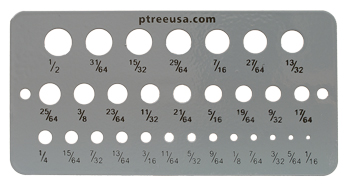
Image Source: www.ptreeusa.com
Why Drill Bit Length Matters
The length of a drill bit dictates the depth to which you can drill a hole. When tackling projects, knowing the total drill bit length allows you to plan your drilling operations effectively. For instance, if you need to drill a hole to a specific depth for a screw or bolt, you need to know if your drill bit is long enough and how much of the bit will actually be engaging with the material. This is where the concept of effective drill bit length comes into play – it’s the portion of the bit that actually cuts into the material.
Ensuring Project Precision
Accurate drill bit measurement is critical for:
- Consistent Hole Depth: Whether you’re creating pilot holes for screws, installing fixtures, or crafting intricate joinery, consistent depth is key.
- Material Integrity: Drilling too deep can weaken materials, especially thinner ones, or pass through completely, which is often undesirable.
- Tool Compatibility: Some specialized drilling operations require specific bit lengths to work with jigs, depth stops, or specific tool capacities.
- Tool Longevity: Using a bit that is too short for a deep hole might mean the chuck or drill body impacts the workpiece, damaging both.
Tools for Drill Bit Measurement
Several tools can help you achieve an accurate drill bit measurement. The choice often depends on the precision required and the tools you have available.
The Humble Ruler: A Basic Approach
A standard ruler or tape measure is the most accessible tool for drill bit measurement.
How to Use a Ruler:
- Lay the Bit Flat: Place the drill bit on a flat, stable surface. Ensure the bit is straight.
- Align the Zero Mark: Position the zero mark of your ruler at the very tip of the drill bit’s cutting edge.
- Read the Measurement: Extend the ruler along the shank of the drill bit until you reach the end of the shank. Read the measurement at this point. This gives you the total drill bit length.
Tips for Ruler Measurement:
- Use a ruler with clear markings, preferably in millimeters or inches for greater accuracy.
- Ensure the ruler is not bent or damaged.
- Try to view the measurement directly from above to avoid parallax error.
The Caliper: For Enhanced Precision
For more precise drill bit measurement, a caliper is an excellent choice. Digital calipers offer the easiest and most accurate readings.
How to Use a Caliper:
- Open the Jaws: Gently open the caliper jaws.
- Position the Bit: Place the very tip of the drill bit against one of the inside jaws (the ones that move).
- Close the Jaws: Carefully close the jaws until they lightly touch the tip of the bit.
- Measure the Shank End: Now, carefully move the caliper along the drill bit until the outer jaws of the caliper can gently rest against the end of the drill bit’s shank.
- Read the Display: The digital display will show the total drill bit length. For dial calipers, read the main scale and the vernier scale.
Advantages of Calipers:
- Higher precision than a ruler.
- Easier to read exact measurements, especially for fractional lengths.
- Can be used for measuring drill bit diameter as well, offering a complete drill bit dimension check.
Specialized Tools: The Drill Bit Length Gauge
While less common for everyday users, a drill bit length gauge is a specialized tool designed specifically for this purpose. These gauges often feature a base with a stop and a sliding measurement scale, allowing for quick and repeatable measurements.
How a Drill Bit Length Gauge Works:
- Set the Zero: The gauge is typically zeroed with the bit tip against a stop.
- Slide the Measurement Arm: A calibrated arm or scale slides along the bit’s shank.
- Read the Length: The measurement is read directly from the scale, providing the total drill bit length.
These gauges are particularly useful in workshops where many bits need to be measured and cataloged, aiding in drill bit length identification.
Distinguishing Total vs. Effective Drill Bit Length
It’s crucial to differentiate between the total drill bit length and the effective drill bit length.
- Total Drill Bit Length: This is the measurement from the absolute tip of the cutting edge to the very end of the shank (the part that grips in the chuck).
- Effective Drill Bit Length: This refers to the portion of the drill bit that is actually designed to cut. It typically includes the cutting edges and the flutes that clear the chips away. The shank length is not part of the effective cutting length.
When you’re measuring for a specific drilling depth, you’re often concerned with how much of the bit will enter the material. However, for general drill bit measurement and identification, the total drill bit length is what you’ll usually record.
Factors Affecting Drill Bit Length Measurement
Several factors can influence the accuracy of your drill bit measurement.
Wear and Tear
Over time, drill bits can wear down, especially their tips. This wear can subtly reduce the total drill bit length. While this might seem insignificant for general tasks, for very precise work, it’s something to consider.
Shank Variations
Drill bits come with different shank types (straight, SDS, hex). The end of the shank might not always be a perfectly flat surface. When measuring, ensure you are measuring to the furthest point of the shank.
Bit Angles and Shapes
While most common drill bits have a consistent profile, some specialized bits might have angled or non-standard shank ends. Always align your measuring tool with the longest point of the bit.
Common Drill Bit Sizes and Their Lengths
Drill bits come in a vast array of sizes, and their lengths often correlate with their diameter. While there’s no strict universal standard for every single bit, general patterns emerge. A drill bit size chart can often provide typical lengths for common diameters, but always measure your specific bit for certainty.
Miniature Bits vs. Large Bits
- Small Diameter Bits (e.g., 1/16″ or 1.5mm): These often have shorter overall lengths to maintain rigidity. Their effective length is a significant portion of their total length.
- Medium Diameter Bits (e.g., 1/4″ or 6mm): These are the most common and come in a wide range of lengths, from short “stubby” bits to longer general-purpose bits.
- Large Diameter Bits (e.g., 1″ or 25mm): These are often longer to allow for efficient chip removal and to provide the necessary leverage for drilling larger holes.
Brad-Point vs. Standard Twist Bits
- Brad-Point Bits: These have a central point that helps them stay put, ideal for precise starting on wood. Their effective cutting length is similar to standard twist bits.
- Standard Twist Bits: These are the most common type for general-purpose drilling in various materials.
It’s important to remember that manufacturers might vary the lengths slightly even within the same nominal size. This is why a drill bit dimension check on the actual bit is always recommended.
Practical Applications of Accurate Measurement
Knowing how to measure drill bit length is not just an academic exercise; it has real-world applications.
Using Depth Stops
When using a drill press or a handheld drill with a depth stop attachment, you need to set the stop accurately. This setting relies on knowing the length of the drill bit you are using, especially the effective drill bit length, to ensure you achieve the desired hole depth without drilling too far.
Setting Up Jigs and Fixtures
Many woodworking and metalworking jigs are designed to accommodate specific drill bit lengths. Incorrect measurements can lead to improper fit and inaccurate results.
Stock Management and Inventory
For businesses or serious hobbyists, keeping track of drill bit inventory includes their dimensions. A drill bit length gauge can be invaluable for quick drill bit length identification and ensuring your stock matches your needs.
Troubleshooting Drilling Issues
If you’re experiencing problems like a drill bit overheating or breaking, checking its length and comparing it to what’s expected for the task can sometimes reveal issues, such as a bit that’s too short for the required depth and the drill body is hitting the material.
The Best Way to Measure Drill Bit Length: A Summary
The best way to measure drill bit length ultimately depends on the required precision.
- For quick, general checks: A ruler is usually sufficient.
- For greater accuracy and repeated measurements: A caliper, especially a digital one, is the superior choice.
- For professional workshops and cataloging: A dedicated drill bit length gauge provides the most efficient and consistent results.
Regardless of the tool, the key principles remain the same: align the zero mark accurately with the very tip of the cutting edge and measure to the furthest extent of the shank.
Ensuring Accuracy in Your Drill Bit Measurement
Here are some tips to ensure you always get an accurate drill bit measurement:
- Clean the Bit: Dust or debris can interfere with measurements. Wipe your drill bit clean before measuring.
- Use a Flat Surface: Always measure on a stable, flat surface.
- Check Your Tools: Ensure your ruler or caliper is not damaged and is properly zeroed.
- Measure Twice, Drill Once: This adage holds true for drill bit measurements as much as it does for cutting.
What is Drill Bit Length Identification?
Drill bit length identification refers to the process of determining and noting the length of a drill bit, often for inventory, organizational, or specific project planning purposes. This can involve simply measuring and writing down the length, or using labeling systems associated with the measurement.
Can I Measure Drill Bit Length with a Standard Tape Measure?
Yes, you can measure drill bit length with a standard tape measure, especially for larger drill bits. However, for smaller bits or when high precision is needed, a ruler with finer markings or a caliper will be more accurate due to the limited precision of most tape measures.
Who Needs to Know How to Measure Drill Bit Length?
Anyone who uses drills and drill bits needs to know how to measure their length. This includes:
- Woodworkers
- Metalworkers
- DIY enthusiasts
- Machinists
- Tradespeople (electricians, plumbers, general contractors)
- Hobbyists involved in crafts requiring precise drilling
Frequently Asked Questions (FAQ)
Q1: Does the length of a drill bit affect how fast it drills?
A1: Not directly. The speed of drilling is more influenced by the drill’s RPM, the material being drilled, and the drill bit’s diameter and sharpness. However, a bit that is too short for a deep hole might require more passes or a less efficient drilling technique if the drill body interferes.
Q2: What is the standard length of a drill bit?
A2: There isn’t a single “standard” length. Drill bits come in various lengths, often categorized as standard, extra-long, or stubby, with lengths varying significantly based on diameter and intended use. Always measure your specific bit.
Q3: How do I read a drill bit size chart?
A3: A drill bit size chart typically lists diameters, and sometimes corresponding lengths and materials the bit is designed for. You’d look up the diameter of your bit to find its general specifications. However, for exact dimensions, you still need to perform a drill bit dimension check on the actual bit.
Q4: What’s the difference between a drill bit and a drill bit extender?
A4: A drill bit extender is a separate tool that attaches to a drill bit to increase its reach, allowing you to drill deeper holes with standard-length bits. It effectively extends the effective drill bit length without changing the bit itself.
Q5: How important is it to measure the drill bit length accurately?
A5: It’s very important for precision tasks. If you need a hole of a specific depth, knowing the exact length of the bit you’re using is crucial to avoid over-drilling or under-drilling. This ensures consistent results and prevents damage to your workpiece.
By mastering drill bit measurement, you equip yourself with a fundamental skill that enhances precision, efficiency, and the overall success of your projects. Whether you’re a seasoned professional or just starting out, taking the time for an accurate drill bit measurement will pay dividends in the quality of your work.