
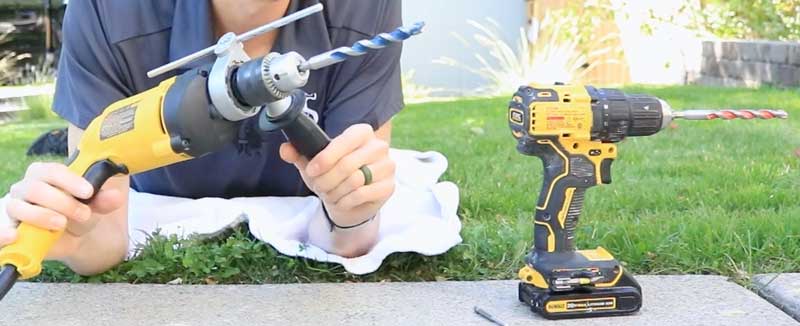
Image Source: www.handymanstartup.com
Step-by-Step: How To Drill Concrete With A Regular Drill
Can you drill concrete with a regular drill? Yes, you can drill concrete with a regular drill, but it requires specific tools and techniques for the best results. While a regular drill might not be the absolute best drill for concrete compared to specialized tools, with the right approach, you can successfully drill into concrete for various DIY projects. This guide will walk you through the process of concrete drilling using a standard drill.
Grasping the Fundamentals of Concrete Drilling
Drilling into concrete might seem like a daunting task, especially if you only have a standard household drill. However, with the correct preparation and approach, it’s entirely achievable for tasks like installing concrete anchors or mounting shelves. Understanding the materials and tools involved is key to a successful and safe drilling experience.
Why Concrete Drilling is Different
Concrete is a hard and dense material. Unlike wood or drywall, it’s made from cement, aggregate (like gravel and sand), and water. This composition makes it very durable, but also resistant to conventional drilling. Standard drill bits designed for wood or metal will dull quickly and struggle to penetrate concrete. This is where specialized masonry bits come into play.
Essential Tools and Materials for Concrete Drilling
Before you start, gather all the necessary items. Having everything ready will make the process smoother and safer.
The Drill: Standard vs. Hammer Drill
While you can drill concrete with a regular drill, a hammer drill concrete model is significantly more effective.
- Regular Drill: These drills provide rotational force only. They rely on the sharpness of the bit and your own physical effort to break through the concrete.
- Hammer Drill: This type of drill has a dual action. It rotates the bit and also pounds it forward and backward simultaneously. This hammering action pulverizes the concrete as the bit turns, making it much faster and easier to drill into hard materials.
- Rotary Hammer: This is an even more powerful tool, often referred to as an SDS drill concrete tool. Rotary hammers use a piston mechanism for a much more forceful hammering action than a hammer drill. They are ideal for heavy-duty concrete drilling and demolition. The rotary hammer vs hammer drill comparison often comes down to the scale of the job; for most home projects, a good hammer drill is sufficient.
If you only have a regular drill: Be prepared for a slower process and more effort. You’ll need to apply significant downward pressure and periodically withdraw the bit to clear dust.
Drill Bits: The Backbone of Concrete Drilling
The type of drill bit you use is crucial for successful concrete drilling techniques.
- Masonry Bits: These are essential for drilling into concrete, brick, and stone. They typically have a carbide tip designed to withstand the abrasion and hardness of these materials. Look for bits specifically labeled for masonry or concrete.
- Carbide-Tipped Bits: These are the most common and effective for concrete drilling with a standard drill. The carbide tip is brazed onto a steel shaft.
- Masonry Drill Bit Sizes: You’ll need to select the correct diameter for your intended anchor or fastener. Common sizes include 3/16 inch, 1/4 inch, 5/16 inch, and 3/8 inch.
Safety Gear: Non-Negotiable
Safety should always be your top priority when working with power tools and concrete.
- Safety Glasses/Goggles: Protect your eyes from flying concrete dust and debris.
- Dust Mask/Respirator: Concrete dust can be harmful if inhaled. A good quality mask will prevent respiratory irritation.
- Gloves: Protect your hands from dust and potential abrasions.
- Ear Protection: If using a hammer drill, earplugs or earmuffs are recommended to protect your hearing.
Other Helpful Items
- Water: A spray bottle of water can help cool the drill bit and reduce dust.
- Vacuum Cleaner: To clean up dust as you go.
- Tape Measure and Pencil: For marking the drilling location.
- Hammer: To lightly tap in concrete anchors.
- Level: To ensure holes are drilled straight.
Preparing for the Job
Proper preparation ensures safety and efficiency.
Marking Your Spot
Use a tape measure and pencil to mark the exact spot where you need to drill. If you’re installing multiple anchors, ensure they are spaced correctly. A level can help you ensure the marks are in a straight line or at the correct height.
Clearing the Area
Remove any furniture, decorations, or other items from the work area. This prevents them from being damaged by dust and provides you with ample space to work.
Choosing the Right Bit and Drill Setting
- Bit Selection: Based on the size of your concrete anchors or fasteners, select the appropriate diameter masonry bit. It’s often recommended to use a bit that is the same size as the anchor itself, or slightly smaller if the anchor has a self-tapping thread.
- Drill Setting: If you have a regular drill, ensure it’s set to its highest speed. If you have a hammer drill, engage the hammer function. Do not use the hammer function if you are drilling into something other than masonry, like wood or metal.
Step-by-Step: How to Drill Concrete with a Regular Drill
Follow these steps carefully for successful concrete drilling.
Step 1: Secure the Drill Bit
Ensure the masonry bit is securely clamped in the drill chuck. If your drill has a keyless chuck, tighten it firmly by hand. If it has a keyed chuck, use the chuck key to tighten it. Make sure there’s no wobble.
Step 2: Position the Drill
Place the tip of the drill bit precisely on the mark you made on the concrete. Hold the drill perpendicular to the surface. A common mistake is drilling at an angle, which can make the hole too large or cause the bit to bind. For larger holes or when using a concrete hole saw, it’s crucial to maintain a steady, perpendicular angle.
Step 3: Start Drilling (Slowly and Steadily)
Begin drilling at a slow speed. Apply firm, consistent downward pressure. Let the drill bit do the work. As the bit begins to bite into the concrete, you can gradually increase the speed.
- For Regular Drills: This is where the effort comes in. You’ll need to maintain good control and apply steady pressure. Don’t force the drill; if it feels like it’s struggling, ease up slightly and let the bit grind.
Step 4: Manage Heat and Dust
Concrete drilling generates heat and dust.
- Cooling the Bit: Periodically withdraw the drill bit from the hole while it’s still spinning slowly. This helps to clear out concrete dust and debris, which can clog the flutes of the bit and cause it to overheat. You can also lightly spray the bit and hole with water. Be cautious when using water, especially with electrical tools; ensure your drill is double-insulated or you are using a GFCI outlet.
- Dust Control: Use a vacuum cleaner hose positioned near the drilling point to suck up dust as it’s created. This keeps your work area cleaner and improves visibility.
Step 5: Drill to the Required Depth
Continue drilling until you reach the desired depth. Most concrete anchors or fasteners come with specifications for the required hole depth. It’s often a good idea to drill slightly deeper than the anchor’s length to ensure it can be fully seated. For example, if your anchor is 1 inch long, drill about 1.25 inches deep.
Step 6: Clearing the Hole
Once you’ve reached the required depth, withdraw the drill bit. Ensure the hole is clear of dust and debris. You can use compressed air or the vacuum cleaner to clean it out thoroughly. A clean hole is essential for the concrete anchors to grip effectively.
Step 7: Inserting the Anchor
Carefully insert your chosen concrete anchor into the hole. For many expansion anchors, you’ll tap them gently with a hammer until they are flush with the concrete surface. For self-drilling anchors, you might need to use your drill to screw them in.
Important Concrete Drilling Techniques to Remember
Mastering these techniques will enhance your success rate.
Maintaining Perpendicularity
As mentioned, holding the drill straight is vital. If you’re drilling a hole for a wall plug, an angled hole will not hold the plug securely.
Intermittent Pressure and Withdrawal
Don’t just hold the drill and let it run continuously. Regularly pull the drill bit out slightly while it’s spinning. This clears dust and debris, preventing the bit from overheating and binding.
Using Water for Cooling and Dust Suppression
A little water can go a long way. Spraying water into the hole periodically will help keep the bit cool and reduce the amount of airborne dust. This is particularly helpful when drilling longer or deeper holes, or when using a standard drill without a hammer function.
Dealing with Rebar
What if you hit rebar? This is a common challenge when drilling into foundation walls or slabs. If you encounter rebar:
- Stop immediately.
- Try to move the hole slightly if possible.
- If you cannot move the hole, you may need a specialized masonry bit designed for rebar, or you might have to consider a different location. A rotary hammer vs hammer drill comparison is relevant here; rotary hammers are better equipped to handle rebar due to their more powerful hammering action.
The Role of a Concrete Hole Saw
For creating larger diameter holes (e.g., for pipes or electrical conduit), a concrete hole saw is used. This is essentially a large circular saw blade designed to cut through concrete. Drilling with a hole saw requires significant power and often a hammer drill or rotary hammer for effective use. It’s a more advanced concrete drilling technique.
When a Regular Drill Might Not Be Enough
While a regular drill can handle light-duty concrete drilling, there are limitations.
Heavily Reinforced Concrete
If the concrete is heavily reinforced with steel rebar, a standard drill will likely struggle significantly. You’ll need a more powerful tool like a hammer drill or a rotary hammer.
Large Diameter Holes
For holes larger than about 1/2 inch, especially if they need to be precise, a standard drill may not have enough power or stability. A concrete hole saw would be the appropriate tool, but this requires a more robust drill.
Frequent Concrete Drilling
If you plan to drill into concrete regularly or for extensive projects, investing in a dedicated hammer drill or rotary hammer will save you time, effort, and frustration. The best drill for concrete for frequent use is a hammer drill or rotary hammer.
Table: Drill Types and Their Suitability for Concrete
| Drill Type | Hammer Function | Suitability for Concrete Drilling | Best For |
|---|---|---|---|
| Regular Drill | No | Limited; suitable for very small holes in softer concrete. | Light tasks, pilot holes for small anchors, wood, metal, plastic. |
| Hammer Drill | Yes | Good; significantly faster and more effective than a regular drill. | Installing concrete anchors, mounting shelves, light to moderate concrete drilling. Often considered the best drill for concrete for DIYers. |
| Rotary Hammer | Yes (more powerful) | Excellent; designed for heavy-duty concrete work. | Drilling large holes, creating openings, demolition, working with SDS drill concrete bits which offer better power transfer. |
Troubleshooting Common Issues
Encountering problems is part of the DIY process. Here’s how to deal with them.
Drill Bit Gets Stuck
If the drill bit gets stuck, don’t force it. Try to reverse the drill slowly. If that doesn’t work, try gently wiggling the drill while it’s in reverse. Ensure you are not applying excessive pressure.
Slow Progress
If you’re making very slow progress, check your drill bit. Is it sharp? Is it the correct type for concrete? Are you applying enough downward pressure? Is your drill set to a high speed? If you have a hammer drill, ensure the hammer function is engaged.
Overheating Bit
If the bit is overheating, you need to improve your cooling and dust removal. Withdraw the bit more frequently, use water spray, and consider a break to let the bit cool down.
Frequently Asked Questions (FAQ)
Q1: What is the best drill bit for concrete?
The best drill bits for concrete are masonry bits, specifically those with a carbide tip. For SDS drill concrete applications, you’ll use SDS-specific carbide-tipped bits.
Q2: Can I use a regular drill for concrete anchors?
Yes, you can use a regular drill for concrete anchors, but it will be slower and require more effort. You must use masonry bits. Using a hammer drill is highly recommended for this task.
Q3: What’s the difference between a hammer drill and a rotary hammer?
A hammer drill uses a clutch mechanism to create a hammering action, while a rotary hammer uses a piston mechanism for a much more powerful and consistent hammering action. Rotary hammers are generally more effective for heavy-duty concrete drilling.
Q4: How do I drill a clean hole in concrete?
To drill a clean hole, use sharp masonry bits, maintain a perpendicular angle, drill at a consistent speed, and periodically withdraw the bit to clear dust. Using water spray can also help reduce dust and improve the finish.
Q5: When should I consider a concrete hole saw?
A concrete hole saw is used for creating larger diameter holes, typically for running pipes or conduit through concrete walls or floors. This is a more specialized application that usually requires a powerful drill.
Q6: I’m drilling into foundation concrete. What should I be aware of?
When drilling into foundation concrete, be aware of potential moisture, hidden conduits, or rebar. Always wear safety gear, and if you suspect you might hit rebar, proceed with caution or consider a specialized tool.
By following these guidelines, you can confidently tackle concrete drilling tasks with your regular drill, ensuring your DIY projects are completed successfully and safely. Remember to always prioritize safety and use the right tools for the job.