
A band saw works by using a continuous loop of toothed metal that runs over two or more wheels, creating a powerful and efficient cutting mechanism. What is a band saw used for? Band saws are incredibly versatile and can be used for a wide range of tasks, including cutting wood, metal, plastic, and even food products, making them a staple in workshops, factories, and even kitchens. Can I cut curves with a band saw? Yes, the narrowness of the band saw blade allows for intricate curved cuts that are difficult or impossible with other saws.
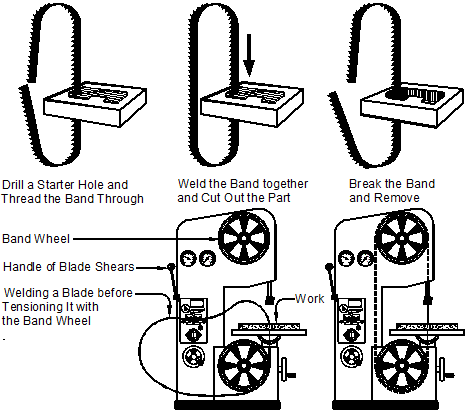
Image Source: www.metalartspress.com
Deciphering the Bandsaw Mechanics: Core Components and Function
At its heart, a band saw is a marvel of engineering, relying on a specific set of components working in harmony to achieve its cutting prowess. The core of its operation lies in the bandsaw mechanics that govern how the blade moves and interacts with the material being cut.
The Heart of the Machine: Saw Blade Operation
The saw blade operation is the most critical aspect of a band saw. Unlike a circular saw with a rotating blade, a band saw utilizes a continuous loop of toothed metal. This band is typically made from hardened steel and features precisely ground teeth along one edge. The design of these teeth – their spacing (pitch), angle (hook), and set (the outward bend of the teeth) – are crucial for determining the type of material the saw can cut and the efficiency of the cut.
- Tooth Pitch: The distance between teeth. A finer pitch is good for thin materials and smooth cuts, while a coarser pitch is better for thicker materials and faster cutting.
- Tooth Set: The way teeth are angled outwards. This creates a kerf (the width of the cut) that is wider than the blade itself, preventing the blade from binding in the material.
- Tooth Hook: The angle of the tooth face. A more aggressive hook angle cuts faster but can be rougher, while a less aggressive angle provides a smoother cut.
The blade is designed to be very flexible, allowing it to bend around the wheels without breaking. This flexibility is a key factor in the band saw’s ability to make curved cuts.
The Cutting Mechanism: Precision in Motion
The cutting mechanism of a band saw is a continuous process. As the blade moves down through the workpiece, the teeth remove material, creating the desired cut. The sharpness and integrity of the blade are paramount. A dull blade will not only cut poorly but can also generate excess heat, potentially damaging the blade and the workpiece.
The blade is held under significant tension, which is essential for maintaining its straightness and preventing it from wobbling during the cut. This tension, along with the rigidity of the saw frame, ensures a clean and accurate cut.
The Driving Force: Power Source and Motor Function
Every band saw, from the smallest benchtop model to the largest industrial unit, requires a reliable power source to drive its operation. This power source is almost universally an electric motor.
The Motor Function: Converting Energy to Motion
The motor function is to convert electrical energy into rotational mechanical energy. This rotation is then transferred to the band saw wheels, which in turn drive the blade. The power output of the motor is measured in horsepower (HP) or watts (W), and it directly influences the saw’s ability to cut through different materials and thicknesses.
- Small Benchtop Band Saws: Typically use motors ranging from 1/4 HP to 1 HP, suitable for hobbyist woodworking and light-duty cutting.
- Larger Cabinet Saws: May have motors ranging from 1 HP to 3 HP, offering more power for heavier woodworking tasks.
- Industrial Band Saws: Can feature motors exceeding 5 HP, designed for continuous operation and cutting hard metals or large lumber.
The motor is connected to the lower drive wheel, usually via a belt and pulley system. This system can also be used to adjust the cutting speed, allowing the operator to select the optimal speed for the material being cut.
Guiding the Cut: Material Feed and Blade Control
To achieve precise cuts, a band saw relies on controlled material feed and sophisticated blade guidance systems.
Material Feed: The Operator’s Role
The material feed refers to how the workpiece is moved into the blade. In most band saws, the material is fed by hand by the operator. It is crucial to feed the material smoothly and steadily, allowing the blade to do the cutting without forcing it. Forcing the blade can lead to binding, blade breakage, or inaccurate cuts.
- Woodworking: Feed rate depends on the type of wood, the thickness, and the blade’s tooth configuration.
- Metal Cutting: Typically requires a slower, more controlled feed rate, often with the aid of a coolant to dissipate heat.
Blade Tension: Maintaining Straightness and Efficiency
Blade tension is a critical adjustment that ensures the band saw blade remains straight and true as it rotates. The blade is held between the upper and lower wheels, and a tensioning mechanism, usually a screw or lever, allows for precise adjustment.
- Too little tension: The blade can wander off course, leading to inaccurate cuts and potential binding.
- Too much tension: Can cause premature wear on the blade, the wheels, and the bearings, and can even lead to blade breakage.
Manufacturers provide recommended tension levels for different blade widths and types. It’s essential to consult these guidelines.
Guides and Supports: Precision in Action
The guides and supports are instrumental in keeping the blade running straight and true, especially during the cutting process. Band saws typically have upper and lower blade guides.
- Lower Blade Guides: These are usually located just below the table and consist of a thrust bearing that supports the back of the blade and side guides that prevent the blade from flexing sideways.
- Upper Blade Guides: Located above the table, these also include a thrust bearing and side guides. The position of the upper guides is adjustable, allowing them to be set very close to the workpiece for optimal support.
The quality and adjustability of these guides significantly impact the precision and stability of the cut. Well-adjusted guides minimize blade drift and ensure that the teeth are presented to the material at a consistent angle.
Optimizing Performance: Cutting Speed and Saw Frame Design
The overall performance of a band saw is a product of several factors, including the appropriate cutting speed and a robust saw frame design.
Cutting Speed: Tailoring to the Material
Cutting speed, often referred to as blade speed or surface feet per minute (SFPM), is the rate at which the teeth of the band saw blade move through the material. This speed needs to be carefully selected based on the type of material being cut and the characteristics of the blade.
| Material Type | Typical SFPM Range | Notes |
|---|---|---|
| Softwoods | 1,500 – 3,500 | Faster speeds for softer woods, slower for denser hardwoods. |
| Hardwoods | 1,000 – 2,000 | Slower speeds are crucial to avoid overheating and burning. |
| Non-ferrous Metals | 100 – 500 | Requires slow speeds and often a coolant. |
| Ferrous Metals | 50 – 200 | Very slow speeds and constant coolant are essential. |
| Plastics | 500 – 1,500 | Varies greatly by plastic type; some plastics can melt if too fast. |
Many band saws offer variable speed control, allowing users to fine-tune the SFPM. This is particularly important when switching between different materials.
Saw Frame Design: Stability and Durability
The saw frame design is the backbone of the band saw, providing the structural integrity and stability required for accurate cutting. A well-designed frame minimizes vibration and deflection, ensuring the blade remains stable during operation.
- Cast Iron Construction: Provides excellent rigidity and dampens vibrations, leading to smoother cuts and longer component life. Higher-end and industrial band saws often feature heavy cast iron frames.
- Welded Steel Construction: While lighter, a well-engineered welded frame can also offer good stability, especially in smaller or portable models.
- Frame Height and Throat Depth: These dimensions are crucial for determining the size of the workpiece that can be accommodated. The throat depth is the distance from the blade to the nearest part of the saw frame, limiting the width of stock that can be cut. The frame height (or resaw capacity) dictates the maximum thickness of material that can be cut vertically.
The overall saw frame design also influences factors like dust collection, ease of blade changes, and the stability of the table.
Advanced Band Saw Features and Applications
Beyond the fundamental mechanics, modern band saws incorporate features that enhance their functionality and broaden their applications.
Ergonomics and User Interface
Modern band saws often prioritize user comfort and ease of use. Features like large, accessible on/off switches, integrated dust collection ports, and tool-less blade change mechanisms contribute to a more pleasant and efficient user experience. Adjustable work tables with miter slots and fence attachments further enhance precision for ripping and crosscutting operations.
Specialized Band Saws
The versatility of the band saw principle has led to the development of specialized machines:
- Resaw Band Saws: These are designed with wider blades and greater throat capacity for cutting thick lumber into thinner pieces. They often feature taller frames and powerful motors.
- Metal-Cutting Band Saws: These are built for durability and precision when cutting metals. They typically feature slower speeds, coolant systems, and more robust blade guides.
- Vertical vs. Horizontal Band Saws: While most band saws have vertical blades for cutting objects from above, horizontal band saws are used for cutting long stock to length, similar to a miter saw but with a continuous blade.
Maintenance for Optimal Performance
To ensure your band saw continues to perform at its best, regular maintenance is essential.
Blade Care
- Sharpness: Keep blades sharp. Replace or sharpen dull blades promptly.
- Correct Blade for the Job: Use blades with appropriate tooth pitch, set, and material for the task.
- Tension Check: Regularly check and adjust blade tension according to manufacturer recommendations.
- Cleaning: Clean blades of pitch and debris after use, especially when cutting wood.
Guide and Bearing Inspection
- Lubrication: Ensure bearings and guide mechanisms are properly lubricated if required.
- Wear and Tear: Inspect guides and thrust bearings for wear. Replace them if they show signs of damage.
- Alignment: Periodically check the alignment of the guides to ensure they are correctly positioned relative to the blade.
Motor and Drive System
- Belts: Inspect drive belts for wear or damage and adjust tension as needed.
- Motor Ventilation: Ensure the motor cooling vents are clear of dust and debris.
By paying attention to these aspects of bandsaw mechanics, you can significantly extend the life of your equipment and ensure consistent, high-quality results.
Frequently Asked Questions (FAQ)
Q1: What is the difference between a band saw and a jigsaw?
A1: A band saw uses a continuous loop blade that moves in one direction, allowing for longer and more intricate cuts. A jigsaw uses a shorter, reciprocating blade that moves up and down, making it better for plunge cuts and detailed curves within a workpiece.
Q2: Can I cut metal with a standard woodworking band saw?
A2: While some light-gauge metals might be cut with a woodworking band saw using a specialized metal-cutting blade, it’s generally not recommended. Woodworking band saws typically operate at higher speeds than are suitable for metal, which can lead to overheating, blade damage, and safety hazards. Dedicated metal-cutting band saws are designed with slower speeds, more robust guides, and often coolant systems for efficient metal cutting.
Q3: How do I set the blade tension on a band saw?
A3: Most band saws have a tensioning handwheel or lever, usually located at the top of the saw frame. Consult your band saw’s manual for specific instructions, as the procedure can vary. Generally, you’ll tighten the tension until the blade is taut and makes a “ping” sound when plucked, but not so tight that it distorts the blade or causes excessive stress.
Q4: What does “throat depth” mean on a band saw?
A4: Throat depth is the distance from the blade to the nearest part of the band saw frame. This measurement determines the maximum width of a workpiece that can be cut from the edge. A larger throat depth allows for wider cuts.
Q5: How often should I change my band saw blade?
A5: The frequency of blade changes depends on usage, the materials you cut, and the quality of the blade. A good rule of thumb is to change or sharpen your blade when you notice it becoming dull, leading to rough cuts, increased effort to push material, or burning. For frequent use, blades might need replacement every few months or even weeks, while for occasional hobby use, a blade can last much longer.