
Can you make a bow drill for fire starting? Yes, you absolutely can make a bow drill for fire starting, and it’s a fundamental skill in primitive skills and survival techniques. The bow drill is a classic method for friction fire, relying on the power of a bow to spin a spindle against a hearth board, creating an ember.
Making your own bow drill might seem daunting at first, but with a little knowledge and practice, it’s a rewarding and incredibly useful woodcraft skill. This guide will walk you through everything you need to know, from selecting the right materials to the step-by-step process of crafting and using your own fire starting tool.
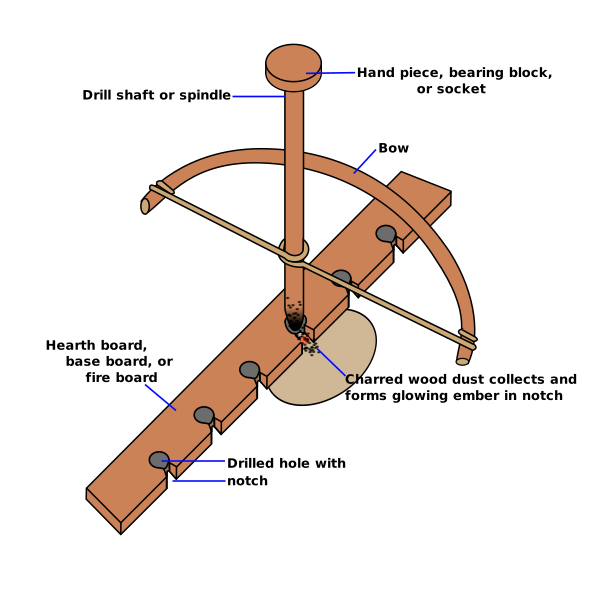
Image Source: upload.wikimedia.org
Deconstructing the Bow Drill: The Essential Components
Before we dive into the “how-to,” let’s break down the essential parts of a bow drill kit. Each piece plays a crucial role in generating the friction needed to create an ember.
The Hearth Board
The hearth board is the base of our friction fire. It’s a flat piece of wood where the spindle will be drilled.
- Material Choice: Soft to medium-hard woods work best. Think basswood, cottonwood, willow, aspen, or poplar. These woods are forgiving and will ablate (wear away) without being too resistant. Avoid very hard woods like oak or hickory, as they require more force and are harder to work with initially.
- Preparation:
- Flatness: The board needs to be flat on at least one side. You can achieve this by scraping with a sharp rock or knife.
- Thickness: Aim for about ½ to ¾ inch thick. Too thin, and it might break; too thick, and it can be unwieldy.
- The Notch: This is critical. On the edge of the board, about an inch from the end, you’ll cut a V-shaped notch. This notch will collect the hot dust, or “coal,” that is created by the friction. The notch should go about halfway to two-thirds of the way into the thickness of the board.
The Spindle
The spindle is the rotating stick that does the work. It’s the heart of the friction process.
- Material Choice: Again, choose a medium-soft wood. Straight, dry branches are ideal. The same woods that work for the hearth board are excellent choices for the spindle.
- Preparation:
- Straightness: The straighter the better. A bent spindle will wobble and make generating friction much harder.
- Taper: One end needs to be rounded to fit into the handhold (socket) comfortably. The other end, which contacts the hearth board, should be slightly blunted or rounded, not sharp.
- Length: A good length is about 8-12 inches.
- Diameter: Aim for about ½ to ¾ inch in diameter.
The Handhold (Socket)
The handhold, also called a socket or bearing block, is what you use to apply downward pressure on the spindle.
- Material Choice: This can be a piece of hardwood, a smooth stone with a natural indentation, or even a sturdy piece of bone. The key is that it needs to be hard enough not to wear away too quickly.
- Preparation:
- Indentation: Create a smooth, rounded indentation on one side. This is where the top of the spindle will sit. You can carve this with a knife or abrade it with a harder stone.
- Lubrication (Optional but Recommended): A bit of green leaf, sap, or even a drop of water in the socket can reduce friction between the handhold and the spindle, allowing the spindle to spin more freely.
The Bow
The bow provides the leverage and motion to spin the spindle.
- Material Choice: Find a sturdy, slightly flexible piece of wood, about arm’s length. Green wood is often better as it has more flex and is less likely to snap. A nicely curved branch works well. Think hazel, ash, or even a flexible sapling.
- Preparation:
- Shape: You can leave it as is, or trim it to a more comfortable shape. Ensure it has a bit of natural curve.
- Notches: Cut small notches at each end of the bow to secure the bowstring.
The Bow String
The bow string is what connects the bow to the spindle, transferring the motion.
- Material Choice: This is where many natural cordage materials come into play. Think paracord (if you’re not strictly going primitive), sturdy plant fibers (like dogbane, nettle, or yucca), rawhide, or even strong sinew.
- Preparation:
- Strength: The string needs to be strong enough to withstand the tension and the friction.
- Length: It should be long enough to wrap around the spindle once, with a little slack.
- Attachment: Securely tie the string to the bow’s notches. You can use a strong knot like a timber hitch or a bowline. The string should be tight enough to wrap snugly around the spindle without slipping, but not so tight that it prevents the spindle from spinning freely.
The Tinder Bundle
This is what will catch the ember and be blown into a flame.
- Material Choice: Extremely fine, dry, fluffy material is essential. Think bird’s nests, cattail fluff, inner bark fibers (cedar, birch), dry grass that has been processed by rubbing it between your hands, or cottonwood fluff.
- Preparation: Roll the chosen material into a loose, airy ball.
Crafting Your Bow Drill Kit: Step-by-Step
Now that you know the components, let’s get to building. This is where the woodcraft really comes in.
Step 1: Preparing the Hearth Board
- Select a piece of dry, medium-soft wood. It should be about 6-8 inches long and 1-1.5 inches wide, and about ¾ inch thick.
- Flatten one side. Use a knife or a sharp rock to scrape the surface until it’s reasonably smooth and flat. This will be your working surface.
- Mark the center. Find the middle of the board, about an inch from one end.
- Cut the notch. Carefully carve a V-shaped notch from the edge into the center mark. This notch should be about ½ to ⅔ of the way through the thickness of the board. It’s where your ember will form.
Step 2: Creating the Spindle
- Find a straight, dry stick. Aim for a length of 8-12 inches and a diameter of ½ to ¾ inch.
- Shape the top end. Round off one end to fit snugly into your handhold. You can do this by scraping with a knife or rubbing it against a rough stone.
- Shape the bottom end. Blunt the other end. It should not be sharp, but rather a dull point or rounded tip. This end will sit in the hearth board.
Step 3: Making the Handhold (Socket)
- Find a piece of hardwood, a smooth stone, or bone. It should be comfortable to hold.
- Create an indentation. Carve or abrade a smooth, rounded socket on one side. This socket needs to be the right size for the top of your spindle to sit in.
- Consider lubrication. If using wood or bone, you might want to make the socket slightly deeper and perhaps add a small divot to hold lubricant like green leaves or a bit of sap.
Step 4: Constructing the Bow
- Select a flexible piece of wood. About the length of your arm is good. It should have a natural curve.
- Cut notches. Make small notches at each end of the bow for your string.
- Attach the bow string.
- Take your cordage material.
- Tie one end securely to one notch using a strong knot.
- Loop the other end around the spindle once.
- Pull the bow taut and tie the other end of the string securely to the other notch.
- The string should be taut enough to grip the spindle, but allow it to spin freely.
Step 5: Assembling and Testing
- Wrap the bowstring around the spindle. Place the spindle on the hearth board, ensuring the bottom end is in the notch.
- Position the handhold. Place the handhold on top of the spindle.
- Apply pressure. Hold the handhold firmly with one hand, applying downward pressure.
- Begin sawing. Use your other hand to saw the bow back and forth in a smooth, rhythmic motion.
The Art of Friction Fire: Using Your Bow Drill
Building the kit is only half the battle. The other half is learning the technique. This is where survival techniques and primitive skills truly shine.
Getting Started: The Setup
- Find a stable surface. Your hearth board needs to be stable. You can place it on the ground and brace it with your foot, or carve a small divot in the ground to hold it steady.
- Prepare your tinder bundle. Make sure it’s loose, dry, and ready to receive an ember. Place it directly next to the notch on your hearth board.
- Position yourself. Kneel on the ground with one foot holding down the hearth board.
- Wrap the spindle. Loop the bowstring once around the spindle. Make sure the spindle is firmly seated in the hearth board notch.
- Place the handhold. Hold the handhold on top of the spindle, applying firm, consistent downward pressure.
The Motion: Creating Heat
- Start slow. Begin by gently sawing the bow back and forth. This will help seat the spindle and create a slight depression.
- Increase speed and pressure. As you gain momentum, increase the speed of your sawing and apply steady downward pressure. The goal is to create black, powdery dust that collects in the notch.
- Listen and watch. You should hear the friction, and see smoke starting to rise from the notch.
- Keep going. Continue sawing until you have a good pile of dark, smoking dust in the notch. This is your potential ember.
- Don’t stop too soon! It takes time and persistence.
Nurturing the Ember
- Gently remove the spindle. Once you see consistent smoke and a good amount of black dust, carefully remove the spindle and bow.
- Observe the dust pile. You should see a small, glowing ember within the black dust.
- Transfer to the tinder bundle. Carefully slide the hearth board so the ember and dust pile fall directly onto your prepared tinder bundle.
- Gently blow. Cup the tinder bundle around the ember. Blow gently and steadily onto the ember. You should see the ember grow brighter and the smoke increase.
- Increase airflow. As the tinder starts to glow more intensely, increase your blowing. The goal is to get the tinder to ignite into a flame.
- Feed the flame. Once you have a flame, carefully add small, dry twigs to build it up.
Troubleshooting Common Bow Drill Problems
Like any skill, friction fire with a bow drill can present challenges. Here’s how to overcome them:
| Problem | Cause | Solution |
|---|---|---|
| No Smoke | Not enough friction, wood too wet, insufficient pressure. | Ensure your wood is dry. Increase speed and downward pressure. Check that the bowstring is tight enough to grip the spindle. Ensure the spindle is seated properly in the notch. |
| Spindle Slipping | Bowstring is too loose, spindle top is too smooth. | Tighten the bowstring. Create a rougher surface on the top of the spindle where it meets the handhold. Add a lubricant to the socket. |
| Hearth Board Burning | Too much friction too quickly, poor wood choice. | Use softer wood for the hearth board. Start slowly and build speed gradually. Ensure good airflow around the spindle. |
| Ember Dies Quickly | Tinder bundle not dry or fine enough, not enough airflow. | Use the driest, fluffiest tinder possible. Process dry grasses by rubbing them between your hands to make them very fine. Blow more steadily and gently onto the ember. |
| Spindle Sticks | Too much friction in the socket, wood too soft. | Lubricate the socket. Use a harder material for the handhold. Ensure the spindle is not binding against the sides of the hearth board. |
Variations on the Bow Drill
While the basic principle remains the same, there are slight variations and improvements you can consider:
The Hand Drill vs. Bow Drill
The hand drill is the most basic form of friction fire, using only your hands to spin a spindle. It requires immense skill and stamina, and works best in very dry conditions with specific types of wood. The bow drill greatly enhances the efficiency and speed of rotation, making it accessible to more people and in a wider range of conditions.
Material Substitutions
- Bowstring Alternatives: If you can’t find ideal natural cordage, even a strong shoelace or a strip of tough fabric can work in a pinch.
- Hearth Board Notches: Some prefer a more rounded notch, while others swear by a sharper V. Experiment to see what works best for you.
The Importance of Practice
Like any survival technique or woodcraft skill, proficiency with the bow drill comes with practice. Don’t be discouraged if your first few attempts don’t result in a fire. Each attempt is a learning experience.
- Practice dry runs: Get comfortable with the motion of sawing the bow and maintaining pressure.
- Experiment with wood types: Learn what kind of woods work best for your local environment.
- Practice fire starting in different conditions: Try it when it’s slightly damp, or windy, to build resilience.
Mastering the bow drill is a deeply rewarding experience, connecting you to ancient primitive skills and giving you a profound sense of self-reliance. It’s a tool that, once made, can provide the warmth and security of fire anywhere, anytime.
Frequently Asked Questions About Bow Drills
Q1: What is the best type of wood for a bow drill?
The best woods are generally medium-soft, dry, and non-resinous. Excellent choices include basswood, cottonwood, willow, aspen, and poplar for both the hearth board and spindle. For the handhold, a harder wood like oak or a smooth, dense stone is preferable.
Q2: How tight should the bow string be?
The bow string should be snug enough to grip the spindle securely without slipping, but not so tight that it binds the spindle or makes it difficult to rotate. It should allow for smooth, fast spinning.
Q3: What if my spindle keeps slipping in the handhold?
This often happens when the socket in the handhold is too smooth or the spindle top is too rounded. Try roughening the top of the spindle slightly or creating a deeper, more secure socket in your handhold. Adding a bit of lubricant (like a green leaf, sap, or even a drop of water) to the socket can also help reduce friction between the spindle and the handhold, allowing the spindle to spin more freely.
Q4: My hearth board is starting to burn too much, what am I doing wrong?
This usually indicates excessive friction or that the wood is too soft. Ensure you are using a medium-soft wood for the hearth board and start with a gentle sawing motion, gradually increasing speed and pressure. Make sure you’re not applying excessive downward force initially. Also, check that the notch is clean and not clogged with dust.
Q5: How do I know when I have a hot ember?
You’ll see a consistent stream of dark, smoking dust collecting in the notch of your hearth board. When you carefully remove the spindle, this pile of dust should be glowing red or orange.
Q6: Can I use a different type of cordage if I don’t have natural fibers?
Yes, if you’re not going for a purely primitive setup, a strong shoelace, paracord (with the inner strands removed or used as a single strand), or even a strip of tough fabric can work as a bowstring. The key is strength and the ability to hold tension.