
Have you ever seen a photo that just takes your breath away? Maybe the background melts away perfectly, or the colors just pop. Often, that magic comes from the lens a photographer uses. For those of you who own a Sony full-frame camera, you know it’s a powerhouse. But choosing the *right* lens can feel like trying to find a needle in a giant haystack. There are so many choices, and it’s easy to feel overwhelmed and unsure which one will give you the stunning results you dream of.
This guide is here to help you cut through the confusion. We’ll break down what makes a great full-frame Sony lens and explore some of the best options for different kinds of photography. By the end, you’ll feel much more confident about picking the perfect lens to match your style and budget. Get ready to unlock the full potential of your Sony camera!
Our Top 5 Full Frame Sony Lenses Recommendations at a Glance
Top 5 Full Frame Sony Lenses Detailed Reviews
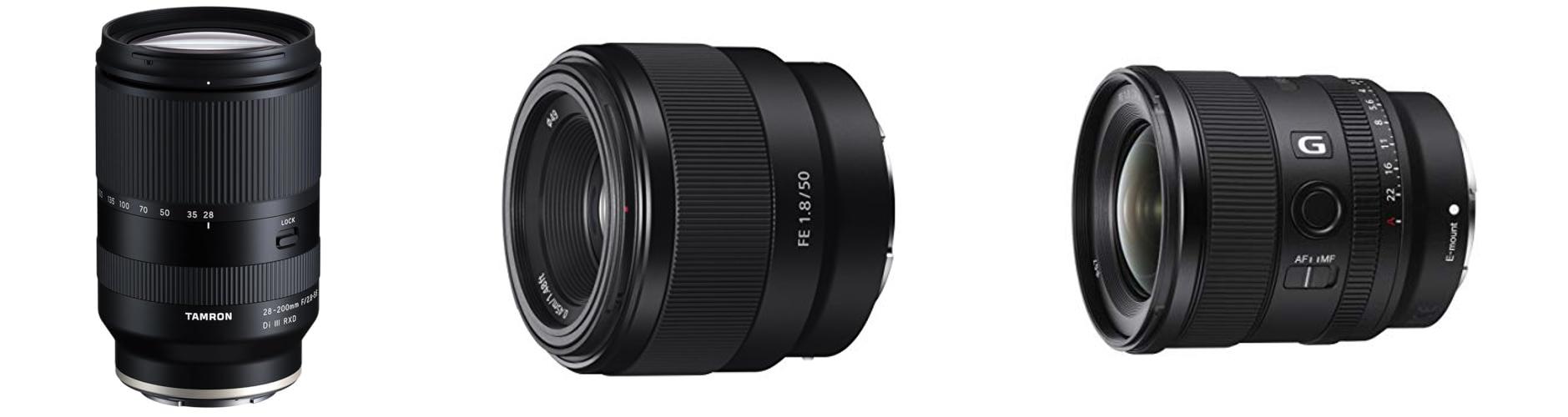
1. Tamron 28-200 F/2.8-5.6 Di III RXD for Sony Mirrorless Full Frame/APS-C E-Mount

Rating: 9.5/10
Meet the Tamron 28-200mm F/2.8-5.6 Di III RXD lens, a super-zoom that fits right into your Sony E-mount camera. This lens is a game-changer because it’s the first all-in-one zoom lens for full-frame mirrorless cameras that opens up to a super-fast F2.8 aperture. It’s built to go wherever you do, making it ideal for travel, everyday shots, and even close-up adventures.
What We Like:
- It’s the world’s first F2.8 all-in-one zoom lens for full-frame mirrorless cameras, which is a big deal for low-light photos.
- It’s super light, weighing only 20.3 oz., and compact at just 4.6 inches long, making it easy to carry around all day.
- You can get really close to your subjects, with amazing close-up shooting performance at both wide (7.5 inches) and telephoto (31.5 inches) ends.
- The RXD stepping motor is very quiet, so it won’t bother you or your subjects when you’re taking pictures or videos.
What Could Be Improved:
- While it’s an F2.8 at the wide end, the aperture narrows to F5.6 at the telephoto end, which might require more light for distant shots.
This Tamron lens is an excellent choice for photographers who want one lens to do it all. Its portability and versatile zoom range make it a fantastic companion for any shooting situation.
2. Sony – FE 50mm F1.8 Standard Lens (SEL50F18F/2)

Rating: 8.9/10
The Sony FE 50mm F1.8 Standard Lens, also known as the SEL50F18F/2, is a fantastic lens for anyone looking to take their photography to the next level. It’s designed for full-frame E-mount cameras and is super easy to carry around. This lens lets you take amazing pictures with a blurred background, making your main subject really stand out.
What We Like:
- The big F1.8 aperture creates beautiful blurry backgrounds, which is great for portraits.
- It has a 7-blade circular aperture that makes the out-of-focus areas look smooth and pleasing, called bokeh.
- The lens is small and light, making it perfect for taking with you everywhere.
- It has a special aspherical element that helps make your pictures sharp and clear by fixing certain kinds of blur.
- The Double-Gauss design helps keep the image flat and prevents weird stretching at the edges.
What Could Be Improved:
- Autofocus can sometimes be a little slow, especially in low light.
- The lens is mostly made of plastic, which might not feel as sturdy as metal lenses.
- While great for the price, some photographers might want more advanced features found in pricier lenses.
This lens is a wonderful way to capture stunning photos with artistic background blur. It’s a smart choice for photographers who want to add a professional touch to their images without breaking the bank.
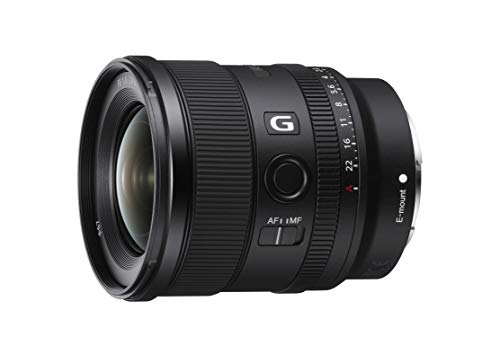
3. Sony FE 20mm F1.8 G Full-Frame Large-Aperture Ultra-Wide Prime Angle G Lens
Rating: 8.8/10
The Sony FE 20mm F1.8 G lens is an amazing ultra-wide lens that lets you capture stunning photos. It’s a G lens, which means it’s a high-quality lens from Sony. This lens is perfect for both full-frame and APS-C cameras, so you can use it with many different Sony cameras. Its large aperture makes it great for low light and for creating beautiful blurry backgrounds.
What We Like:
- It takes incredibly sharp pictures, even when you use the widest opening (F1.8).
- The F1.8 aperture lets in a lot of light, making it easy to shoot in dark places. It also helps you get that cool blurry background effect.
- This lens is small and light, which makes it easy to carry around all day.
- It works great on both full-frame and smaller APS-C Sony cameras.
- Special lens elements help make your photos look very clear and natural.
- It focuses super fast and accurately thanks to its two XD Linear Motors.
What Could Be Improved:
- While generally great, some users might find the fixed 20mm focal length a bit limiting for certain situations compared to zoom lenses.
This lens is a fantastic choice for anyone who wants to explore wide-angle photography with excellent image quality and speed. You’ll be able to capture breathtaking landscapes and creative shots with ease.
4. Sony – FE 24-105mm F4 G OSS Standard Zoom Lens (SEL24105G/2)

Rating: 8.9/10
The Sony FE 24-105mm F4 G OSS Standard Zoom Lens (SEL24105G/2) in black is a fantastic all-around lens for photographers. It covers a wide range of situations, from landscapes to portraits. This lens is built with special glass to make your pictures look sharp and clear, even at the edges. Its constant F4 aperture means you get the same bright picture and depth of field no matter where you zoom. This lens also creates beautiful, blurry backgrounds for your subjects.
What We Like:
- The G-lens design with special glass elements makes photos super sharp from edge to edge.
- The constant F4 aperture keeps your photos bright and your background blur consistent.
- The 9-blade circular aperture makes out-of-focus areas look really smooth and pleasing.
- You can get really close to your subject, just 1.25 feet away, for creative shots.
- The fast and quiet autofocus system (DDSSM) is great for capturing moving things.
- The manual focus ring feels responsive and accurate.
- It’s a versatile zoom range, perfect for many different types of photography.
What Could Be Improved:
- While good, some photographers might want an even wider aperture for extreme low light.
- For its price point, a weather-sealed design would be a welcome addition for shooting in more challenging conditions.
This lens is a top-notch choice for many photographers looking for quality and versatility. It’s a lens that will serve you well for a long time.
5. Sony SEL2470GM E-Mount Camera Lens: FE 24-70 mm F2.8 G Master Full Frame Standard Zoom Lens Black

Rating: 9.1/10
The Sony SEL2470GM E-Mount Camera Lens is a top-tier lens for your Sony camera. This lens is designed for full-frame cameras and offers a versatile zoom range from 24mm to 70mm. Its f/2.8 aperture lets in a lot of light, making it great for low-light shots and creating beautiful blurry backgrounds. The lens uses special glass to make your photos sharp and clear, with vibrant colors. It also has a special coating to reduce glare. This lens is built for professional results.
What We Like:
- It delivers incredibly sharp images with amazing detail and color.
- The f/2.8 aperture is fantastic for low light and creates beautiful bokeh (blurry backgrounds).
- It has a quick and accurate autofocus system.
- The build quality feels very solid and professional.
- It’s a versatile lens that works for many different types of photography, like portraits and landscapes.
What Could Be Improved:
- It does not have built-in image stabilization.
- It is a bit on the heavier side.
- The price point is quite high.
This Sony G Master lens is an excellent investment for photographers who demand the best. It will help you capture stunning images with ease.
Choosing the Right Full-Frame Sony Lens: A Beginner’s Guide
So, you’ve got a shiny new full-frame Sony camera! That’s fantastic. Now, to make the most of it, you need the right lenses. Full-frame lenses are designed for cameras with a larger sensor, which means they capture more light and can produce some truly stunning images. Let’s dive into what you should look for.
Key Features to Look For
When you’re shopping for full-frame Sony lenses, keep these important things in mind:
- Focal Length: This tells you how much of a scene the lens can capture. A wide-angle lens (like 24mm) shows a lot, great for landscapes. A telephoto lens (like 70mm or more) zooms in close, perfect for faraway subjects. A “normal” lens (around 50mm) sees things much like your own eyes do.
- Aperture (f-stop): This is like the pupil of your lens. A lower f-number (like f/1.8) means a wider opening. This lets in more light, which is great for low-light shots and creating a blurry background (called bokeh). A higher f-number (like f/8) means a smaller opening, letting in less light but keeping more of the image sharp.
- Autofocus (AF) Motor: Modern lenses have motors that help them focus quickly and quietly. Sony offers different types, like SSM (Super Sonicwave Motor) and SAM (Smooth Autofocus Motor). SSM is generally faster and quieter.
- Image Stabilization (IS): Some lenses have built-in stabilization. This helps reduce blur from camera shake, especially when you’re shooting handheld or using a telephoto lens. Sony calls their system Optical SteadyShot (OSS).
Important Materials
Lenses are made from a few key materials that affect their performance and durability:
- Glass Elements: High-quality glass is crucial. Lenses often use special types of glass, like Extra-low Dispersion (ED) or Fluorite glass, to reduce color fringing and improve sharpness.
- Lens Coatings: These are thin layers applied to the glass. They help reduce glare and reflections, making your images clearer and more vibrant.
- Lens Barrel: Most lenses have a barrel made of plastic or metal. Metal barrels are usually more durable and feel more premium, but they can also make the lens heavier and more expensive.
Factors That Improve or Reduce Quality
Several things make a lens great or not so great:
- Optical Design: How the glass elements are arranged inside the lens makes a big difference. A well-designed lens will produce sharp images from edge to edge and minimize distortions.
- Build Quality: A well-built lens feels solid. It will have smooth focusing rings and a tight mount. Poor build quality can lead to loose parts or a lens that doesn’t feel reliable.
- Aberrations: These are optical flaws. Chromatic aberration (color fringing) and distortion (straight lines looking curved) can reduce image quality. Good lenses are designed to minimize these.
- Weather Sealing: If you plan to shoot in rain or dusty conditions, look for lenses with weather sealing. This protects the internal components from the elements.
User Experience and Use Cases
How you’ll use your lens matters a lot.
- Portraits: For beautiful portraits with a blurry background, a prime lens (one with a fixed focal length) with a wide aperture (like f/1.8 or f/1.4) is often best. A 50mm or 85mm lens is a popular choice.
- Landscapes: Wide-angle lenses (16-35mm range) are perfect for capturing sweeping vistas. You’ll want a lens that’s sharp all over.
- Travel: A versatile zoom lens, like a 24-70mm or 24-105mm, is a great all-around option for travel. It covers many situations without needing to change lenses often.
- Sports & Wildlife: For action or distant subjects, a telephoto zoom lens (like 70-200mm or 100-400mm) is essential. Fast autofocus and image stabilization are very helpful here.
Frequently Asked Questions (FAQ) About Full-Frame Sony Lenses
Q: What is “full frame” in relation to a Sony lens?
A: Full-frame means the lens is designed for cameras with a larger image sensor, the same size as a 35mm film frame. This sensor captures more light and detail.
Q: Do I need a special adapter for older Sony A-mount lenses on my E-mount full-frame camera?
A: Yes, if you have older Sony A-mount lenses, you will likely need a lens adapter to use them on a newer E-mount full-frame camera.
Q: What’s the difference between a prime lens and a zoom lens?
A: A prime lens has a fixed focal length (e.g., 50mm), while a zoom lens lets you change the focal length (e.g., 24-70mm).
Q: Is a wider aperture always better?
A: A wider aperture (lower f-number) is better for low light and creating background blur, but it can also make the depth of field very shallow, meaning only a small part of the image is in focus.
Q: What does “bokeh” mean?
A: Bokeh refers to the pleasing aesthetic quality of the blur in the out-of-focus parts of an image, often seen in portraits.
Q: How important is image stabilization for full-frame lenses?
A: Image stabilization is very helpful, especially for telephoto lenses or when shooting in low light without a tripod. It helps reduce camera shake and keeps your images sharp.
Q: What are G Master lenses from Sony?
A: Sony’s G Master (GM) lenses are their top-tier professional lenses, offering the highest image quality, performance, and build.
Q: Can I use a crop-sensor (APS-C) lens on a full-frame Sony camera?
A: Yes, you can, but the camera will automatically crop the image to match the smaller sensor size of the lens, effectively turning your full-frame camera into a crop-sensor camera.
Q: How do I clean my full-frame Sony lenses?
A: Use a soft lens brush to remove dust, then a microfiber cloth with a lens cleaning solution. Never spray solution directly onto the lens.
Q: Where can I find good deals on full-frame Sony lenses?
A: Check reputable camera stores, online retailers, and consider buying used from trusted sources to save money.
In conclusion, every product has unique features and benefits. We hope this review helps you decide if it meets your needs. An informed choice ensures the best experience.
If you have any questions or feedback, please share them in the comments. Your input helps everyone. Thank you for reading.