
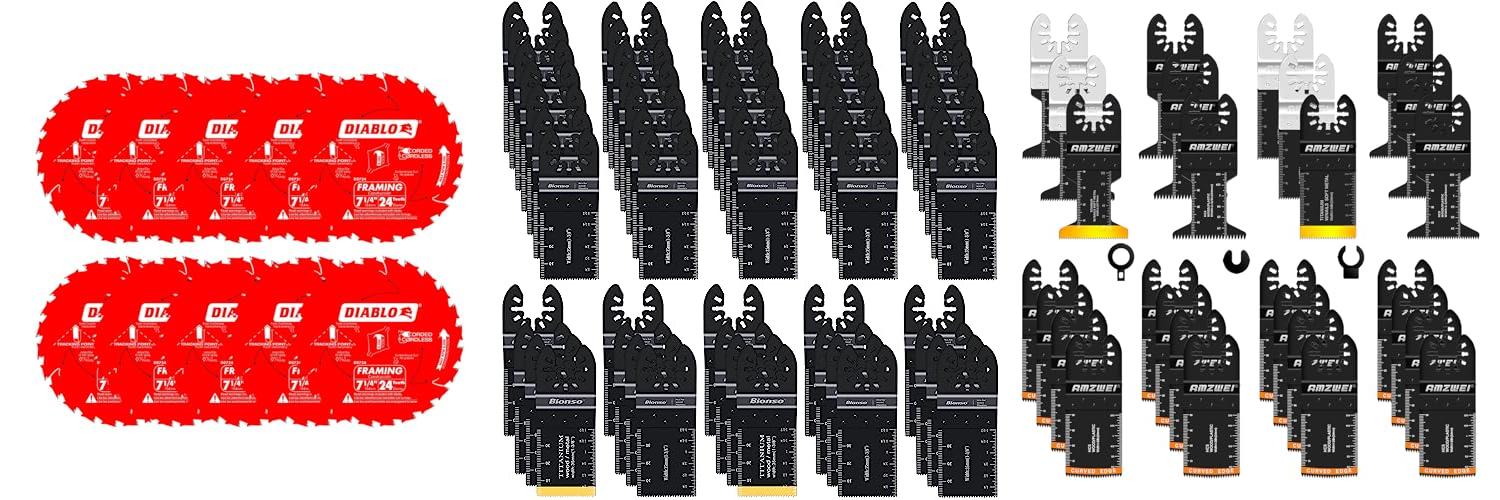
Ever tried to cut through wood and ended up with a jagged, messy edge? Or maybe you’ve spent ages wrestling with a saw, only to realize the blade wasn’t quite right for the job. It’s a frustrating experience many DIYers and woodworkers face. Choosing the perfect saw blade can feel like navigating a maze, with so many types and sizes all claiming to be the best.
This confusion can lead to wasted time, ruined projects, and even safety hazards. But what if you could easily pick the right blade every single time? What if you knew exactly what to look for to get clean cuts, smooth finishes, and make your sawing projects a breeze?
In this post, we’re going to unlock the secrets of saw blades. We’ll break down the different types, explain what makes them work, and show you how to choose the ideal blade for any task. By the end, you’ll feel confident and ready to tackle any cutting job, turning those frustrating moments into satisfying successes. Let’s dive in and discover the power of the perfect cut!
Our Top 5 Saw Blades Recommendations at a Glance
| Image | Product | Rating | Links |
|---|---|---|---|
 |
Diablo Framing Saw Blade for Wood – 7-1/4″ x 24-Tooth | 8.6/10 | Check Price |
 |
Bionso 55PCS Oscillating Saw Blades | 9.0/10 | Check Price |
 |
AMZWEI 28PCS Oscillating Saw Blades | 8.7/10 | Check Price |
 |
CMT 256.050.10 ITK XTreme Industrial Combination Saw Blade | 9.1/10 | Check Price |
 |
DEWALT Reciprocating Saw Blades | 8.9/10 | Check Price |
Top 5 Saw Blades Detailed Reviews
1. Diablo Framing Saw Blade for Wood – 7-1/4″ x 24-Tooth
Rating: 9.0/10
Tackle your toughest framing jobs with the Diablo Framing Saw Blade. This 10-pack of 7-1/4-inch, 24-tooth blades is built for power and precision. They are designed to cut through framing lumber, plywood, and even pressure-treated wood with ease. Whether you’re working on a big construction project or a weekend DIY, these blades are a great choice.
What We Like:
- The Tracking Point tooth design helps you make super straight cuts.
- These blades last a long time, up to 5 times longer than others.
- They work great with cordless saws, giving you more cuts per battery charge.
- The special coating keeps the blades from getting sticky or rusty.
- The thin kerf design means less resistance and faster, cleaner cuts.
- Anti-vibration vents make cutting smoother and more accurate.
What Could Be Improved:
- The 24-tooth count might not be ideal for very fine finish cuts.
- A larger pack size might be more economical for very frequent users.
These Diablo framing saw blades offer excellent performance and durability for woodworkers. You’ll get precise cuts and long-lasting use, making your projects easier and faster.
2. Bionso 55PCS Oscillating Saw Blades
Rating: 8.9/10
The Bionso 55PCS Oscillating Saw Blades offer a massive collection for all your cutting needs. This set includes 55 blades, with two different types, making it a versatile tool for various projects. You can tackle wood, plastics, and even metal with this kit. It’s designed to be your go-to helper for any job.
What We Like:
- Huge selection of 55 blades for many jobs.
- Cost-effective price for so many blades.
- Efficient cutting with thoughtful sawtooth designs.
- Comfortable to hold and use for extended periods.
- Durable blades made from strong steel for long life.
- Universal fit for over 95% of oscillating tools.
- Easy to find the right adapter for your tool.
- Excellent customer service for any questions or issues.
What Could Be Improved:
- The sheer number of blades might be overwhelming for beginners.
- Specific adapter compatibility details are on a separate page, requiring extra checking.
This Bionso set is a fantastic value, providing a wide array of blades for almost any task. It’s a smart investment for DIYers and professionals alike who want efficiency and durability in their cutting tools.
3. AMZWEI 28PCS Oscillating Saw Blades
Rating: 8.6/10
The AMZWEI 28PCS Oscillating Saw Blades kit is a versatile set designed for a wide range of cutting tasks. This professional set includes 5 different types of multitool blades, carefully chosen to handle common jobs for both professionals and DIY enthusiasts. Whether you’re working with wood, plastic, or metal, these blades offer solutions for precise cuts, clean finishes, and even cutting through nails.
What We Like:
- The kit offers 5 distinct types of blades, including curved-edge for precision, Japanese-tooth for clean wood cuts, bi-metal for nails, titanium bi-metal for soft metals, and standard wood blades.
- The innovative curved-edge design on some blades helps improve cutting efficiency and accuracy while reducing vibration for a more stable experience.
- These blades are made from high-quality materials like HCS, Titanium, Bi-Metal, and Stainless Steel, ensuring they are durable and long-lasting.
- The variety of blades and teeth types makes this kit suitable for many projects, from home remodeling and window installation to flooring and trimming.
- With a universal interface, these blades are compatible with over 95% of oscillating tools on the market, including popular brands like Bosch, Fein, and Milwaukee.
- This makes them a thoughtful and practical gift for any woodworker or DIYer.
What Could Be Improved:
- The description notes that the blades are not suitable for cutting bolts or screws, which limits their application in certain hardware removal tasks.
This comprehensive set provides excellent value and versatility for anyone needing reliable cutting tools. It’s a great choice for tackling various projects with confidence.
4. CMT 256.050.10 ITK XTreme Industrial Combination Saw Blade
Rating: 8.6/10
The CMT 256.050.10 ITK XTreme Industrial Combination Saw Blade is a powerful tool for any woodworker. This 10-inch blade with 50 teeth is designed for both ripping and crosscutting. Its specially designed large gullets help clear chips easily, making your cuts cleaner and faster. You can trust this blade to handle a variety of materials, including solid wood, melamine, laminates, plywood, and chipboard. It works great on radial arm saws, miter saws, and table saws.
What We Like:
- Versatile for both rip and crosscuts.
- Large gullets for excellent chip removal.
- Cuts a wide range of wood materials smoothly.
- Works on multiple types of saws.
- Micrograin carbide teeth offer long-lasting sharpness.
- Laser-cut plate reduces noise and vibration for a more comfortable experience.
What Could Be Improved:
- The 15° hook angle might be too aggressive for some very delicate cuts.
- While durable, the advanced features might make it a more significant investment for casual hobbyists.
This CMT blade delivers professional results for a variety of woodworking tasks. It’s a reliable choice for anyone looking for precision and efficiency in their cuts.
5. DEWALT Reciprocating Saw Blades
Rating: 8.8/10
Tackle a wide range of cutting jobs with the DEWALT Reciprocating Saw Blades, 10 Piece Combination Set (DW4898). This set gives you a variety of blades for different tasks. The blades are made with bi-metal construction. This makes them flexible and long-lasting. A tough case keeps your blades organized and ready to go. It even fits inside your tool kit box.
What We Like:
- The combination set offers a great selection of blades for many common cutting needs.
- Bi-metal construction provides both flexibility and a durable cutting edge that lasts.
- The tough case keeps blades organized and fits neatly into your tool kit.
- You get a good variety of sizes for different materials and jobs.
What Could Be Improved:
- For very heavy-duty or specialized tasks, you might need blades not included in this specific set.
- While the case is tough, some users might prefer a more robust, dedicated blade storage solution for extremely frequent use.
This DEWALT set is a smart choice for DIYers and pros alike. It offers good value and versatility for your reciprocating saw.
Choosing the Right Saw Blade: Your Guide to a Perfect Cut
Picking the right saw blade makes a big difference. It helps you cut wood, metal, or plastic cleanly and safely. This guide will help you find the best blade for your projects.
Key Features to Look For
1. Tooth Count
More teeth mean smoother cuts, especially on thin materials. Fewer teeth are better for faster, rougher cuts on thicker materials.
- High Tooth Count (e.g., 60+ teeth): Great for smooth finishes on plywood, laminate, and fine woodworking.
- Low Tooth Count (e.g., 24-30 teeth): Good for fast cuts on rough lumber and framing.
- Medium Tooth Count (e.g., 40-50 teeth): A good all-around choice for general-purpose cutting.
2. Tooth Shape (Grind)
The shape of the teeth affects how the blade cuts and how long it stays sharp.
- Flat Top Grind (FTG): Strong teeth for rough cuts and ripping through wood.
- Alternate Top Bevel (ATB): Common for crosscutting wood, giving a cleaner finish than FTG.
- High Alternate Top Bevel (Hi-ATB): Even sharper angles for very smooth crosscuts.
- Combination (Comb): A mix of FTG and ATB teeth for both ripping and crosscutting.
3. Blade Diameter
This must match your saw. Common sizes are 10 inches for miter saws and table saws, and 5.5 or 7.25 inches for circular saws.
4. Arbor Size
This is the hole in the center of the blade. It needs to fit the spindle on your saw. Most common is 5/8 inch.
Important Materials
1. Blade Body Material
Most blade bodies are made of steel. High-quality steel is stronger and lasts longer.
2. Tooth Material
The teeth are what do the cutting. Different materials offer different benefits.
- Carbide Tipped: This is the most common and best option for most users. Tiny pieces of carbide are brazed onto the steel teeth. Carbide is very hard and stays sharp much longer than plain steel.
- High-Speed Steel (HSS): Used for cutting metal. It’s tougher than regular steel but not as hard as carbide.
Factors That Improve or Reduce Quality
Factors That Improve Quality:
- Precision-Ground Teeth: Sharp, accurately shaped teeth cut better and last longer.
- Heat Treatment: Properly heat-treated blades resist warping and stay sharp.
- Anti-Vibration Slots: Small slots cut into the blade body reduce vibration. This means quieter cuts and less wear on your saw.
- Coating: Some blades have coatings that reduce friction and prevent rust.
Factors That Reduce Quality:
- Dull Teeth: Worn-out teeth make cutting difficult and dangerous.
- Bent or Warped Blades: These can cause rough cuts and are unsafe.
- Poorly Brazed Teeth: Teeth that aren’t attached strongly can break off.
User Experience and Use Cases
For the DIYer:
If you’re building furniture or doing home repairs, a good combination blade with 40-50 teeth is a great starting point. It handles both ripping (cutting with the grain) and crosscutting (cutting across the grain) well.
For the Woodworker:
Woodworkers often need different blades for specific tasks. A high-tooth-count blade (60+ teeth) is essential for smooth, splinter-free cuts on hardwoods and veneers. A ripping blade with fewer teeth is best for cutting long pieces of lumber.
For Metal Cutting:
You need special blades for metal. Look for blades made of HSS or with carbide teeth designed for metal. The tooth count will be lower than wood blades, and the teeth are often shaped differently.
Saw Blade FAQs
Q: What is the difference between a ripping blade and a crosscut blade?
A: A ripping blade has fewer, larger teeth for fast cuts along the wood grain. A crosscut blade has more, smaller teeth for clean cuts across the wood grain.
Q: Can I use a wood blade to cut metal?
A: No, you should never use a wood blade to cut metal. It’s dangerous and will ruin the blade and the material.
Q: How do I know what size blade I need?
A: Check your saw’s manual or look at the label on your current blade. The diameter and arbor size must match.
Q: What does “kerf” mean?
A: Kerf is the width of the cut the blade makes. Thin kerf blades remove less material, which is good for saving wood and reducing strain on your saw.
Q: How often should I sharpen or replace my saw blades?
A: Blades get dull with use. You’ll notice rough cuts or the saw struggling. For most DIYers, replacing them is easier than sharpening. Professional woodworkers may sharpen them.
Q: Are more expensive blades always better?
A: Not always. A more expensive blade might have better materials or design features that suit specific jobs. For general use, a mid-range carbide-tipped blade is often the best value.
Q: What are anti-vibration slots?
A: These are small cuts in the blade body that help reduce noise and vibration during cutting. This makes the saw easier to control and last longer.
Q: Can I use a blade with more teeth than my saw recommends?
A: Generally, it’s best to stick to the recommended tooth count. Too many teeth can overload a saw not designed for them.
Q: What is carbide tipping?
A: Carbide tipping means small, very hard pieces of carbide are attached to the steel teeth of the blade. This makes the teeth much sharper and longer-lasting.
Q: How do I store my saw blades safely?
A: Store blades flat in their original packaging or in a blade case. Keep them away from moisture to prevent rust. Ensure they are stored so the sharp teeth don’t pose a hazard.
In conclusion, every product has unique features and benefits. We hope this review helps you decide if it meets your needs. An informed choice ensures the best experience.
If you have any questions or feedback, please share them in the comments. Your input helps everyone. Thank you for reading.