
Can you use a table saw as a jointer? Yes, you absolutely can, but with the right techniques and tools, you can achieve remarkably accurate and flat edges. While a dedicated jointer is the ideal tool for creating perfectly square and flat edges on your lumber, many woodworkers find themselves without one. Fortunately, a table saw, when equipped with the proper setup and a bit of ingenuity, can perform this crucial task with surprising effectiveness. This guide will delve into the expert methods for using your table saw as a jointer, ensuring you can produce factory-quality edges for your projects.
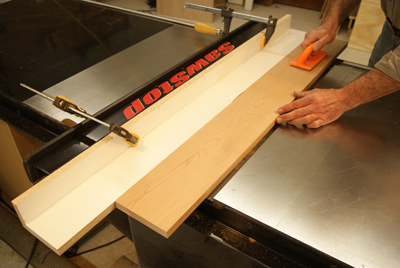
Image Source: www.woodworkersjournal.com
Why Jointing is Crucial in Woodworking
Before we dive into the “how,” let’s establish the “why.” Jointing is a fundamental step in woodworking, especially when working with solid wood. It’s the process of creating a perfectly flat and square edge on a board. Why is this so important?
- Glue-Up Success: When you’re gluing boards together to make a wider panel, like for a tabletop or cabinet sides, the edges need to meet perfectly. Any gaps or slight curves will result in weak glue joints. A properly jointed edge ensures a tight, strong bond.
- Squareness and Stability: Jointing not only flattens an edge but also makes it square to the face of the board. This squareness is vital for accurate assembly and for ensuring your final project is stable and true.
- Planing Efficiency: Jointing removes the rough, often uneven edge left by a saw blade or from rough lumber. This means your planer will have less material to remove and can work more efficiently, preserving the overall thickness of your boards.
- Aesthetics: A perfectly jointed edge looks professional. It provides a clean, crisp line that enhances the overall appearance of your finished piece.
The Basic Principle: Using the Rip Fence
The core concept behind making a jointer with a table saw is to use the rip fence as a guide to pass a board over the spinning blade. The blade itself, however, doesn’t magically create a flat edge. It’s the table saw jointer techniques that transform a standard table saw into a makeshift jointer. We’re essentially using the fence as a reference surface, and the blade as the cutting tool. The key is to ensure that the fence is perfectly perpendicular to the table and that the blade is set to the correct height.
Essential Tools and Setups for Table Saw Jointing
To effectively use your table saw as a jointer, you need more than just the saw itself. A few specialized accessories and a precise table saw jointer setup are critical for success and safety.
The Importance of a Solid Fence
Your table saw’s standard rip fence needs to be absolutely parallel to the blade. If it’s not, you’ll get beveled edges instead of square ones.
-
Checking Fence Parallelism:
- Turn off the saw.
- Set the blade height to its maximum.
- Place a dial indicator on the blade’s front edge, touching the fence.
- Rotate the blade by hand and observe the dial. The reading should not change.
- Alternatively, you can use a machinist’s square and a feeler gauge. Place the square against the fence and the blade’s teeth at the front and back. You should be able to slide a feeler gauge of the same thickness between the fence and the blade at both points.
-
Adjusting the Rip Fence: Most modern table saws have adjustment screws on the fence carriage. Fine-tuning these allows you to achieve perfect parallelism. This is a non-negotiable step for accurate jointing.
The Role of the Table Saw Jointer Jig
This is arguably the most critical piece of equipment when using a table saw as a jointer. A dedicated table saw jointer jig provides a stable platform for your workpiece, ensuring it stays flat against the table and pressed firmly against the rip fence. Without a jig, you risk uneven cuts and significant safety hazards.
Building a Table Saw Jointer Jig
You can purchase commercial jigs, but building a table saw jointer jig is a rewarding project and allows for customization. Here are the principles behind a good jig and how to approach building a table saw jointer jig:
Design Considerations for Your Jig
A good shop made table saw jointer jig will have the following features:
- Stable Base: A piece of high-quality plywood or MDF, usually slightly longer than your table saw’s throat plate, forms the base.
- Fence Alignment: A strip of material (like hardwood or melamine-coated particleboard) is attached to the base, perfectly aligned with the rip fence when the jig is in place. This strip acts as an extended fence for your workpiece.
- Workpiece Support: This is where the magic happens. The jig needs to hold your workpiece securely against the fence and the table. This is typically achieved with an angled support or a clamp system.
Table Saw Jointer Jig Plans
While specific plans can vary, the fundamental idea is to create a sled-like structure that rides against your rip fence.
Simple Jig Construction (Basic Design):
- Base: Cut a piece of ¾-inch plywood or MDF to a size that fits snugly in your table saw’s miter slot. Make it long enough to extend past the blade.
- Fence Attachment: Attach a straight piece of hardwood (e.g., 1×2 or 1×3) to the base, parallel to the edge that will ride against the rip fence. Ensure this attached fence is perfectly 90 degrees to the base.
- Workpiece Support Mechanism: This is the crucial part.
- Option A (Angled Support): Cut a piece of plywood with a bevel to create a ramp that pushes the workpiece against the fence and the table. The angle of the bevel is typically around 45 degrees. You’ll need to experiment with the positioning to ensure consistent pressure.
- Option B (Clamping Method): Create a simple channel or bracket system that allows you to clamp your workpiece securely to the jig before passing it over the blade. This is often more secure for wider boards.
Advanced Jig Construction (Incorporating Push Blocks):
For greater stability and safety, consider a jig with a dedicated push block that remains in contact with the workpiece throughout the cut.
- Base and Fence: Similar to the simple jig.
- Sliding Push Block: Create a block that slides in a track attached to the jig. This push block should have an angled surface to press the workpiece against the fence. It should be adjustable to accommodate different board thicknesses.
- Hold-Downs: Consider incorporating cam locks or toggle clamps to hold the workpiece firmly to the jig and the push block.
Crucial Jig Aspect: The Alignment Strip
The strip of material attached to your jig that butts up against the rip fence must be perfectly aligned with the cutting path of the blade. If this strip is not parallel to the blade, your jointed edge will not be square.
The Auxiliary Jointer Fence Table Saw
If you’re not building a full jig but want to improve your fence’s effectiveness, an auxiliary jointer fence table saw attachment can be a good option. This is typically a separate fence that attaches to your existing rip fence, extending its surface and providing a more stable reference for your workpiece.
- Materials: Melamine-coated particleboard or a thick piece of MDF are ideal for an auxiliary fence.
- Attachment: Use sturdy screws and possibly dadoes to create a secure connection to your existing rip fence. The key is that the auxiliary fence’s face must be perfectly parallel to the blade.
Understanding the Router Table Jointer Fence Concept
While not directly for a table saw, the principles of a router table jointer fence can inform your table saw jig design. Router table fences often feature adjustable infeed and outfeed surfaces, allowing for precise control over the cutting depth and ensuring a perfectly flat surface. You can incorporate similar adjustability into your table saw jig, though it’s generally more complex.
Table Saw Jointer Techniques: Step-by-Step Guide
Once you have your setup dialed in, it’s time to joint. Precision and patience are key here.
Preparing Your Lumber
- Select Straight Stock: Start with lumber that is as straight and flat as possible. Trying to joint severely warped wood is difficult and potentially dangerous.
- Mark the “Good” Face and Edge: Before jointing, decide which face of your board will be the primary “good” face and which edge will be the primary “good” edge. You’ll be referencing off these.
- Initial Saw Cuts: If your board has a very rough or uneven edge, make a rough rip cut just outside the intended line with your standard rip fence setup. This will give you a straighter starting point.
The Jointing Process
- Blade Height Adjustment: Set the blade so that it protrudes no more than 1/8″ to 1/4″ above the surface of the workpiece. A lower blade height generally provides a cleaner cut and better control.
- Fence Alignment Check: Double-check that your rip fence (or your jig’s fence alignment strip) is perfectly parallel to the blade.
- Jig Placement: Place your table saw jointer jig firmly against the rip fence. Ensure it’s snug and won’t shift during the cut.
- Workpiece Placement in Jig:
- Place your lumber into the jig, ensuring the edge you want to joint is presented to the blade.
- Crucially, press the “good” face of your workpiece firmly against the base of the jig (or the jig’s integrated support).
- Simultaneously, press the edge you want to joint firmly against the jig’s fence alignment strip.
- Use push blocks or hold-downs. Your hands should never be in the path of the blade. Push blocks and clamps are essential for safety and for maintaining consistent pressure.
- The Cut:
- Turn on the saw and let the blade reach full speed.
- Slowly and steadily feed the jig and workpiece across the blade.
- Maintain firm pressure against the fence and the table throughout the entire pass.
- Let the blade do the work; don’t force the wood.
- Evaluating the Edge:
- Once the cut is complete, turn off the saw.
- Carefully remove the workpiece.
- Inspect the newly cut edge. It should be flat, square to the face, and have minimal saw marks. You can check for squareness with a machinist’s square.
Creating the Opposite Edge (The “Second Pass”)
This is where the real accuracy comes in.
- Reset the Blade: Lower the blade slightly so it cuts just a shaving off the existing jointed edge.
- Flip the Workpiece: Take your board and place it back into the jig. Now, the previously jointed edge should be pressed firmly against the jig’s fence alignment strip.
- The Second Cut: Feed the workpiece through the saw, just as before. This second pass will remove a tiny amount of material, ensuring the opposite edge is parallel to the first.
Why this two-pass method is crucial:
- Guaranteed Parallelism: By referencing off the first perfectly jointed edge, you guarantee that the opposite edge will be parallel to it.
- Achieving Desired Width: You can rip the board to its final width with great accuracy by making the second pass.
Jointing for Width and Planing Preparation
After jointing one edge, you can proceed to flatten the face and then joint the second edge.
- Flattening the Face:
- If your lumber has a significant face warp, you’ll need to address it. This is the most challenging part of making a jointer with a table saw.
- Method: Place the board onto the table saw jig with the jointed edge against the fence. The warp will cause the face to lift off the jig’s base. You’ll need to use clamps or a specialized jig that holds the face down.
- Safety First: This requires extra care. Ensure the clamps do not interfere with the blade. You might need to make multiple shallow passes.
- Alternative for Faces: For significant face flattening, a router sled or a drum sander is often a better solution than a table saw.
- Jointing the Second Edge: Once you have a reasonably flat face and a jointed edge, you can joint the second edge to achieve your desired width. Place the board with the jointed edge against the jig’s fence alignment strip and make the cut. You can set the rip fence on your table saw to the desired final width and use it to guide the jig for this cut, or simply cut to width after jointing both edges.
Table Saw Jointer Techniques for Different Lumber Types
The table saw jointer setup and table saw jointer techniques might need slight adjustments depending on the type and size of lumber you’re working with.
Smaller Stock vs. Larger Stock
- Small Pieces: Small pieces are easier to control and less prone to lifting off the jig. Ensure you have a jig that can hold them securely. An auxiliary fence can be particularly helpful here.
- Large/Long Boards: Long boards require a jig that is stable and long enough to support them. You may also need additional support at the infeed and outfeed to prevent the board from dipping. A roller stand is invaluable for long lumber.
Hardwoods vs. Softwoods
- Hardwoods: Hardwoods are denser and require a sharp blade. Take shallower passes to avoid bogging down the motor and to achieve a cleaner cut.
- Softwoods: Softwoods are easier to cut but can be prone to tear-out, especially with figured grain. Sharp blades and slower feed rates are still recommended.
Table Saw Jointer Conversion and Upgrades
While not a true conversion, several upgrades can enhance your table saw’s jointing capabilities.
Upgrading the Rip Fence
- Aftermarket Fences: Consider a high-quality aftermarket rip fence for your table saw. These are often more parallel and rigid than stock fences, providing a better reference for jointing.
- Auxiliary Fence Attachments: As mentioned, a well-made auxiliary fence can significantly improve accuracy.
Improving the Blade
- Dedicated Jointer Blade: Some manufacturers offer specialized blades designed for cleaner, flatter cuts, which can be beneficial for jointing.
- Blade Sharpness: Always use a sharp blade. A dull blade will leave rougher edges and put more stress on your saw.
Table Saw Jointer Setup Precision
- Miter Slot Accuracy: Ensure your miter slots are clean and free of debris. A jig that relies on a miter slot for alignment needs a pristine slot.
- Table Flatness: A flat table saw surface is crucial. If your table is warped, it will directly affect the flatness of your jointed edges.
Safety First: Paramount Considerations
Using a table saw as a jointer carries inherent risks. Table saw jointer techniques must prioritize safety above all else.
- Never use your hands to push the wood. Always use push blocks, push sticks, or jigs with integrated push mechanisms.
- Ensure the workpiece is always held firmly against the fence and the table. Any movement can lead to a bad cut or a dangerous kickback.
- Use the correct blade. A blade with a high tooth count can provide a cleaner cut for jointing.
- Never attempt to joint very short pieces. There’s a minimum length for safe operation. Consult your table saw’s manual for recommendations, but generally, avoid pieces shorter than 6-8 inches for jointing.
- Keep your hands away from the blade at all times. Maintain a safe distance.
- Use safety glasses and hearing protection.
- Ensure your blade guard is removed if it interferes with the jig. However, be extra vigilant without it.
- Dust collection is important. Fine wood dust can be a respiratory hazard.
Frequently Asked Questions (FAQ)
Q1: Can I really get a perfectly square edge using a table saw as a jointer?
A1: Yes, with a well-made table saw jointer jig, precise table saw jointer setup, and careful table saw jointer techniques, you can achieve very accurate and square edges. It requires practice and attention to detail.
Q2: What’s the difference between using a table saw and a dedicated jointer?
A2: A dedicated jointer is designed specifically for this task, often with longer infeed and outfeed tables and a more robust fence system. This makes them generally faster, easier, and more effective for jointing, especially on longer boards. However, for many home woodworkers, a table saw with a jig is a perfectly viable alternative.
Q3: Do I need a special blade to use my table saw as a jointer?
A3: While not strictly mandatory, a sharp blade with a moderate to high tooth count will give you a cleaner cut. Some woodworkers prefer a dedicated “jointer” blade, but a good quality rip blade can also work well. The key is sharpness.
Q4: How much material can I remove in one pass?
A4: It’s best to take very shallow passes, especially when learning. Removing no more than 1/16″ to 1/8″ per pass is recommended for best results and to avoid stressing your table saw motor.
Q5: What if my table saw’s fence isn’t perfectly parallel?
A5: This is critical. You must ensure your fence is parallel to the blade. If it isn’t, you’ll get beveled edges. You’ll need to adjust your fence or use an auxiliary fence that you’ve made perfectly parallel.
Q6: Is it safe to joint pieces of wood that are very short?
A6: No, it’s generally not safe to joint very short pieces of wood with this method. The risk of kickback is significantly higher. Stick to longer pieces or use specialized jigs designed for small parts.
Q7: Can I use my table saw to flatten the face of a board?
A7: While it’s possible, it’s much more challenging and less effective than jointing an edge. Warped faces are difficult to hold flat against the jig. Specialized jigs or tools like router sleds or drum sanders are better suited for flattening faces.
Conclusion
Transforming your table saw into a capable jointer is an achievable goal for any woodworker seeking precision. By meticulously crafting or acquiring a reliable table saw jointer jig, ensuring a perfectly calibrated table saw jointer setup, and adhering to expert table saw jointer techniques, you can overcome the limitations of not having a dedicated jointer. Remember, safety is paramount. With patience, practice, and the right approach, you’ll be able to produce perfectly jointed edges that elevate the quality and accuracy of all your woodworking projects. The ability to make a jointer with a table saw is a testament to the versatility of woodworking tools and the ingenuity of those who use them.