
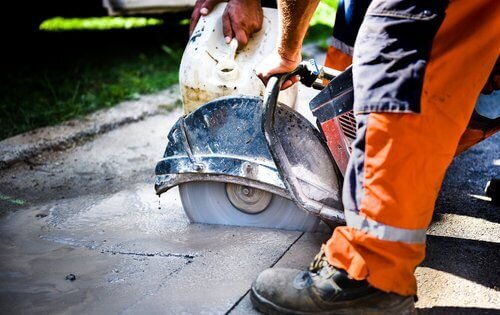
Can you use a concrete saw for concrete demolition? Yes, concrete saws are essential power tools for concrete work, including demolition. They are also fundamental for precise concrete cutting, preparing surfaces for concrete finishing, and even in projects involving concrete resurfacing. This guide will delve deep into how to use a concrete saw effectively and safely.
Image Source: images.squarespace-cdn.com
Choosing the Right Concrete Saw
Selecting the correct concrete saw is the first step towards efficient and safe operation. Different tasks call for different types of saws, and knowing their capabilities will save you time, effort, and potential hazards.
Types of Concrete Saws
Concrete saws come in various forms, each designed for specific applications. The two main categories are the dry concrete saw and the wet concrete saw.
Dry Concrete Saw
- Description: A dry concrete saw operates without water. It uses a high-speed rotating blade to cut through concrete.
- Pros:
- More portable and often lighter.
- No need for a water source, making it versatile for various locations.
- Faster for shallow cuts in some materials.
- Cons:
- Generates significant dust, requiring robust dust collection systems and respiratory protection.
- Blade wear can be higher due to heat buildup.
- Can be harder to control the cut line due to dust obscuring vision.
- Best For: Dry cutting of brick, asphalt, and cured concrete where dust control is manageable.
Wet Concrete Saw
- Description: A wet concrete saw uses a continuous flow of water to cool the concrete saw blade and suppress dust. This is a critical feature for safety and blade longevity.
- Pros:
- Significantly reduces airborne dust, creating a safer work environment.
- Cools the blade, prolonging its life and improving cutting performance.
- Lubricates the cut, making it smoother and easier.
- Cons:
- Requires a reliable water source and hose.
- Can create slurry, which needs proper disposal.
- Often heavier and less portable than dry saws.
- Best For: Deep cuts, prolonged cutting sessions, and when minimizing dust is a priority, such as in occupied buildings or residential areas. This type is often preferred for general concrete cutting.
Blade Selection: The Crucial Component
The concrete saw blade is arguably the most important part of the equation. Using the wrong blade can lead to poor performance, premature wear, and safety risks. The most common and effective blades for concrete are diamond blades.
Diamond Blades Explained
- Composition: Diamond blades consist of a steel core with diamond-impregnated segments brazed onto the edge. These diamond segments are the cutting elements.
- Types of Diamond Blades:
- Segmented Blades: Feature distinct segments with gaps. These are excellent for fast cutting and material removal, making them suitable for concrete demolition. The gaps help with cooling and chip removal.
- Continuous Rim Blades: Have a smooth, unbroken rim of diamond abrasive. They produce a cleaner, smoother cut, often preferred for precise concrete cutting where a clean edge is desired, perhaps for decorative concrete work or preparing for concrete finishing.
- Turbo Blades: A hybrid design with wavy or gulleted edges, offering a balance between the speed of segmented blades and the cleaner cut of continuous rim blades. They are good for general-purpose concrete cutting.
- Choosing the Right Diamond Blade:
- Abrasive Material: Consider the material you are cutting. Blades are often rated for specific materials like cured concrete, green concrete (freshly poured), asphalt, or masonry.
- Bond Type: The bond holding the diamonds to the segment affects how quickly worn diamonds are released, exposing new ones. Different bonds are suited for different hardnesses of material.
- Blade Diameter and Arbor Size: Ensure the blade matches the specifications of your concrete saw.
- Wet vs. Dry Use: Some diamond blades are designed specifically for wet cutting, while others can be used for dry cutting. Using a wet blade dry can cause it to overheat and fail prematurely.
Operating a Concrete Saw Safely: Prioritizing Your Well-being
Safety is paramount when operating any powerful tool, and a concrete saw is no exception. Familiarize yourself with these safety practices before you even start the engine.
Personal Protective Equipment (PPE)
- Eye Protection: Always wear safety glasses or goggles that meet ANSI Z87.1 standards. Flying debris is a significant hazard.
- Hearing Protection: Concrete saws are loud. Use earplugs or earmuffs to protect your hearing.
- Respiratory Protection: Especially crucial for dry cutting. Wear a high-quality dust mask or respirator (N95 or better) to prevent inhaling silica dust, which can cause serious lung diseases.
- Gloves: Durable work gloves protect your hands from abrasions and improve grip.
- Footwear: Steel-toed, slip-resistant boots are essential for foot protection and stability.
- Clothing: Wear long-sleeved shirts and long pants made of sturdy material to protect your skin from sparks and debris. Avoid loose clothing that could get caught in the blade.
Pre-Operation Checks
Before each use, perform a thorough inspection of your concrete saw:
- Blade Condition: Check the diamond blade for any signs of damage, such as cracks, chips, or excessive wear. Ensure it’s securely attached.
- Fluid Levels (for Wet Saws): Verify that the water reservoir is full or the water supply hose is properly connected and free of kinks.
- Power Source: Ensure the power cord (for electric saws) is in good condition and properly grounded. For gas-powered saws, check fuel and oil levels.
- Guards and Shields: Confirm that all safety guards are in place and functioning correctly. Never operate a saw with guards removed.
- Handles and Controls: Check that the handles are secure and all controls (throttle, on/off switch) operate smoothly.
- Work Area: Clear the area of any obstructions, flammable materials, or tripping hazards. Ensure good ventilation.
Safe Operating Procedures
- Start-Up:
- Electric Saws: Ensure the blade is clear of the material before plugging in and turning on the switch.
- Gas Saws: Place the saw on a stable surface. Engage the blade brake if available. Follow the manufacturer’s start-up procedure carefully.
- Cutting Technique:
- Controlled Depth: Don’t try to cut through the entire depth of the concrete in one pass. Make multiple passes, gradually increasing the depth. This reduces strain on the saw and blade, and prevents overheating.
- Steady Pressure: Apply consistent, moderate pressure. Forcing the saw will not speed up the process and can damage the blade or motor.
- Maintain Control: Keep a firm grip on both handles. Stand with a balanced stance to absorb vibrations and maintain control.
- Cutting Direction: Generally, cut into the material from right to left (if facing the blade). However, always refer to your saw’s manual, as some manufacturers may recommend a different direction for specific models or blades.
- Avoid Binding: Never allow the blade to get pinched or bind in the cut. If it does, turn off the saw immediately and carefully free the blade.
- Cooling and Dust Control (Wet Saws): Ensure a steady flow of water is directed at the cutting area. The water should wash away debris and keep the blade cool. For dry saws, if dust becomes unmanageable, stop and use a vacuum or broom to clear the area.
- During Operation:
- Watch for Kickback: Kickback is a sudden, violent upward and backward thrust of the saw. It can occur if the blade binds. Maintain control and avoid situations that could lead to binding.
- Blade Clearance: As you complete a cut, ensure the blade clears the material and the saw is turned off before setting it down.
- Never Leave Running: Do not leave a running concrete saw unattended.
- Shut-Down:
- Turn off the saw.
- Allow the blade to stop completely before moving or setting down the saw.
- Disconnect the power source (unplug electric saws).
- For wet saws, turn off the water supply.
Efficient Concrete Cutting Techniques
Efficiency comes from a combination of the right tools, proper technique, and smart planning.
Planning Your Cuts
- Marking: Clearly mark your cut lines using a chalk line or marker. For precise cuts, consider using a straight edge as a guide.
- Scoring: For deep cuts or when trying to prevent chipping, score the concrete first. Make a shallow initial cut along your marked line, then follow up with deeper passes. This is particularly helpful for tasks related to concrete finishing or when the aesthetic of the cut is important.
- Cut Depth Strategy: As mentioned, don’t try to cut too deep at once. Plan for multiple passes. For example, if you need a 3-inch deep cut, you might make passes at 1 inch, then 2 inches, and finally 3 inches.
- Expansion Joints: When cutting control or expansion joints, ensure they are spaced correctly to prevent random cracking.
Optimizing Blade Performance
- Match Blade to Material: Using a diamond blade designed for the specific type of concrete you’re cutting is crucial for efficiency. A blade meant for asphalt will perform poorly on hard, aggregate-rich concrete.
- Keep it Cool: For wet saws, maintain adequate water flow. For dry saws, pause periodically to let the blade cool down. Overheating dulls the diamonds and reduces cutting speed.
- Don’t Overload: Avoid forcing the saw. Let the blade do the work. Pushing too hard will slow you down and damage the blade.
- Blade Maintenance: Inspect blades regularly. If you notice reduced performance, it might be time to switch to a fresh blade or have the current one dressed (sharpened) if it’s designed for it.
Managing Dust and Debris
- Wet Cutting: This is the most effective way to manage dust. The water binds with the concrete dust to create a slurry.
- Dust Collection Systems: For dry cutting, ensure your saw has an effective dust collection port that is connected to a compatible vacuum. Regular emptying of the dust collector is important for maintaining airflow and suction.
- Site Hygiene: Keep the work area clean. Sweep or vacuum dust and slurry as you go. This improves visibility and reduces the risk of slips.
Advanced Concrete Saw Applications
Concrete saws are versatile tools used in a variety of construction and renovation projects.
Concrete Demolition
When it comes to concrete demolition, a powerful concrete saw, often a walk-behind model with a larger diamond blade, is indispensable.
- Controlled Breakage: Saws allow for precise cuts before breaking, which helps manage the demolition process. You can cut out specific sections of a slab or wall, making removal easier and safer.
- Reducing Spalling: By scoring and making controlled cuts, you can minimize the uncontrolled shattering and spalling of concrete that often occurs with impact-based demolition methods.
- Creating Access: For opening up areas in existing structures, concrete saws are used to cut precise openings for doors, windows, or utility lines.
Concrete Resurfacing and Finishing Preparations
Before concrete resurfacing or applying coatings, the existing surface often needs preparation. Concrete saws play a key role here.
- Edge Cutting: Saws can create clean, straight edges for new concrete pours or repairs.
- Crack Chasing: For cracked concrete that is to be repaired, a concrete saw with a narrow blade can be used to “chase” the crack, widening and deepening it to create a clean channel for repair material. This is a critical step before applying fillers or coatings.
- Surface Preparation: While a concrete grinder is often the primary tool for large-scale surface preparation, a concrete saw can be used to cut back edges or create keyways for new overlays.
Maintenance and Troubleshooting
Proper maintenance ensures your concrete saw remains a reliable tool and extends its lifespan.
Routine Maintenance
- Cleaning: After each use, thoroughly clean the saw. Remove all concrete dust, slurry, and debris from the housing, air vents, and blade guard.
- Blade Care: Inspect blades. For wet saws, rinse the blade to remove residual slurry. Store blades properly to prevent damage.
- Lubrication: Refer to your owner’s manual for specific lubrication points for moving parts.
- Filter Cleaning (Gas Saws): Keep air filters clean to ensure proper engine performance.
- Spark Plugs (Gas Saws): Check and clean or replace spark plugs as needed.
Common Troubleshooting Issues
- Saw Overheating:
- Cause: Forcing the cut, dull blade, insufficient cooling (wet saw) or dust clogging (dry saw).
- Solution: Reduce cutting pressure, use a sharper blade, ensure adequate water flow, or clear dust collection.
- Blade Not Cutting Efficiently:
- Cause: Dull blade, wrong blade for the material, or blade binding.
- Solution: Replace or dress the blade, use the correct blade type, ensure proper cutting technique to avoid binding.
- Saw Vibrating Excessively:
- Cause: Loose blade, damaged blade, or bent arbor.
- Solution: Ensure the blade is securely tightened, inspect for blade damage, and have the arbor checked by a professional if suspected damage.
- Engine Won’t Start (Gas Saws):
- Cause: Fuel issues, spark plug problems, or air intake blockages.
- Solution: Check fuel quality and level, inspect/replace spark plug, clean air filter.
Frequently Asked Questions (FAQ)
Q1: What is the difference between a wet and dry concrete saw?
A wet concrete saw uses water for cooling and dust suppression, while a dry concrete saw cuts without water, producing significant dust.
Q2: Can I use a regular wood saw blade on concrete?
No, absolutely not. Regular saw blades are not designed for the hardness and abrasiveness of concrete and will be destroyed instantly, posing a severe safety risk. Only use specialized diamond blades designed for concrete.
Q3: How deep can a concrete saw cut?
The maximum cutting depth depends on the diameter of the concrete saw blade and the saw’s power. Larger blades and more powerful saws can cut deeper. Always consult your saw’s specifications.
Q4: What is the best way to minimize dust when cutting concrete?
Using a wet concrete saw with continuous water flow is the most effective method. If using a dry saw, a high-quality dust collection system connected to a HEPA vacuum is essential, along with appropriate respiratory protection.
Q5: How often should I replace my concrete saw blade?
Blade life varies greatly depending on the material being cut, the saw’s power, cutting technique, and the quality of the blade. Inspect your blade regularly. If you notice a significant decrease in cutting speed or efficiency, it’s likely time for a replacement.
Q6: Is it safe to cut rebar with a concrete saw?
Yes, concrete saws equipped with appropriate diamond blades can cut through rebar embedded in concrete. However, it will increase blade wear and can cause the blade to bind if the rebar is encountered unexpectedly. Ensure your blade is rated for both concrete and metal if this is a frequent requirement.
Q7: Can I use a concrete saw for concrete resurfacing preparation?
Yes, a concrete saw is useful for preparing surfaces for concrete resurfacing by cutting clean edges or “chasing” cracks to create channels for repair materials. However, for general surface leveling or removal of old coatings, a concrete grinder is usually the more appropriate tool.
Q8: What kind of maintenance does a concrete saw need?
Routine maintenance includes cleaning the saw after each use, checking and maintaining the blade, and performing regular checks on filters, spark plugs, and lubrication points as per the manufacturer’s manual.
Mastering the use of a concrete saw is a skill that combines knowledge of the tool, respect for its power, and adherence to safety protocols. By selecting the right saw and diamond blade, employing safe operating practices, and understanding efficient cutting techniques, you can tackle a wide range of projects, from precise concrete cutting and minor repairs to significant concrete demolition and preparation for concrete resurfacing. Always prioritize safety, and your concrete work will be more effective and far less risky.