
Can you sharpen drill bits with a bench grinder? Yes, you absolutely can sharpen drill bits with a bench grinder, and doing so can save you money and improve your drilling efficiency. This guide will walk you through the process of reconditioning drill bits using a bench grinder, ensuring they perform like new. We’ll cover everything from selecting the right wheel to achieving the proper drill bit angle for various materials.
Drill bits are essential tools for any DIYer or professional tradesperson. Over time, even the best drill bits become dull, making them less effective and more prone to breaking. Fortunately, with a bench grinder and a little know-how, you can bring those grinding dulled drill bits back to life. This process is a key part of drill bit maintenance, extending the lifespan of your valuable tools.
This comprehensive guide aims to make sharpening twist drills on a bench grinder accessible and straightforward, even for beginners. We’ll break down each step, providing clear instructions and helpful tips to achieve a sharp, functional cutting edge. Whether you’re sharpening metal drill bits or bits for wood, this guide will serve you well.
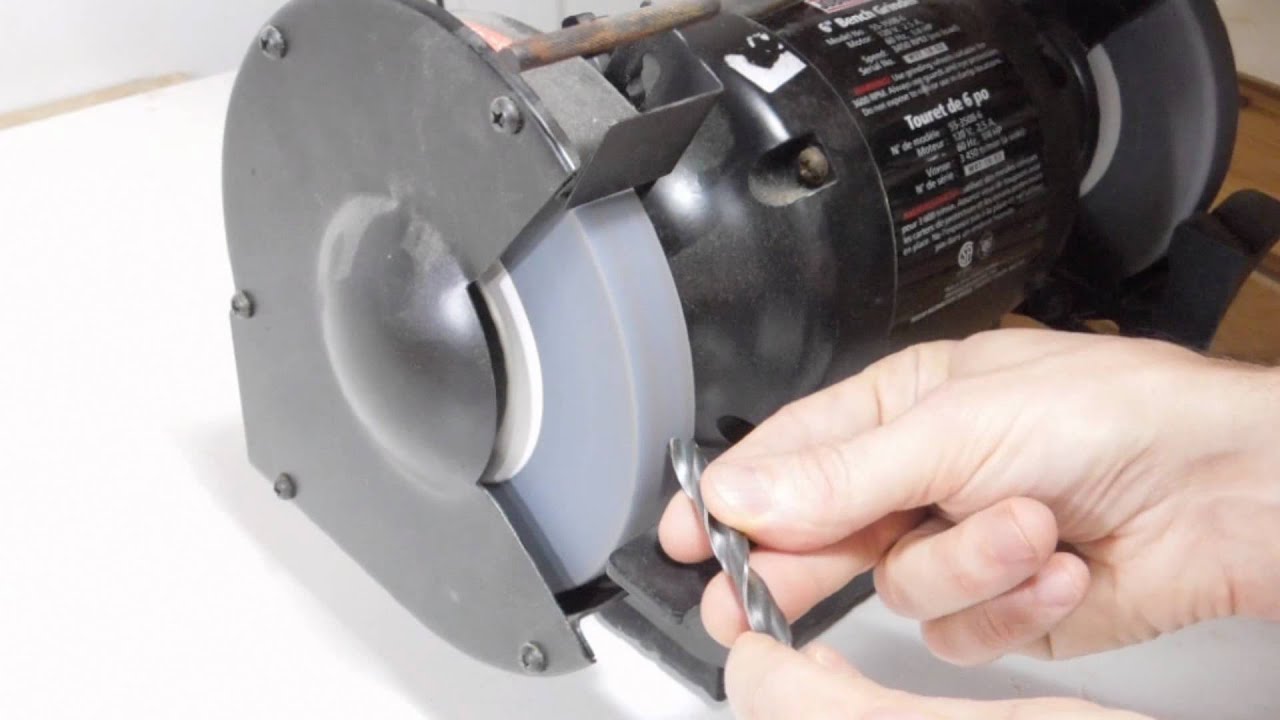
Image Source: i.ytimg.com
Why Sharpen Your Drill Bits?
Sharpening your drill bits offers several significant advantages:
- Improved Drilling Performance: Sharp drill bits cut through materials cleanly and efficiently, reducing the effort required and producing smoother holes.
- Reduced Risk of Breakage: Dull bits require more force, increasing the chance of snapping the bit, especially in harder materials.
- Cost Savings: Regularly sharpening your drill bits means you won’t need to buy new ones as often, saving you money in the long run.
- Enhanced Safety: A sharp bit is less likely to slip or bind, reducing the risk of injury.
- Better Hole Quality: Sharp bits create precise, clean holes, which is crucial for many projects, especially those involving fasteners or tight tolerances.
Essential Tools and Materials
Before you begin sharpening twist drills, ensure you have the following:
- Bench Grinder: A reliable bench grinder is your primary tool.
- Drill Bits: The dulled bits you intend to sharpen.
- Safety Glasses/Face Shield: Crucial for protecting your eyes from sparks and debris.
- Gloves: To protect your hands from heat and sharp edges.
- Bench Grinder Jig for Drill Bits (Optional but Recommended): This specialized jig helps maintain a consistent drill bit grinding angle. While not strictly necessary, it significantly improves accuracy and ease of use, especially for beginners.
- Fine-Grit Bench Grinder Wheel: A finer grit wheel is essential for sharpening metal drill bits and achieving a good cutting edge without removing too much material. Consider a white or pink aluminum oxide wheel.
- Watering Trough or Bucket of Water: To cool the drill bit periodically and prevent overheating, which can ruin the temper of the metal.
- Marker or Light Pencil: To mark the cutting edge if needed.
- Bench Vise (Optional): For a more secure grip on larger drill bits.
Preparing Your Bench Grinder
Proper preparation is key to safe and effective drill bit sharpening.
Wheel Selection
The type of drill bit grinding wheel you use significantly impacts the outcome.
- Grits: For sharpening drill bits, a medium-grit wheel (around 60-80 grit) is often used for initial shaping, followed by a fine-grit wheel (120-180 grit) for refining the cutting edge. If your grinder has multiple wheels, use the finer one for sharpening. If you only have one wheel, a medium-fine grit (around 80 grit) can work for general-purpose sharpening.
- Material: Aluminum oxide wheels are common and effective for sharpening steel drill bits. White or pink aluminum oxide wheels are generally preferred for their cooler grinding action and finer finish. Silicon carbide wheels can also be used but tend to be more aggressive.
Wheel Dressing
Before sharpening, ensure your drill bit grinding wheel is clean and properly dressed. A dressing tool will remove any glazed-over material and create a fresh, sharp grinding surface. A wheel dresser also helps to true up a warped wheel, ensuring a flat grinding surface.
Safety First!
- Eye Protection: Always wear safety glasses or a full face shield. Sparks and metal fragments can fly off during grinding.
- Hand Protection: Wear sturdy gloves to protect your hands from heat and sharp edges.
- Clothing: Avoid loose clothing that could get caught in the grinder.
- Machine Guards: Ensure all safety guards are in place on the bench grinder.
- Stability: Make sure the bench grinder is securely mounted to a workbench or stand to prevent it from moving during operation.
The Art of Sharpening Twist Drills
Sharpening twist drills involves reforming the cutting edges at the ends of the bit. The goal is to create two identical cutting lips that are at the correct angle to the flute and the drill bit’s axis.
Understanding the Drill Bit’s Anatomy
To sharpen effectively, you need to know the key parts of a drill bit:
- Point: The conical end that drills into the material.
- Cutting Lips (or Cutting Edges): The sharp edges at the very tip of the point.
- Heel: The trailing edge of the cutting lip.
- Flutes: The spiral grooves that channel away chips and allow coolant to reach the cutting edge.
- Chisel Edge: The blunt edge at the center of the drill bit’s point, which doesn’t cut but rather pushes material aside.
The Proper Drill Bit Angle
Achieving the proper drill bit angle is critical for efficient cutting. The most common angle for the cutting lips is 118 degrees. This angle is suitable for most soft metals and wood. For harder materials like steel, a 135-degree angle is often preferred, as it provides a more aggressive cut and can reduce heat buildup.
The angle of the heel, known as the clearance angle, is also important. This angle ensures the heel doesn’t rub against the material as the bit rotates, which would create friction and heat. A typical clearance angle is around 12-15 degrees.
Sharpening Method 1: Freehand Grinding
This method requires practice and a steady hand.
- Setup: Position the tool rest of your bench grinder close to the wheel (about 1/8 inch).
- Grip: Hold the drill bit firmly in your dominant hand, with your other hand supporting it.
- Angle: Place the drill bit’s cutting lip against the drill bit grinding wheel. You need to tilt the drill bit so that you are grinding the face of the cutting lip. This angle is crucial for achieving the correct drill bit grinding angle.
- Imagine the drill bit pointing straight up. You want to grind the face of the cutting lip that will be doing the cutting as the bit spins.
- The angle relative to the axis of the drill bit for the cutting lip itself is about 59 degrees (half of the 118-degree point angle).
- The clearance angle is achieved by slightly rotating the drill bit as you grind, so the heel lifts away from the wheel.
- Grind and Cool: Apply light pressure and move the drill bit back and forth gently along the wheel face. Grind for a few seconds, then dip the bit in water to cool it. Overheating can anneal the steel, making it soft and unusable.
- Repeat on the Other Side: Rotate the drill bit to the opposite cutting lip and repeat the process. Aim to remove the same amount of material from both lips to maintain symmetry.
- Check for Symmetry and Sharpness: Periodically check the two cutting lips. They should be equal in length and shape. The cutting edge should appear bright and sharp, with no dull spots. You can use a magnifying glass to inspect the edge.
- Grind the Chisel Edge: The chisel edge is formed at the center of the bit. You want to create a slight bevel on each side of the chisel edge. Grind the faces of the drill bit point slightly to narrow the chisel edge. This is a delicate step; you’re not trying to create a sharp cutting edge here, but rather to improve the bit’s ability to penetrate material. Grind from the tip of the cutting lip towards the center.
- Honing (Optional): For a truly sharp edge, you can lightly hone the cutting lips on a fine-grit sharpening stone or a specialized sharpening system. This process is sometimes referred to as how to hone drill bits and refines the cutting edge.
Sharpening Method 2: Using a Bench Grinder Jig for Drill Bits
A bench grinder jig for drill bits simplifies the process and dramatically improves consistency. These jigs are designed to hold the drill bit at the correct angles automatically.
- Jig Setup: Attach the jig to your bench grinder according to its instructions. Ensure the jig is set for the desired point angle (e.g., 118 or 135 degrees).
- Insert Drill Bit: Secure the drill bit in the jig’s chuck or clamp.
- Grind: Bring the drill bit to the drill bit grinding wheel. The jig will guide the bit, presenting the cutting lip at the correct angle to the wheel.
- Rotate and Grind: Rotate the drill bit within the jig, or advance it along the wheel, following the jig’s design. Grind for a few seconds, then cool the bit in water.
- Switch Sides: Most jigs have a mechanism to easily switch to the other cutting lip, ensuring symmetry.
- Chisel Edge: Some jigs also assist in creating the correct bevel on the chisel edge.
- Inspect: As with freehand grinding, inspect the bit for sharpness and symmetry.
Sharpening Specific Drill Bit Types
- Sharpening Metal Drill Bits: For sharpening metal drill bits, it’s especially important to avoid overheating. Dip the bit in water frequently. A 118-degree or 135-degree point angle is typically used, depending on the metal.
- Wood Drill Bits: Wood bits generally have spurs and a pilot point. The spurs are critical for clean cuts. When sharpening wood bits, focus on the cutting edges of the spurs and the main cutting lips. Be careful not to grind away the spurs themselves. A slightly coarser grit wheel might be acceptable for wood bits, but a fine grit will provide a cleaner cut.
Common Mistakes to Avoid
- Overheating: This is the most common mistake. Overheated bits lose their hardness and will not cut effectively. Cool frequently.
- Removing Too Much Material: You only need to remove enough metal to restore a sharp edge. Aggressive grinding removes valuable material and can alter the bit’s geometry.
- Inconsistent Angles: Uneven grinding on both lips will cause the bit to cut off-center, leading to oversized holes and increased stress on the bit.
- Not Cooling the Wheel: A hot wheel can quickly overheat your drill bit. Keep the wheel wet if possible, or ensure you are dipping the bit frequently.
- Ignoring Safety: Grinding produces heat and sharp debris. Always prioritize safety.
Maintaining Your Sharpened Bits
Once your drill bits are sharp, proper drill bit maintenance continues:
- Storage: Store drill bits in a case or rack to protect their sharp edges.
- Cleaning: Clean bits after use to remove debris that can cause corrosion.
- Lubrication: For metal drilling, using a cutting fluid or lubricant will extend the life of your sharpened bits and improve performance.
Table: Drill Bit Angles for Different Materials
| Material | Recommended Point Angle | Recommended Clearance Angle |
|---|---|---|
| Soft Metals (Aluminum, Brass) | 118° | 12-15° |
| Medium Metals (Steel) | 118° – 135° | 12-15° |
| Hard Metals (Stainless Steel, Titanium) | 135° | 12-15° |
| Wood | 118° | 12-15° |
| Plastics | 90° – 118° | 5-10° |
Note: These are general guidelines. Specific applications might require slight variations.
Advanced Techniques: Sharpening Different Bit Types
While this guide focuses on twist drills, the principles can be extended.
Sharpening Brad-Point Bits
Brad-point bits have a central spur that guides the bit and a primary cutting edge. When sharpening, focus on:
- The Spur: Gently grind the outer edges of the spur to a fine point, ensuring it remains sharp without being ground away.
- The Primary Cutting Edges: Grind these similar to standard twist drills, maintaining the correct proper drill bit angle.
Sharpening Spade Bits
Spade bits have flat cutting edges.
- The Leading Edge: Grind the bevel of the leading cutting edge. Use a fine file or a bench grinder with a very light touch. The goal is to restore the sharp angle without creating a radius.
- The Side Cutting Edges: These also need to be sharpened. Maintain the original angle.
Reconditioning Drill Bits
Reconditioning drill bits can also involve minor repairs. If a bit has a slightly chipped cutting edge, you might be able to carefully grind out the chip and restore the cutting profile. However, if the damage is significant, it might be better to consider the bit beyond repair or to use a specialized sharpening service.
Frequently Asked Questions (FAQ)
Q: How often should I sharpen my drill bits?
A: This depends on how often you use them and the materials you drill. If you notice bits struggling to cut, making a “screeching” noise, or producing rough holes, it’s time to sharpen.
Q: Can I sharpen carbide drill bits on a bench grinder?
A: Generally, no. Carbide is very hard and brittle. Sharpening carbide typically requires a diamond-coated grinding wheel, as standard abrasive wheels will wear out quickly and can chip the carbide. Using a standard bench grinder on carbide bits will likely damage both the bits and the wheel.
Q: What is the best bench grinder jig for drill bits?
A: The “best” jig depends on your budget and specific needs. Popular and well-regarded options include those from Drill Doctor, Drev-On, and various brands offering universal drill bit sharpening attachments. Research reviews and features to find one that suits you.
Q: How do I know if I’ve removed too much material?
A: If you significantly reduce the diameter of the drill bit’s flute, you may have removed too much material. The goal is to just sharpen the cutting edge, not to reshape the entire bit.
Q: Is it safe to grind drill bits without a jig?
A: Yes, it is safe if you follow proper safety procedures and take your time to maintain consistent angles. However, jigs make the process much easier and more accurate, especially for beginners.
Q: What is the difference between sharpening and honing drill bits?
A: Sharpening involves removing material to create a new cutting edge. Honing is a lighter process that refines an existing edge, making it sharper and smoother without significant material removal. You can hone a freshly sharpened bit for an even keener edge.
By following these guidelines and practicing patience, you can effectively restore your dulled drill bits to sharp, cutting tools using a bench grinder. This skill is invaluable for any serious DIYer or professional, contributing to better results and a more efficient workflow. Remember that consistent drill bit maintenance is key to longevity and performance.