
Can you replace a scroll saw blade yourself? Yes, absolutely! Replacing a scroll saw blade is a straightforward process that most woodworkers can master with a little guidance. This comprehensive guide will walk you through every step, ensuring a smooth and successful scroll saw blade replacement. We’ll cover everything from identifying the right blade to securely installing it and getting back to your creative projects.
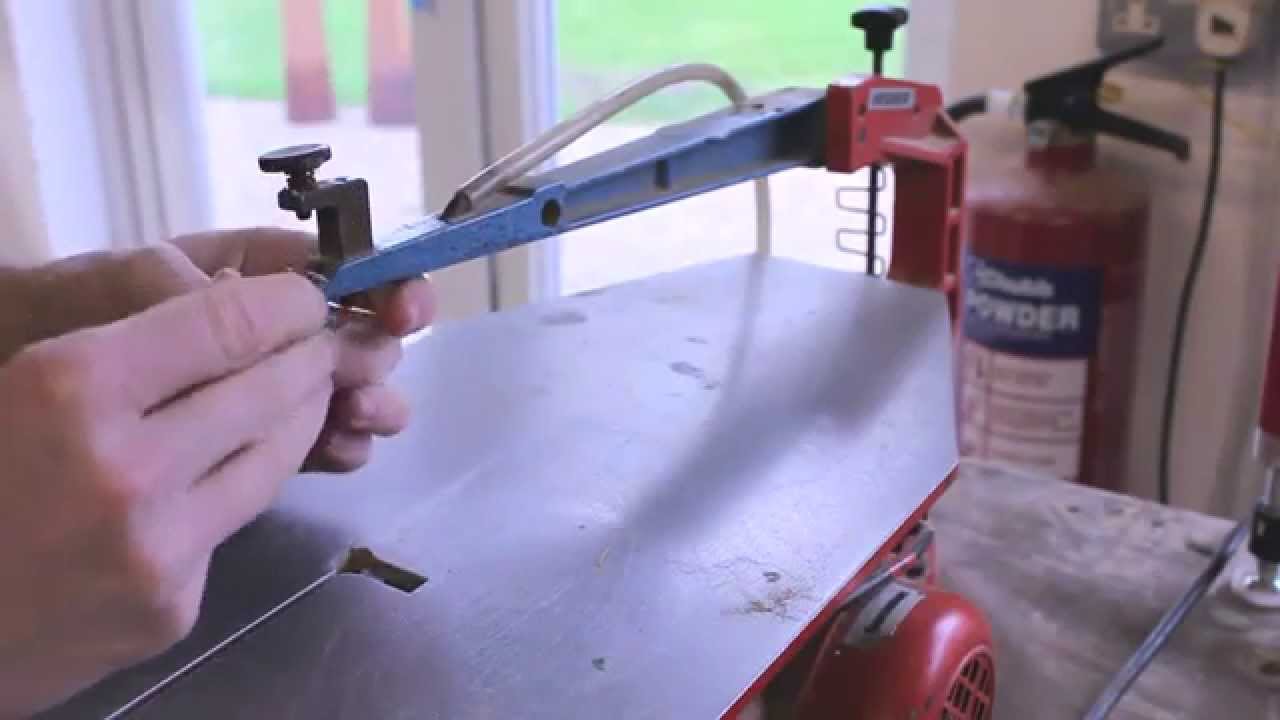
Image Source: i.ytimg.com
Why Changing Your Scroll Saw Blade is Important
Your scroll saw blade is the heart of your cutting operation. A dull or damaged blade won’t just make your work harder; it can lead to poor cuts, frustration, and even safety hazards. Knowing how to perform a scroll saw blade replacement correctly ensures you’re always working with optimal cutting power. It’s a fundamental skill for anyone who uses a scroll saw regularly.
Signs Your Blade Needs Replacing
How do you know when it’s time for a changing scroll saw blade? Look out for these tell-tale signs:
- Rough or Jagged Cuts: If your cuts are no longer clean and smooth, even on simple materials, your blade is likely dull.
- Excessive Heat: A dull blade requires more force to cut, generating more friction and heat. The blade or the wood becoming unusually hot is a bad sign.
- Blade Wobble or Vibration: If the blade feels unstable or vibrates excessively during operation, it might be damaged or improperly tensioned.
- Difficulty Cutting: The saw seems to struggle, requiring you to push harder than usual.
- Broken Blades: Obvious signs of damage like bent or broken teeth.
Gathering Your Supplies: What You Need for the Job
Before you start installing scroll saw blade components, make sure you have everything ready. This makes the process much smoother.
Essential Tools and Materials
- New Scroll Saw Blade: This is the most crucial item! We’ll discuss choosing the right blade later.
- Safety Glasses: Always protect your eyes when working with tools.
- Gloves (Optional): Some people prefer gloves for a better grip or to keep their hands clean.
- Small Wrench or Hex Key: Your scroll saw will likely come with a specific tool for blade tensioning.
- Soft Cloth or Brush: For cleaning around the blade holder.
- Rag: To wipe down the new blade.
The Step-by-Step Guide to Removing Your Old Scroll Saw Blade
Removing scroll saw blade components is the first physical step in the process. Follow these steps carefully:
Step 1: Power Down and Unplug!
Safety first, always! Before touching anything on your scroll saw, ensure the power is turned OFF. Even better, unplug the saw from the wall outlet. This prevents accidental startup while you’re working.
Step 2: Lower the Blade Tension
Most scroll saws have a tensioning knob or lever, usually located near the top arm of the saw. Turn this knob counter-clockwise (or move the lever) to release the tension on the current blade. You’ll feel the tension decrease significantly. This is vital for safe blade removal and prevents strain on your hands.
Step 3: Locate the Blade Clamps
Scroll saws typically have two main points where the blade is secured:
- The Upper Blade Holder: This is usually found on the upper arm of the saw.
- The Lower Blade Holder: This is typically located on the saw’s base table.
Step 4: Loosen the Blade Clamps
Each blade holder will have a mechanism to secure the blade. This is often a small knob or a set screw that tightens onto the blade’s tang (the end part of the blade).
- For Knob-Type Clamps: Turn the knob counter-clockwise until it is loose enough to allow the blade to slide out. You don’t need to remove the knob completely.
- For Set Screw Clamps: Use the appropriate hex key or small wrench to loosen the set screw by turning it counter-clockwise. Again, you only need to loosen it enough to free the blade.
Step 5: Remove the Old Blade
With the tension released and the clamps loosened, gently slide the old blade out of both the upper and lower blade holders. Be mindful that the blade might still have some residual tension or be slightly bent, so handle it with care. Dispose of the old blade safely, perhaps by wrapping it in a cloth or placing it in a designated sharps container.
The Step-by-Step Guide to Installing Your New Scroll Saw Blade
Now that the old blade is out, it’s time for installing scroll saw blade components. This is where you’ll put in your fresh blade.
Step 1: Prepare the New Blade
Take your new scroll saw blade. Many new blades have a light coating of oil to prevent rust. You might want to wipe this off with a clean, soft cloth. This ensures a good grip in the clamps and prevents any oily residue from transferring to your workpiece.
Step 2: Orient the Blade Correctly
Scroll saw blades have teeth that face in a specific direction to cut effectively.
- For most scroll saws: The teeth should point downwards, towards the table. This means the blade will cut on the downstroke.
- For some specialized cuts or blades: The orientation might differ, but the downward-pointing teeth are the most common.
Step 3: Insert the Blade into the Lower Holder
Carefully insert the tang of the new blade into the lower blade holder. Make sure it’s seated correctly in the slot designed for it.
Step 4: Insert the Blade into the Upper Holder
Now, guide the other end of the blade up to the upper blade holder. You might need to slightly flex the blade to get it into place. This is normal.
Step 5: Secure the Blade Clamps
Once the blade is positioned in both holders, it’s time to secure them.
- For Knob-Type Clamps: Turn the knobs clockwise until they are snug against the blade tang. Don’t overtighten initially; we’ll fine-tune the tension next.
- For Set Screw Clamps: Use your hex key or wrench to tighten the set screws clockwise until they are firm against the blade tang.
Step 6: Apply Proper Tension (Tensioning Scroll Saw Blade)
This is a critical step in tensioning scroll saw blade for optimal performance.
- Gradually Increase Tension: Start by turning the tensioning knob clockwise (or moving the lever) to increase tension.
- Listen and Feel: As you increase tension, the blade will straighten out and become taut. You should hear a distinct “ping” or “twang” sound when the blade reaches proper tension. The blade should be tight enough not to deflect sideways easily, but not so tight that it feels like it’s about to snap.
- Refer to Your Manual: If you’re unsure about the exact tension, consult your scroll saw’s owner’s manual. It often provides guidance on how to achieve the correct tension. A good rule of thumb is that the blade should feel taut and make a clear ringing sound when plucked lightly. Too little tension leads to blade wander and rough cuts; too much can break the blade.
- Check for Wobble: Gently try to wiggle the blade sideways. It should have very little give.
Step 7: Final Check and Test Cut
Once you believe the tension is correct, double-check that both the upper and lower clamps are snug.
- Plug In and Power On: Plug your scroll saw back into the power outlet and turn it on.
- Run Briefly: Let the saw run at a low speed for a few seconds. Listen for any unusual noises or vibrations.
- Make a Test Cut: Take a scrap piece of the material you intend to work with and make a simple test cut. Observe the quality of the cut. If it’s clean and the blade feels stable, you’ve successfully replaced and tensioned your blade! If not, repeat the tensioning process.
Choosing the Right Scroll Saw Blade: A Comprehensive Guide
The type of scroll saw blade types you choose significantly impacts your cutting experience and results. There’s no single “best” blade; the ideal choice depends on the material you’re cutting and the type of cut you want to make.
Understanding Blade Anatomy
Before diving into types, let’s look at key blade features:
| Feature | Description | Impact on Cutting |
|---|---|---|
| TPI (Teeth Per Inch) | The number of teeth along one inch of the blade. Higher TPI means smaller teeth and more of them; lower TPI means larger teeth and fewer of them. | Higher TPI: Smoother cuts, suitable for thinner materials and detailed work. Lower TPI: Faster cuts, suitable for thicker materials. |
| Blade Width | How wide the blade is from edge to edge. | Narrower blades: Better for intricate curves and tight turns. Wider blades: Better for straight cuts and gentle curves. |
| Tooth Type | Different tooth configurations exist, like standard skip-tooth, double-skip-tooth, reverse teeth, and specialized metal-cutting teeth. | Standard: All-purpose. Skip-tooth: Reduced clogging, good for wood. Double-skip: Even better for thick wood. Reverse: Cleaner bottom. |
| Blade Material | Blades can be made from carbon steel, high-speed steel (HSS), or bi-metal. | Carbon steel: Affordable, good for softwoods. HSS: Harder, better for hardwoods and plastics. Bi-metal: Most durable, best for metal. |
| Blade Length | Most scroll saw blades are the same length (typically 5 inches), but some specialized saws might use different lengths. Always check your saw’s requirements. | Consistency ensures the blade fits your saw. |
| Blade Thickness | How thick the blade material is. | Thicker blades are more rigid, thinner blades flex more for tight curves. |
Common Scroll Saw Blade Types and Their Uses
Here’s a breakdown of popular best scroll saw blades:
1. Standard Tooth Blades
- Description: These have closely spaced, sharp teeth that face forward.
- TPI Range: Typically 7 to 15 TPI.
- Best For: General purpose cutting, softwoods, and medium-density hardwoods. They offer a good balance between cutting speed and finish quality.
2. Skip-Tooth Blades
- Description: These blades have a gap between every other tooth.
- TPI Range: Often around 3.5 to 7 TPI.
- Best For: Cutting thicker woods (over 3/4 inch) and softer woods. The gaps help clear sawdust efficiently, preventing the blade from binding and overheating. They produce a faster cut but can leave a rougher finish.
3. Double-Skip-Tooth Blades
- Description: These feature two teeth, a gap, two teeth, a gap, and so on.
- TPI Range: Usually 3 to 5 TPI.
- Best For: Cutting very thick or soft woods. They offer excellent chip clearance for aggressive cutting. The finish will be rougher.
4. Reverse Tooth Blades
- Description: The teeth on these blades are angled slightly backward in addition to pointing down.
- TPI Range: Varies, often similar to standard or skip-tooth blades.
- Best For: Achieving a cleaner cut on the bottom surface of your workpiece. The reverse teeth help to pull chips up and away from the underside, reducing tear-out. Excellent for ornamental work where the bottom finish is important.
5. Pin-End Blades
- Description: These blades have a small pin on each end that fits into specialized holders on some older or simpler scroll saws.
- Best For: Saws that specifically require pin-end blades. Most modern saws use plain-end blades.
6. Spiral Blades
- Description: These blades are unique, with teeth running all the way around.
- Best For: Cutting in multiple directions without turning the workpiece. Ideal for intricate 3D carving or cutting complex shapes from multiple angles. They leave a rougher finish and require more practice to control.
7. Metal-Cutting Blades
- Description: These blades have very fine teeth and are made of harder materials like HSS or bi-metal.
- TPI Range: Often 20 TPI and higher.
- Best For: Cutting thin metals, plastics, and other hard materials. Using the correct speed and lubricant is crucial when cutting metal.
8. Jeweler’s Blades / Fret Saw Blades
- Description: These are extremely fine-toothed blades designed for very delicate work.
- TPI Range: Can be 20 TPI up to 50+ TPI.
- Best For: Intricate fretwork, jewelry making, and extremely fine detail in wood or soft metals.
Selecting Blades Based on Material
| Material Type | Recommended Blade Type | TPI Range | Notes |
|---|---|---|---|
| Softwoods | Skip-tooth, Double-skip-tooth, Standard tooth | 3.5 – 7 TPI | Skip-tooth clears chips well. Standard tooth for finer work. |
| Hardwoods | Standard tooth, Reverse tooth, Fine skip-tooth | 7 – 15 TPI | Standard for general use. Reverse for cleaner bottom cuts. Fine skip-tooth for thicker hardwoods. |
| Plywood | Standard tooth, Fine skip-tooth | 7 – 15 TPI | Use finer teeth for cleaner cuts and to avoid delamination. |
| Veneer | Very fine standard tooth, Jeweler’s blade | 20+ TPI | Extremely fine teeth are needed to prevent chipping and splintering. |
| Plastics | Standard tooth (sharp), HSS, Metal-cutting blade | 10 – 20 TPI | Use sharp, standard blades or specialized plastic/metal blades. Consider cooling to prevent melting. |
| Thin Metal | Metal-cutting blade, HSS, Bi-metal | 20+ TPI | Requires high TPI and durable blade material. Lubrication is often recommended. |
| Intricate Curves | Narrow blade width, Reverse tooth, Fine skip-tooth | Varies | Narrow blades allow for tighter turns. Reverse tooth helps with bottom finish during complex cuts. |
| Thick Materials | Skip-tooth, Double-skip-tooth | 3 – 5 TPI | Prioritize chip clearance for efficient cutting and reduced binding. |
Scroll Saw Blade Maintenance and Care
Proper scroll saw blade maintenance extends the life of your blades and ensures consistent performance.
Keeping Blades Clean
- After each use, especially when cutting resinous woods or plastics, wipe down your blade with a clean cloth to remove sap or residue.
- A soft brush can be used to remove sawdust that may have accumulated on the teeth.
Proper Storage
- Store your scroll saw blades in their original packaging or a designated blade organizer. This protects the teeth from damage and prevents rust.
- Avoid storing blades loose in a toolbox where they can bump against other metal objects.
Sharpening Scroll Saw Blades (Is it Possible?)
Scroll saw blade sharpening is generally not a practical or cost-effective endeavor for most users. Scroll saw blades are inexpensive and delicate.
- Why it’s difficult: The small size and the specialized tooth geometry make it very hard to resharpen effectively at home.
- Cost vs. Benefit: The time and effort required to attempt sharpening often outweigh the cost of buying new blades.
- Alternative: Invest in good quality blades and replace them when they become dull. For exceptionally fine work, consider buying blades specifically designed for precision.
Troubleshooting Common Scroll Saw Blade Issues
Even with the best practices, you might encounter problems. Here are some common issues and solutions:
Blade Breaking During Operation
- Cause: Too much tension, incorrect blade type for the material, dull blade forcing the saw, binding due to insufficient chip clearance, or a damaged blade.
- Solution: Check and adjust blade tension (refer to tensioning scroll saw blade section). Ensure you’re using the appropriate blade for the material. Make sure the blade teeth are sharp and clear sawdust properly. Inspect the blade for any defects before installation.
Blade Wobbling or Wandering
- Cause: Insufficient blade tension, dull blade, blade not seated properly in the holders, or the blade is too thin for the material or cut complexity.
- Solution: Increase blade tension slightly. Try a sharper blade or one with more TPI for finer cuts. Ensure the blade is securely clamped at both ends. Use a wider or stiffer blade if necessary.
Rough or Jagged Cuts
- Cause: Dull blade, incorrect blade type (e.g., too coarse for detailed work), insufficient speed, or binding.
- Solution: Replace the blade. Use a blade with more TPI for a smoother finish. Adjust your saw’s speed. Ensure good chip clearance, especially when cutting thicker materials.
Sawdust Clogging the Blade
- Cause: Using a blade with too many teeth per inch (TPI) for the material, or cutting soft, resinous woods.
- Solution: Switch to a skip-tooth or double-skip-tooth blade. These have wider gaps between teeth that help clear sawdust more effectively. You can also try occasionally backing the workpiece out of the cut to clear the blade.
Frequently Asked Questions (FAQ)
Here are answers to some common questions about scroll saw blades:
-
Q: How often should I change my scroll saw blade?
A: This depends on how much you use the saw and the materials you cut. A good indicator is when your cuts start becoming rough. For frequent users, changing blades every few hours of actual cutting time is a good general guideline. For occasional users, a blade might last much longer. -
Q: Can I use any brand of scroll saw blade?
A: While most scroll saws use standard plain-end blades, it’s always best to check your saw’s manual. Some saws may have specific requirements, and using incompatible blades could damage the saw or result in poor performance. Stick to reputable brands for consistent quality. -
Q: What’s the difference between plain-end and pin-end blades?
A: Plain-end blades have a flat end that is gripped by set screws or knobs in the blade clamps. Pin-end blades have a small pin on each end that fits into specific slots on some older or simpler scroll saw models. Most modern saws use plain-end blades. -
Q: My scroll saw has a lever for tensioning. How do I know the right setting?
A: Many saws with lever tensioning have markings or indicators for different material types. If yours doesn’t, start with the lever in a position that feels tight but not overly strained. Listen for the “ping” sound. It might take some experimentation to find the sweet spot. Always consult your manual if available. -
Q: Can I cut metal with a standard wood scroll saw blade?
A: It’s not recommended. Standard wood scroll saw blades are not designed for the hardness and friction generated by cutting metal. You should use specialized metal-cutting blades made from high-speed steel (HSS) or bi-metal for best results and to avoid damaging your blade or saw.
By following these detailed steps and guidelines, you’ll be a pro at scroll saw blade replacement in no time. Happy scrolling!