
Can you make fire with a bow drill? Yes, you absolutely can, and it’s a foundational skill for anyone interested in primitive survival and mastering friction fire. This guide will walk you through each step of creating your own bow drill set, a powerful tool for generating an ember and ultimately, fire.
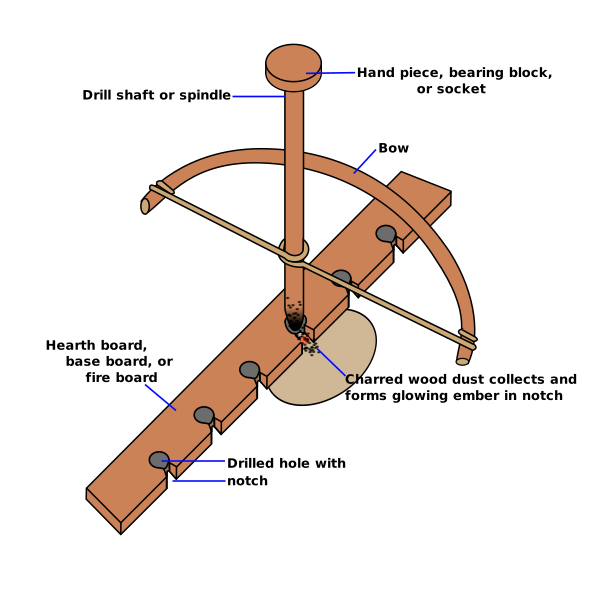
Image Source: upload.wikimedia.org
The Core Components: Deciphering the Bow Drill
A bow drill is a tool used to create fire through friction. It consists of four primary parts: the bow, the spindle, the hearth board, and the socket. Each piece plays a crucial role in generating the heat needed for ignition. Mastering the construction and use of these components is a rewarding aspect of learning primitive skills.
1. Selecting and Preparing Your Wood
The success of your bow drill hinges on the materials you choose. Not all wood is created equal when it comes to friction fire. You need to find the right type of wood for each component.
Hearth Board Selection
Your hearth board is the base upon which the friction occurs. It needs to be made of a softer, non-resinous wood that will easily wear down and create fine dust.
- Good Choices: Cedar, Aspen, Basswood, Willow, Cottonwood, Poplar, Yucca stalk.
- Avoid: Hardwoods like Oak, Maple, or Hickory, as they require too much force and heat to create an ember. Also avoid resinous woods like Pine or Fir, as the sap can interfere with the friction process.
Preparation:
- Find a Dry Piece: Ensure your wood is completely dry. Green wood will steam rather than ignite. Look for deadfall that has been exposed to the air for a while.
- Shape the Board: Aim for a flat piece of wood, roughly ¾ inch to 1 inch thick and about 8 to 12 inches long. You can use a knife or a rock to flatten one side.
- Create the Notch: This is arguably the most critical part of the hearth board.
- Marking: Decide where you want your spindle to rest. A good spot is about 1 to 1.5 inches from one end.
- Drilling the Starting Hole: Use your spindle to create a small, shallow depression where the spindle will initially sit. This is often done by pressing the tip of the spindle into the wood and twisting it a few times.
- Carving the Notch: Once you have a starting hole, you need to carve a “V” shaped notch. This notch should go from the edge of the board into the center of the depression you just made. It’s where the hot dust will collect and form the ember. The notch should be about halfway through the thickness of the board.
- The Function of the Notch: This notch is vital. It allows the fine wood dust, heated by the friction of the spinning spindle, to accumulate in one place. Without it, the dust would be scattered, and you wouldn’t be able to form an ember.
Spindle Preparation
The spindle is the rotating shaft that creates friction against the hearth board. It needs to be straight and have a rounded or slightly tapered tip that fits snugly into the socket, and a flatter, more worn tip to contact the hearth board.
- Good Choices: The same woods as the hearth board are often suitable. Straight, strong twigs or branches are ideal.
- Avoid: Knotty or crooked pieces, as they will wobble and prevent consistent friction.
Preparation:
- Find a Straight Piece: Look for a branch that is as straight as possible.
- Shape the Spindle: Aim for a piece about 8 to 12 inches long and about ½ to ¾ inch in diameter.
- Round the Ends: Use a knife or abrasive rock to round both ends of the spindle.
- Bottom Tip: This end will sit in the hearth board’s notch. It should be slightly blunted or flattened so it makes good contact.
- Top Tip: This end will sit in the socket. It should be rounded and smooth to allow it to spin freely.
Bow Construction
The bow is used to spin the spindle rapidly. It needs to be strong but slightly flexible.
- Good Choices: A sturdy, slightly curved branch. Look for a piece that has a natural bend. Hickory, Ash, or Oak can be good choices for the bow, as it needs strength.
- Avoid: Brittle woods or anything that feels weak.
Preparation:
- Find a Curved Branch: Search for a branch that has a good natural curve, about arm’s length.
- Carve Notches: Carve small notches on both ends of the bow, about ½ inch from each tip. These notches will hold your cordage.
Cordage Selection
The cordage connects the bow to the spindle, transferring the back-and-forth motion of the bow to the spinning of the spindle.
- Good Choices: Strong natural fibers like sinew, rawhide, paracord (if you’re not going strictly primitive), or even tightly twisted plant fibers (like dogbane or milkweed).
- Avoid: Anything that is weak, stretches too much, or breaks easily.
Preparation:
- Measure and Attach: Cut a length of cordage that, when strung on the bow, allows the bow to bend but doesn’t overextend.
- Secure the Ends: Tie the cordage securely into the notches on the ends of the bow. It should be taut enough to wrap around the spindle without slipping.
Socket Preparation
The socket, also known as the handhold or bearing block, is used to apply downward pressure on the top of the spindle. It needs to be smooth and hard enough to withstand the friction.
- Good Choices: A smooth, hard stone with a natural depression, a piece of dense hardwood (like oak or maple), or even bone.
- Avoid: Soft woods or anything that will easily crumble or wear down.
Preparation:
- Find or Create a Depression:
- Stone: Look for a stone with a natural indentation or carefully use another harder stone to grind a smooth depression.
- Wood/Bone: Carve a smooth, rounded depression into your chosen material.
- Lubrication (Optional but Recommended): You can lubricate the socket with a little green sap, beeswax, or even a bit of oil to reduce friction and make it easier to hold and apply pressure.
Assembling and Using Your Bow Drill
Once you have all your components prepared, it’s time to put it all together and start generating friction.
Step-by-Step Assembly and Operation
-
String the Spindle:
- Place the bow horizontally.
- Wrap the cordage of the bow once around the middle of the spindle.
- Ensure the spindle is perpendicular to the bowstring.
-
Position the Hearth Board:
- Place the hearth board on a stable, flat surface.
- Ensure the notch is positioned where you want to create friction.
- Place a small piece of dry bark or a large leaf underneath the notch to catch the hot dust. This is crucial for creating your tinder bundle.
-
Prepare Your Tinder Bundle:
- Gather very fine, dry, fluffy material. This is your tinder.
- Good tinder materials include: dry grass, inner bark of cedar or cottonwood, birch bark shavings, cattail fluff, or bird nests.
- Form this material into a loose, bird’s nest shape. You need this ready to receive the ember.
-
Position the Socket:
- Hold the socket in your non-dominant hand.
- Place the rounded top of the spindle into the depression of the socket.
- Apply firm, consistent downward pressure.
-
Begin the Bow Motion:
- Hold the bow horizontally.
- Move the bow back and forth in a smooth, steady motion. This will cause the spindle to spin rapidly against the hearth board.
- Start slowly to get the spindle spinning evenly and then increase your speed.
-
Generate Dust and Heat:
- As you saw the bow, the spindle will grind against the hearth board within the notch.
- This friction will create fine wood dust, which will start to accumulate in the notch.
- Keep the bow moving smoothly and maintain consistent downward pressure with the socket.
-
Look for Smoke and Dust Piles:
- You will begin to see smoke rising from the notch. This is a good sign!
- The dust will turn dark brown and then black. The pile of dust beneath the notch should grow larger and darker.
-
Achieve the Ember:
- Continue sawing with a consistent rhythm and pressure.
- When you see a good amount of dark dust and a steady stream of smoke, you’re close.
- Gently lift the spindle away. If successful, you will see a small, glowing ember within the pile of dark dust.
-
Transfer the Ember:
- Carefully tap the hearth board to drop the glowing ember onto your prepared tinder bundle.
- Gently pick up the tinder bundle, enclosing the ember.
-
Nurture the Flame:
- Cup the tinder bundle in your hands and blow gently and consistently onto the ember.
- As the ember grows and the smoke increases, gradually blow harder.
- The goal is to provide enough oxygen to the ember to ignite the tinder.
- Once the tinder bursts into flame, transfer it to your prepared kindling and then larger fuel.
Troubleshooting Common Issues
Even with the best preparation, you might encounter problems. Here’s how to address them.
Table: Common Bow Drill Problems and Solutions
| Problem | Cause | Solution |
|---|---|---|
| No smoke or dust | Wood is too wet; spindle not spinning fast enough; not enough downward pressure; notch not deep enough. | Ensure wood is bone dry; increase speed of bow; apply more consistent downward pressure; deepen the notch slightly; ensure socket is smooth. |
| Spindle slipping on bowstring | Bowstring is too loose; spindle not securely wrapped. | Tighten the bowstring; ensure the spindle is wrapped at least once, or even twice, around the string. |
| Spindle wobbling | Spindle is not straight; notch is too wide; socket is not holding spindle securely. | Find a straighter spindle; narrow the notch; ensure the socket depression is a good fit for the spindle’s top. |
| Dust blows away | Wind is too strong; notch is too shallow. | Shield the area from wind; deepen the notch slightly so dust collects better. |
| Hearth board burns through | Too much pressure; prolonged sawing in one spot. | Reduce downward pressure slightly; move the bow with a longer stroke to distribute friction. |
| No ember formation | Friction not hot enough; tinder material is not fine or dry enough; ember pile is too small. | Increase speed and pressure; ensure tinder is perfectly dry and fluffy; allow more dust to collect and darken before checking for an ember. |
| Socket is too hot to hold | Too much pressure for too long; no lubrication. | Take breaks to allow hand to cool; lubricate the socket with sap, beeswax, or oil. |
Advanced Techniques and Tips for Success
- Practice your stance: Find a stable, comfortable position. Kneeling with your foot firmly planted on the hearth board is common.
- Bow arm stability: Keep your bow arm steady and your elbow locked. This provides a smooth, consistent motion.
- Don’t rush: Patience is key. Focus on a consistent rhythm rather than trying to saw as fast as possible.
- Wood types matter: Experiment with different wood combinations. What works in one climate or season might not work in another.
- The “Burn-in”: Before making your actual notch, you can “burn-in” the spindle by spinning it in the hearth board to create a perfect fit for both pieces.
- Don’t over-saw: Once you see good smoke and dark dust, be prepared to stop and check for the ember. Continuously sawing can burn up your potential ember.
- Dust collection: Ensure your collection method (bark, leaf) is directly under the notch and large enough to catch all the dust.
Frequently Asked Questions (FAQ)
What is the best wood for a bow drill hearth board?
The best woods are soft, non-resinous hardwoods that are dry. Cedar, aspen, basswood, willow, cottonwood, and poplar are excellent choices.
How long should my bow drill spindle be?
A spindle around 8 to 12 inches long is generally ideal. It should be long enough to allow for a good stroke with the bow without being unwieldy.
Can I use green wood for a bow drill?
No, green wood will not work. It contains too much moisture and will steam rather than create the fine, dry dust needed for an ember. All parts of your bow drill set must be thoroughly dry.
What if my bowstring keeps slipping off the spindle?
This usually means the bowstring is too loose, or you aren’t wrapping the spindle securely enough. Ensure the string is taut on the bow, and wrap the spindle at least once, or even twice, around the string.
How much downward pressure should I use?
Apply firm, consistent downward pressure. You want enough pressure to create good friction, but not so much that you bind the spindle or burn through the hearth board too quickly. It takes practice to find the right balance.
What are the key components of a bow drill fire starting kit?
The essential components are: the bow, the spindle, the hearth board, the socket (handhold), and strong cordage. You also need a tinder bundle ready to receive the ember.
How do I know when I’ve made an ember?
You’ll see a noticeable increase in smoke and a pile of dark, almost black, finely ground wood dust accumulating in the notch of your hearth board. When you gently remove the spindle, you should see a small, glowing red spot within that dust pile.
Mastering the bow drill is a journey that connects you to ancient practices and the fundamental elements of survival. With practice and attention to detail, you can reliably create fire, a testament to your acquired primitive skills. The process of creating and using a bow drill is deeply satisfying, offering a profound connection to nature and the power of human ingenuity. It’s a fundamental aspect of friction fire techniques that has sustained humanity for millennia.