
Can you cut baseboards with a miter saw? Yes, absolutely! In fact, a miter saw is the best tool for achieving precise and clean baseboard miter cuts, especially for corners. This guide will walk you through the process with pro tips to ensure your baseboard installation miter saw experience is a success. We’ll cover everything from setting up your saw to making those tricky corner cuts.
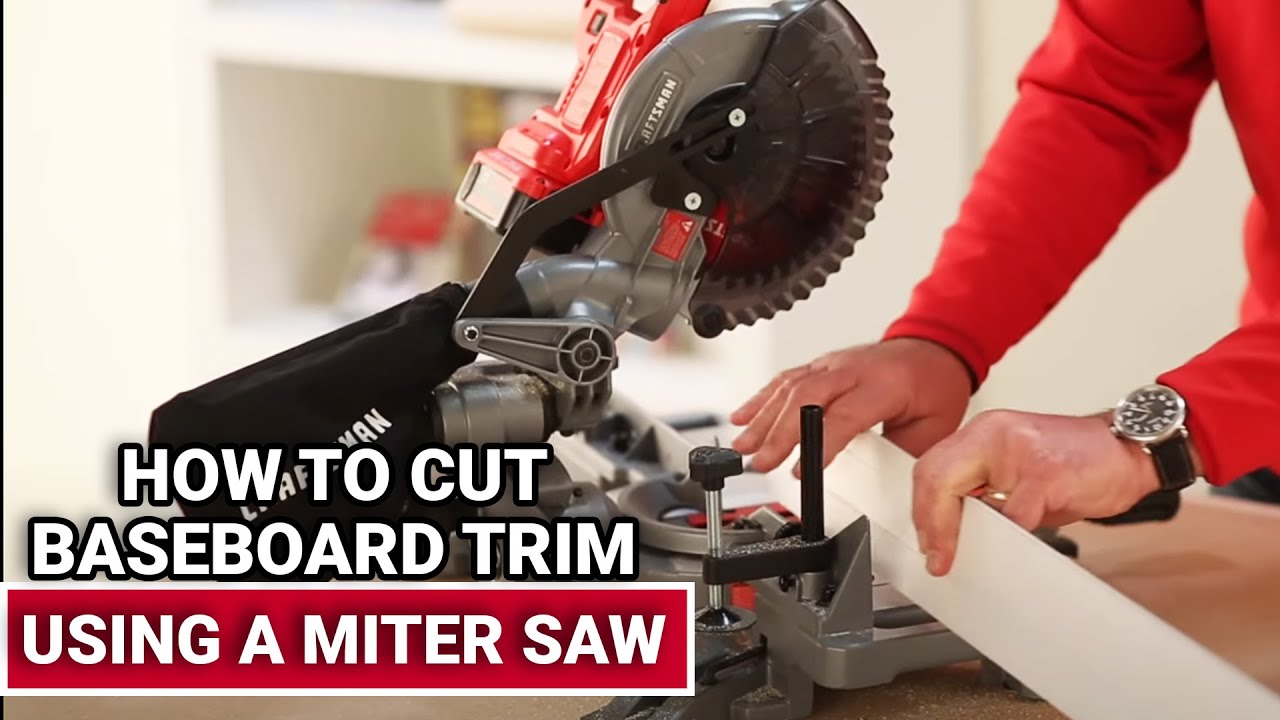
Image Source: i.ytimg.com
Choosing the Right Miter Saw for Baseboards
While many miter saws can tackle baseboards, some are better suited for the job. The best miter saw for baseboards generally has a larger cutting capacity and a sliding feature.
Key Features to Consider:
- Cutting Capacity: Ensure the saw can handle the width and thickness of your baseboards. Most standard baseboards are around 5-8 inches tall. A 10-inch or 12-inch miter saw is usually sufficient.
- Sliding Feature: A sliding miter saw allows you to cut wider pieces of trim by moving the blade forward and backward. This is incredibly helpful for wider baseboards or when you need to cut a board at an angle across its width.
- Bevel Capacity: The ability to tilt the blade (bevel) is crucial for making compound miter cuts, which are often needed for inside and outside corners. Look for a saw with at least a 45-degree bevel capacity in one direction, and ideally both.
- Power: A more powerful motor will make cutting through wood easier and smoother, preventing bogging down.
Setting Up Your Miter Saw for Baseboard Cuts
Proper setup is the first step to mastering cutting baseboards with a miter saw. Accuracy here will save you a lot of headaches later.
Safety First!
Before anything else, always prioritize safety.
- Wear Safety Glasses: Protect your eyes from flying sawdust and debris.
- Wear Hearing Protection: Miter saws can be loud.
- Use Push Sticks: Keep your hands away from the blade, especially when cutting smaller pieces or at angles.
- Ensure the Saw is Stable: Place it on a level surface and ensure it’s not wobbling.
- Read Your Saw’s Manual: Familiarize yourself with its specific features and safety instructions.
Blade Selection
The type of blade you use significantly impacts the quality of your baseboard miter cut.
- Tooth Count: For trim and baseboards, a blade with a higher tooth count (60-80 teeth) is recommended. This will give you a cleaner, smoother cut with less chipping, reducing the need for sanding.
- Blade Material: Carbide-tipped blades are standard and offer good durability and sharpness.
Adjusting Miter and Bevel Angles
The core of making a good baseboard miter cut lies in accurate angle adjustments.
- Miter Angle: This is the horizontal angle of the blade relative to the fence. For standard 90-degree inside and outside corners, you’ll typically need 45-degree miter cuts.
- Bevel Angle: This is the vertical angle of the blade relative to the base. For compound miter cuts in corners, you’ll often need a bevel adjustment in addition to the miter angle.
Test Cuts
Always perform test cuts on scrap pieces of baseboard before cutting your actual trim. This allows you to:
- Verify the accuracy of your angle settings.
- Check for any blade wobble or inconsistencies.
- Get a feel for how the wood feeds through the saw.
Mastering the Baseboard Miter Cut: Inside Corners
Inside corners, where two walls meet to form an interior angle, require a specific type of baseboard miter cut to ensure a tight fit.
The 45-Degree Miter: A Starting Point
For a perfect 90-degree inside corner, you’ll need to cut each piece of baseboard at a 45-degree angle. However, the direction of these cuts is crucial.
Cutting Technique for Inside Corners:
- Determine the Length: Measure the wall where the baseboard will be installed. You’ll need two pieces for each corner.
- Position the Baseboard: Place the baseboard against the saw’s fence. For an inside corner, the back of the baseboard should be firmly against the fence.
- Set the Miter Angle: Set your miter saw to 45 degrees.
- Direct the Cut: The crucial part is the direction of the cut. For the left-hand piece of baseboard that will go into the corner, you’ll make a 45-degree cut sloping away from the fence. For the right-hand piece, you’ll make a 45-degree cut sloping towards the fence. Think of it as cutting a “point” on the end of each board. When these points meet, they should form a 90-degree angle.
- Execute the Cut: Lower the blade smoothly and let it do the work.
The “Coping” Method for Inside Corners
While a precise 45-degree miter is good, baseboard corner cuts miter saw perfection can be achieved with the “coping” method, especially for older homes or walls that aren’t perfectly square. Coping involves cutting a decorative profile into the end of one baseboard piece so it interlocks with the profile of the other.
- Rough Cut: First, make a standard 45-degree miter cut on the piece that will be on the outside of the corner. This rough cut should be made with the back of the baseboard against the fence, and the blade angled away from the fence (a “tight” miter).
- Coping Cut: Take the other piece (the one going inside the corner). Make a 45-degree miter cut, but this time, turn the baseboard over so the face is against the fence and the back is angled upwards. This cut will be made on the opposite side of the desired angle.
- Using a Jigsaw: After the angled cut, use a jigsaw with a fine-tooth blade to carefully cut along the profile line created by the miter cut. This removes a sliver of wood, leaving the decorative profile exposed.
- Fitting: The coped piece should then fit snugly against the face of the other mitered piece.
This method is often considered the hallmark of professional trim work.
Mastering the Baseboard Miter Cut: Outside Corners
Outside corners, where two walls meet to form an exterior angle, also require precise baseboard miter cut techniques.
The 45-Degree Miter: Again, the Foundation
For a perfect 90-degree outside corner, you’ll again cut each piece of baseboard at a 45-degree angle. The direction of these cuts is the key.
Cutting Technique for Outside Corners:
- Determine the Length: Measure the wall length.
- Position the Baseboard: Place the baseboard against the saw’s fence. For an outside corner, the back of the baseboard should be firmly against the fence.
- Set the Miter Angle: Set your miter saw to 45 degrees.
- Direct the Cut: For the left-hand piece of baseboard that will extend outwards from the corner, you’ll make a 45-degree cut sloping towards the fence. For the right-hand piece, you’ll make a 45-degree cut sloping away from the fence. Again, think of creating a “point.” When these points meet, they should form a 90-degree angle.
- Execute the Cut: Lower the blade smoothly.
The “Tight” Miter for Outside Corners
For outside corners, the goal is to have the two pieces meet cleanly at the point. The miter saw angle baseboard adjustment is critical here. A perfectly executed 45-degree miter on both pieces will result in a flush joint. If the walls are not perfectly 90 degrees, you might need to slightly adjust the miter angle (e.g., 46 degrees or 44 degrees) to achieve a tight fit.
Cutting Baseboards with a Miter Saw: Advanced Techniques
Beyond basic corners, there are other situations where cutting trim with a miter saw becomes essential.
Cutting Baseboards Flat vs. Upright
One common question is whether to cut baseboards flat on the saw’s base or upright against the fence.
- Cutting Flat: This is generally easier for beginners and provides more stability for smaller pieces. However, it limits the height of the baseboard you can cut. You’ll need to ensure the saw’s capacity can accommodate the baseboard’s height.
- Cutting Upright: This method is often preferred by professionals, especially for taller baseboards, as it mimics how the baseboard will sit on the wall. However, it requires careful handling and can be less stable if not done correctly. You’ll need to use a jig or ensure the baseboard is firmly pressed against the fence.
Using the Crown Molding Setting
Many modern miter saws have a “crown molding” setting that locks the saw at the correct angle for cutting crown molding when it’s placed upside down on the saw. You can leverage this same setting for baseboards when cutting them in an upright position.
- Positioning: Place the baseboard upside down on the miter saw, with the back (intended to be against the wall) facing up and the top edge against the saw’s fence.
- Angle: Set the miter saw to the crown molding position (usually 38 degrees or 45 degrees depending on the saw’s calibration and the molding profile). This angle allows you to cut the baseboard as if it were crown molding, which is essentially an upside-down baseboard.
- Miter Cuts: For inside corners, you’ll set the miter angle to 45 degrees (or slightly less for a tighter fit if needed) and cut with the blade angled away from the fence. For outside corners, you’ll do the opposite, angling the blade towards the fence.
This method can be very effective for achieving precise angled cuts on baseboards.
Creating Baseboard Plugs or Plinth Blocks
Sometimes, you’ll need to create plugs to cover nail holes or use plinth blocks for a decorative transition. This involves cutting small, precise pieces.
- Repeatable Cuts: Use the miter saw’s fence stops or create a sacrificial fence with stops to make multiple identical cuts.
- Small Piece Handling: Always use a push stick or a clamp to hold small pieces securely while cutting.
Troubleshooting Common Baseboard Cutting Issues
Even with the right tools, occasional problems arise. Here’s how to address them when cutting baseboards with a miter saw.
Chipped or Splintered Edges
- Cause: Dull blade, wrong blade tooth count, forcing the cut, or cutting brittle wood.
- Solution:
- Use a sharp, high-tooth-count blade designed for trim.
- Let the saw do the work; don’t force the cut.
- Support the wood on the exit side of the blade to minimize tear-out.
- Consider scoring the cut line with a utility knife before cutting.
Inaccurate Angles
- Cause: Loose miter or bevel adjustments, worn-out detents, or incorrect initial setup.
- Solution:
- Ensure all locking mechanisms are tight.
- Calibrate your saw if you suspect inaccurate detents.
- Always perform test cuts and use a speed square to verify angles.
Baseboard Not Sitting Flush
- Cause: Walls not perfectly square, inaccurate miter cuts, or baseboard not held firmly against the fence.
- Solution:
- Measure your corners carefully and adjust your miter angles slightly if needed (e.g., 44.5 degrees instead of 45).
- Ensure the back of the baseboard is firmly pressed against the saw’s fence during the cut.
- For inside corners, consider the coping method.
Frequently Asked Questions About Baseboard Miter Cuts
Here are some common questions people have when miter saw baseboard cut comes up:
What is the best miter angle for baseboards?
For standard 90-degree corners, the best miter angle is 45 degrees. However, you may need to slightly adjust this (e.g., 44.5 degrees or 45.5 degrees) depending on the actual angle of your wall corners. Always test your angle on scrap pieces.
How do I make an inside corner baseboard cut?
For an inside corner, you’ll make two 45-degree miter cuts. The first piece will have its cut angled away from the fence (back of baseboard against the fence), and the second piece will have its cut angled towards the fence. Alternatively, you can cope the inside corner for a more professional finish.
How do I make an outside corner baseboard cut?
For an outside corner, you’ll also make two 45-degree miter cuts. The first piece will have its cut angled towards the fence (back of baseboard against the fence), and the second piece will have its cut angled away from the fence.
Can I cut baseboards with a regular circular saw?
While possible, it’s much harder to achieve accurate and clean baseboard miter cut results with a circular saw compared to a miter saw. A miter saw is specifically designed for angled cuts.
How do I ensure a tight fit at the corners?
- Measure accurately.
- Use a sharp, high-tooth-count blade.
- Ensure your miter saw is calibrated correctly.
- Make test cuts and adjust angles as needed.
- For inside corners, consider the coping technique.
- For outside corners, try slightly adjusting the miter angle if the walls aren’t perfectly square.
What is the miter saw angle baseboard setting for crown molding installation?
When installing crown molding with the baseboard upside down on the saw, the typical miter saw angle baseboard setting is either 38 or 45 degrees, depending on your saw and the specific crown molding profile. This is often referred to as the “crown molding setting” on the saw.
Conclusion: Precision in Every Baseboard Miter Cut
Mastering how to cut baseboards with a miter saw is a fundamental skill for any DIYer or professional. By understanding the correct angles, proper saw setup, and techniques for inside and outside corners, you can achieve clean, professional-looking results. Remember to prioritize safety, use the right blade, and always make test cuts. With practice and these pro tips, your baseboard installation miter saw projects will be a testament to your newfound precision. Happy cutting!