
Image Source: www.woodshopdiaries.com
How To Clean Table Saw Metal Surface: Restore and Shine
Can you clean a table saw metal surface with household cleaners? Yes, you can, but using specialized table saw cleaning products often yields better results and protects your equipment. This guide will walk you through restoring your table saw’s metal surfaces to their former glory. A clean and smooth table saw top is crucial for safe and accurate woodworking. It ensures your lumber glides effortlessly, preventing kickbacks and ensuring precise cuts. Neglecting this vital aspect of table saw maintenance can lead to frustration, wasted material, and even injury.
Why a Clean Table Saw Top Matters
The metal surface of your table saw, often cast iron or aluminum, is the primary interface between your workpiece and the cutting action. Over time, this surface can accumulate a variety of contaminants that hinder its performance and aesthetic appeal. These include:
- Resin and Pitch: Wood sap, particularly from softwoods like pine, hardens into a sticky residue. This pitch adheres stubbornly to the metal, creating friction and making it difficult to slide lumber.
- Rust: Moisture is the enemy of bare metal. Even in a relatively dry workshop, humidity, accidental spills, or improper storage can lead to rust formation.
- Sawdust and Grime: The constant production of sawdust, combined with workshop dust and general grime, can create a dull, abrasive layer.
- Adhesive Residue: Sometimes, labels or tape can leave behind sticky residue.
Ignoring these issues not only makes your table saw look unappealing but also directly impacts its functionality. A sticky or rusty surface can cause:
- Increased Friction: This makes it harder to push wood through the blade, requiring more force and increasing the risk of blade deflection, leading to inaccurate cuts.
- Kickback Risk: As wood sticks or snags on a dirty surface, the likelihood of the workpiece being violently thrown back towards the operator (kickback) significantly increases. This is a dangerous woodworking hazard.
- Difficulty in Measurement: A dull surface can make it harder to read measurement scales accurately.
- Uneven Feeding: The inconsistent surface can lead to jerky movements of the workpiece, affecting cut quality.
Gathering Your Cleaning Arsenal
Before you begin the process of cleaning table saw cast iron maintenance, ensure you have the right tools and supplies. Using the wrong products can damage the metal or leave behind residues that attract more dirt. Here’s a breakdown of what you’ll need:
Essential Table Saw Cleaning Products and Tools:
- Rags: Plenty of clean, lint-free rags are essential for applying cleaners, wiping away debris, and buffing. Microfiber cloths are excellent for this.
- Soft Brushes: Non-abrasive brushes, like old toothbrushes or detail brushes, are useful for getting into tight spots and around inserts.
- Scrapers (Plastic or Wood): For removing stubborn, caked-on resin or pitch, a plastic scraper or a piece of scrap wood can be used to gently lift the material without scratching the metal. Avoid metal scrapers if possible.
- Mineral Spirits or Denatured Alcohol: These are excellent solvents for dissolving pitch and resin. They evaporate cleanly, leaving no residue.
- Fine Steel Wool (0000 Grade): This is your go-to for light rust removal and stubborn residue. Always use the finest grade (0000) to avoid scratching the metal.
- Commercial Table Saw Top Cleaners: Several excellent table saw cleaning products are specifically formulated for this purpose. These often contain mild abrasives and rust inhibitors.
- WD-40 or a Similar Lubricant (for initial rust removal/protection): While not a primary cleaning agent for pitch, WD-40 can help loosen light rust and provides a temporary protective layer.
- Paraffin Wax or a Commercial Table Saw Wax: Once clean, applying a protective wax is crucial to prevent future rust and improve sliding.
- Shop Vacuum: For removing loose sawdust and debris before and during cleaning.
- Safety Glasses: Protect your eyes from dust and cleaning solution splashes.
- Gloves: Protect your hands from solvents and grime.
Step-by-Step Guide to Cleaning Your Table Saw Top
Step 1: Safety First and Preparation
- Disconnect Power: Always unplug your table saw from the power source before starting any cleaning or maintenance. This is the most crucial safety step.
- Remove the Blade: For a thorough cleaning, it’s best to remove the table saw blade. This allows you to clean the entire surface, including areas often obscured by the blade. Consult your table saw manual for instructions on how to safely remove and reinstall the blade.
- Remove Inserts and Accessories: Take out the blade insert, miter gauge, and any other removable parts. This gives you unobstructed access to the entire table surface.
- Initial Dust Removal: Use a shop vacuum to remove as much loose sawdust and debris as possible from the table top and surrounding areas.
Step 2: Tackling Resin and Pitch
This is often the most challenging part of cleaning table saw metal surfaces.
- Apply Solvent: Generously apply mineral spirits or denatured alcohol to a section of the table top. Let it sit for a minute or two to soften the pitch.
- Scrape Gently: Use a plastic scraper or a piece of scrap wood to gently lift the softened pitch. Work in the direction of the grain if visible on the cast iron.
- Wipe Clean: Use a clean rag to wipe away the loosened pitch and solvent. You may need to repeat this process several times for heavily soiled areas.
- For Stubborn Residue: If the pitch is still difficult to remove, you can try applying the solvent and then gently scrubbing with a soft brush or the 0000 steel wool. Be sure to follow up with a clean rag to remove any residue.
Step 3: Addressing Rust
Rust can be a persistent problem, but table saw rust removal is achievable.
- Light Rust: For very light rust spots, often the mineral spirits or denatured alcohol will help loosen it. You can also try using a clean rag with a bit of WD-40. Gently rub the rusted area.
- Moderate to Heavy Rust: This is where the 0000 grade steel wool comes into play.
- Apply a small amount of your chosen cleaner (mineral spirits, denatured alcohol, or a specialized table saw cleaner) to the rusted area.
- Gently scrub the rust with the 0000 steel wool. Apply only enough pressure to remove the rust, not to abrade the metal surface.
- Always rub in a circular motion or in the direction of any existing finish on the cast iron.
- Wipe away the rust particles and cleaning solution with a clean rag frequently.
- Rinsing (Optional but Recommended): After using steel wool, it’s a good idea to wipe the area down with a clean rag dampened with a little more mineral spirits or denatured alcohol to ensure all rust particles and abrasive residue are removed.
Step 4: Deep Cleaning the Entire Surface
Once the main contaminants are gone, it’s time for a thorough cleaning.
- Apply Cleaner: If you’re using a commercial table saw cleaner, follow the product instructions. If using mineral spirits or denatured alcohol, apply it liberally to a section of the table.
- Scrubbing: Use a clean rag to scrub the entire surface. For any remaining stubborn spots, you can use the 0000 steel wool again, but with lighter pressure.
- Wipe Down: Use clean rags to wipe down the entire surface until it is completely clean and dry. Ensure no residue from the cleaning agents remains.
Step 5: Cleaning the Table Saw Blade
Don’t forget about the table saw blade! A clean blade cuts more efficiently and safely.
- Removal: As mentioned earlier, remove the blade for the best results.
- Cleaning Agents: You can use a commercial blade cleaner or a paste made from baking soda and water. For very stubborn pitch, a dedicated blade cleaning solution is best.
- Application: Apply the cleaner to the blade, focusing on the gullets (the spaces between the teeth) and the sides of the teeth.
- Scrubbing: Use a stiff brush or the 0000 steel wool to scrub away the pitch and debris.
- Rinsing and Drying: Rinse the blade thoroughly with water (if using water-based cleaners) and dry it completely immediately to prevent rust. A light coat of WD-40 can be applied for temporary rust prevention if the blade won’t be used immediately.
- Reinstallation: Once clean and dry, carefully reinstall the table saw blade according to your saw’s manual. Ensure it is properly seated and the arbor nut is tightened correctly.
Step 6: Protecting the Surface
This is a critical step in table saw maintenance that is often overlooked. A clean, bare metal surface is susceptible to rust.
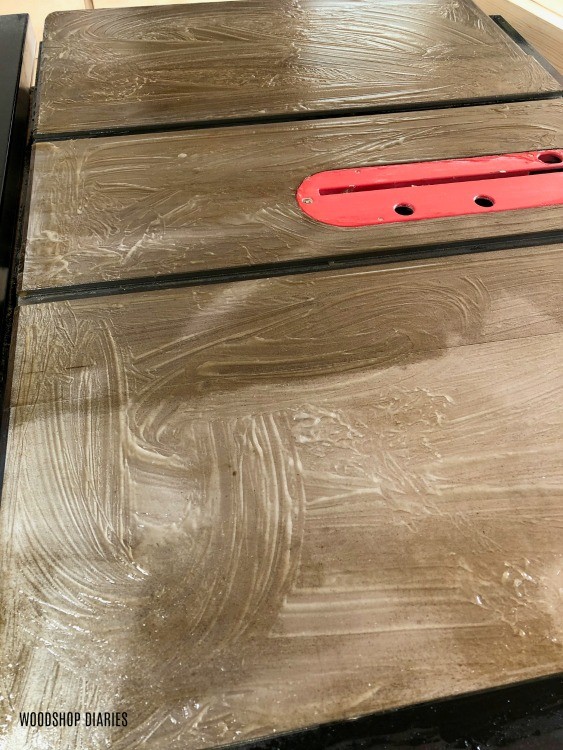
- Apply Wax: The best way to protect your table saw’s metal surface is by applying a thin, even coat of wax. You have a couple of options:
- Paraffin Wax: A simple and effective solution. Rub a block of paraffin wax over the clean metal surface.
- Commercial Table Saw Wax/Lubricant: These products are specifically designed for this purpose and often contain rust inhibitors and synthetic lubricants for superior sliding.
- Buffing: Once the wax is applied, let it haze over for a few minutes (follow product instructions), then buff it to a shine with a clean, dry microfiber cloth. This creates a slick, protective barrier.
- Frequency: Reapply wax every few months or whenever you notice the surface becoming less slick or showing signs of rust.
Table Saw Flat Top Cleaning: Specific Considerations
The table saw flat top, also known as the table insert or throat plate, often requires similar cleaning methods.
- Material: These are typically made of metal (aluminum or steel) or plastic.
- Cleaning: For metal inserts, follow the same steps as cleaning the main table surface. For plastic inserts, use milder cleaners like warm soapy water and a soft brush. Avoid harsh solvents or abrasive materials that could damage the plastic.
- Blade Clearance: Ensure the inserts are clean and free of debris that could interfere with the blade’s rotation or create a fire hazard.
Removing Pitch from Table Saw: Advanced Tips
Removing pitch from table saw surfaces can be tricky. Here are some advanced tips:
- Heat Application (Use with Extreme Caution): For very stubborn pitch, gently heating the area with a heat gun (on a low setting) can help soften it. WARNING: Do not overheat, as this can damage surrounding components or cause a fire hazard. Apply heat briefly, then try scraping and wiping.
- Citrus-Based Cleaners: Some woodworkers find citrus-based degreasers effective at breaking down pitch. Ensure they are safe for use on metal surfaces and rinse thoroughly.
- Dedicated Pitch Removers: There are specific products designed to remove pitch and resin from woodworking tools. These can be very effective but always test them in an inconspicuous area first.
Maintaining Your Table Saw for Longevity
Consistent table saw maintenance is key to ensuring its performance and safety.
Regular Table Saw Maintenance Checklist:
- After Each Use:
- Wipe down the table surface with a clean, dry cloth to remove dust and light debris.
- Vacuum out the dust collection system and under the table.
- Monthly:
- Perform a more thorough cleaning of the table surface, addressing any pitch or rust buildup.
- Inspect the blade for dullness or damage. Clean or replace as needed.
- Check the alignment of the blade and fence.
- Quarterly/Semi-Annually:
- Lubricate any moving parts according to your table saw’s manual. This might include trunnions or the elevation mechanism.
- Deep clean the table saw, including cleaning the blade and ensuring all components are functioning smoothly.
- Apply a fresh coat of protective wax to the table surface.
Table Saw Lubrication: Beyond the Surface
While we’ve focused on the table surface, proper table saw lubrication extends to other moving parts.
- Trunnions: These are the mechanisms that raise, lower, and tilt the blade. They often require a light coating of grease or machine oil. Consult your manual for the specific type and application points.
- Elevation and Tilt Cranks: A small amount of lubricant on the threads of these cranks will ensure smooth operation.
- Fence Rails: Some fence systems benefit from a light application of a dry lubricant or a very light coat of wax on the rails to ensure smooth movement.
What is the best cleaner for table saw surfaces?
The “best” cleaner often depends on the type and severity of the contamination. For general cleaning, mineral spirits or denatured alcohol are excellent. For more stubborn pitch, a specialized table saw cleaner or a citrus-based degreaser can be effective. For rust, 0000 steel wool combined with a solvent is usually the best approach. Always prioritize products that are safe for metal surfaces and evaporate cleanly.
Can I use oven cleaner on my table saw?
It is not recommended to use oven cleaner on your table saw metal surfaces. Oven cleaners are often very caustic and can damage the metal, remove protective coatings (if any), and leave residues that are difficult to remove and can attract dirt and rust. Stick to products designed for metal cleaning or woodworking tools.
Frequently Asked Questions (FAQ)
Q1: How often should I clean my table saw metal surface?
It’s best to wipe down your table saw surface after each use to remove dust. A more thorough cleaning should be done whenever you notice pitch buildup, rust, or reduced sliding action, typically every few months or as needed.
Q2: What should I do if I have very deep rust spots?
For deep rust, you may need to use the 0000 steel wool more vigorously. If that doesn’t work, you might consider a rust remover specifically designed for cast iron, but be sure to test it in an inconspicuous area first and follow the instructions carefully. Always neutralize any strong rust removers as directed.
Q3: Can I use a wire brush on my table saw top?
Avoid using stiff wire brushes. They are too abrasive and can scratch the metal surface, which can then hold more dirt and rust. Always opt for the finest grade steel wool (0000) or non-abrasive pads.
Q4: My table saw top is painted. How do I clean it?
If your table saw has a painted surface, you’ll need to be much gentler. Avoid abrasive cleaners and solvents that could damage the paint. Use a mild soap and water solution, a soft cloth, and a plastic scraper for any stubborn debris. Waxing a painted surface is generally not recommended unless the wax is specifically designed for painted metal.
Q5: How do I prevent rust on my table saw?
The best way to prevent rust is to keep the table surface clean and dry, and to apply a protective wax coating regularly. Store your table saw in a dry environment, and if you live in a humid climate, consider using a dehumidifier in your workshop.
By following these steps and committing to regular table saw maintenance, you can ensure your table saw remains a safe, efficient, and reliable tool in your workshop for years to come. A clean surface means smoother cuts, safer operation, and a more enjoyable woodworking experience.