
A seed drill is a mechanical device used to sow seeds in the ground at precise depths and spacing, ensuring even germination and optimal plant growth. It’s a cornerstone of modern agriculture, replacing the less efficient broadcast sowing method.
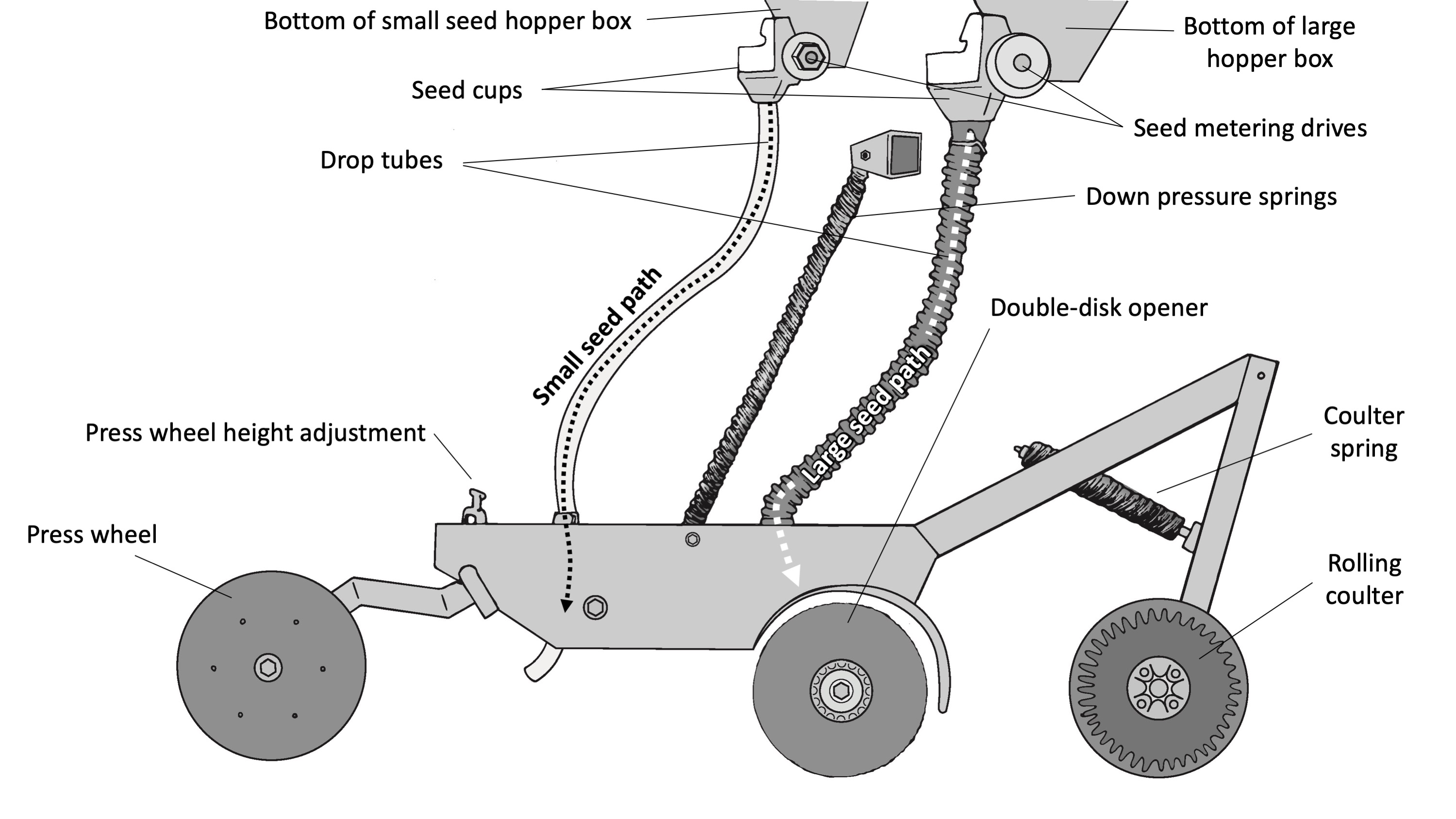
Image Source: secure.caes.uga.edu
The Evolution of Seed Planting
For millennia, farmers planted seeds by hand or by broadcasting them from a bag or container. This method was labor-intensive, wasteful, and produced uneven stands of crops. Seeds were often planted too deep, too shallow, or too close together, leading to poor germination rates and reduced yields. The need for a more efficient and precise method of seed planting led to the invention of the seed drill.
The concept of a mechanical seeder dates back to ancient China, where records suggest early forms of seed drills existed. However, the modern seed drill as we know it today was famously invented by Jethro Tull in 1701. Tull, an English agronomist, designed a horse-drawn machine that could sow seeds in rows at a controlled depth and spacing. His invention was revolutionary, significantly improving crop yields and marking a pivotal moment in the history of agricultural machinery. Tull’s seed drill was a sophisticated piece of engineering for its time, laying the groundwork for the advanced agricultural seeding technology we use today.
Core Components of a Seed Drill
Modern seed drills, while varying in design and complexity, share fundamental components that enable their efficient crop planting process. These parts work in harmony to deliver seeds accurately to the soil.
The Seed Hopper
The seed hopper is the reservoir that holds the seeds to be planted. It’s typically a large container, often made of metal or durable plastic, mounted on the main frame of the seed drill. The size of the hopper determines how much seed the drill can carry before needing a refill. Modern hoppers are designed for easy filling and often have a lid to protect the seeds from the elements.
The Seed Metering System
This is arguably the most critical part of the seed drill, responsible for dispensing seeds at a uniform rate. The seed metering system controls the number of seeds that are released from the hopper to the planting tubes. There are several types of seed metering systems:
Fluted Rollers
These are common in drills designed for smaller seeds like wheat, barley, and canola. A roller with longitudinal grooves (flutes) rotates within the seed hopper. As the roller turns, the flutes pick up seeds and carry them towards an opening, where they drop into the seed tube. The rate of seed flow can be adjusted by changing the speed of the roller, often through a gearbox connected to the tractor’s power take-off (PTO) or the ground drive wheels.
Cell Feeders
These systems use a rotating disc or cylinder with precisely sized cups or cells. Each cell picks up a specific number of seeds. As the disc or cylinder rotates, the cells are inverted, releasing the seeds into the planting tubes. Cell feeders are highly accurate and are often used for larger seeds like corn, soybeans, and peas, allowing for precise population control.
Auger Feeders
Auger feeders use a screw mechanism to move seeds from the hopper to the planting tubes. They are generally used for very large seeds or for materials that might be difficult to meter with other systems. While less precise than fluted rollers or cell feeders, they offer a robust and simple solution.
The Seed Tubes (Drop Tubes)
Once metered, seeds travel down flexible or rigid tubes from the metering system to the ground. These tubes guide the seeds to the openers. The length and flexibility of the seed tubes can affect the accuracy of seed placement, especially at higher speeds, as bouncing can cause uneven distribution.
The Openers (Furrow Openers)
These are the components that create a furrow or trench in the soil into which the seeds are dropped. Different types of openers are used depending on soil conditions and desired planting depth:
Shoe Openers
These are pointed or chisel-like devices that cut a narrow furrow in the soil. They are effective in firm soils and can penetrate some surface trash.
Disc Openers
These are concave metal discs that rotate as the drill moves forward. They cut through the soil, creating a V-shaped furrow. Single disc openers are common, but double disc openers are also used, offering better trash clearance and soil penetration. Disc openers are generally preferred in soils with more residue or in lighter soil types.
The Closing Mechanism
After the seeds are placed in the furrow, a closing mechanism firms the soil over them. This is crucial for ensuring good seed-to-soil contact, which is vital for germination. Common closing mechanisms include:
Press Wheels
These are small, solid or pneumatic wheels that press the soil down over the seed. They also help in maintaining the correct seed depth and firming the soil for better moisture retention.
Covering Discs
In some designs, small discs follow the openers and lightly drag soil back into the furrow.
The Drive System
The seed drill is typically powered by the tractor’s hydraulics and power take-off (PTO). The drive system powers the seed metering mechanisms, ensuring they operate at the correct speed relative to the ground being covered. Some older or smaller drills might be ground-driven, where a wheel on the drill provides the power to the metering system.
The Seed Drill in Action: The Sowing Machine Operation
The sowing machine operation is a carefully orchestrated process. As the tractor pulls the seed drill across the field, several actions occur sequentially:
-
Soil Preparation (Implicit): While the seed drill itself doesn’t till the soil, it’s typically used after primary tillage (plowing, harrowing) or in no-till/minimum-till systems. The openers are designed to cut through existing soil structure and any surface residue.
-
Furrow Creation: The openers, whether they are shoes or discs, penetrate the soil to the set depth. This creates a narrow trench where the seeds will be placed. The depth is a critical factor for germination.
-
Seed Metering and Delivery: The seed metering system begins to dispense seeds from the hopper. The fluted rollers or cell feeders ensure that the seeds are released at a consistent rate. These seeds then travel down the seed tubes.
-
Seed Placement: The seeds are dropped into the bottom of the freshly created furrow. The design of the drill ensures that seeds fall vertically, minimizing scattering. The goal is to place each seed at the predetermined seed placement depth.
-
Furrow Closing and Firming: Immediately after the seed is placed, the closing mechanism – usually press wheels or covering discs – pushes soil back into the furrow, covering the seed. The press wheels then compact the soil lightly, ensuring good seed-to-soil contact. This firming helps retain moisture around the seed, which is essential for germination.
-
Fertilizer Application (Optional): Many modern seed drills are equipped with a fertilizer application with drill capability. This means that fertilizer can be placed in the soil simultaneously with the seeds. This is often done in one of two ways:
- Alongside the seed: Fertilizer is placed in a separate furrow or band next to the seed furrow. This is ideal as it provides nutrients close to the germinating seed without being in direct contact, which could “burn” the seedling.
- In the same furrow: Fertilizer is placed slightly below or to the side of the seed in the same furrow. This requires careful calibration to ensure the seed isn’t damaged.
This integrated approach saves time and fuel by performing two crucial tasks – seeding and fertilizing – in a single pass.
The Planter Unit: The Heart of Precision
The planter unit function is the individual component of the seed drill responsible for the precise placement of a single seed or a small group of seeds. Many modern seed drills are composed of multiple planter units mounted side-by-side on a toolbar. Each unit is designed to operate independently, ensuring consistent performance even on uneven terrain.
A typical planter unit includes:
- Seed Meter: This is the core of the unit, employing a disc with precisely sized holes or cells.
- Seed Hopper (often shared): Seeds are fed from a central hopper to individual units.
- Seed Tube: Guides the seed from the meter to the ground.
- Depth Gauge Wheels: These wheels are mounted on either side of the opener and control the depth at which the opener penetrates the soil. They ensure that all seeds are planted at the same depth, regardless of ground contour variations.
- Furrow Opener: As described earlier, this creates the furrow.
- Closing/Press Wheels: These firm the soil over the seed and ensure good seed-to-soil contact.
The accuracy of the planter unit is paramount for precision agriculture seeding. Modern units incorporate advanced features like:
- Vacuum or Pressure Systems: These systems ensure that a single seed is held securely in each cell of the metering disc, preventing doubles or skips.
- Seed Singulators: Mechanical devices that ensure only one seed enters each cell of the meter.
- Row Cleaners: Oscillating units that clear away debris and small clods of soil from the seed row, allowing the opener to work more effectively.
- Coulters: Rotating discs that precede the opener, cutting through residue and improving penetration.
Types of Seed Drills
Seed drills come in various configurations to suit different farming needs, soil types, and crop requirements.
Plain Seed Drills
These are the simplest form of seed drills. They are designed solely for sowing seeds and do not typically have attachments for fertilizer or other operations. They are effective for uniform seed distribution in prepared seedbeds.
Combined Seed Drills / Seed and Fertilizer Drills
As mentioned earlier, many modern drills combine seeding and fertilization. These machines have separate hoppers for seeds and granular fertilizer. They are highly efficient, allowing farmers to sow seeds and provide essential nutrients in a single pass, saving time and resources. This integration is a key aspect of efficient crop planting process and modern farming.
Pneumatic Seed Drills
These drills use a fan to create airflow that transports seeds from the hopper to the metering system and then to the row. This system is particularly effective for high-speed operation and can handle a wide range of seed sizes with high accuracy. The airflow helps to ensure that seeds are delivered gently to the planting tubes, reducing damage.
.’No-Till’ or Minimum Tillage Seed Drills
These drills are designed to sow seeds directly into undisturbed soil or crop residue, bypassing traditional plowing and harrowing. They feature robust openers, often with large diameter discs, that can cut through tough residue and penetrate compacted soil. Row cleaners are essential on these drills to clear a path for the seed. No-till farming offers significant benefits, including soil conservation, moisture retention, and reduced fuel consumption.
.’Direct Seeders’
This term often overlaps with ‘no-till’ drills, emphasizing the act of planting directly into stubble or residue from the previous crop. The core function is to minimize soil disturbance while accurately placing seeds and often fertilizer.
.’Precision Drills’ (or Planters)
These are highly advanced machines designed for precision agriculture seeding. They are characterized by individual row unit control, allowing for precise seed spacing and depth control. Many precision drills also offer variable rate seeding capabilities, where the seeding rate can be adjusted on the fly based on soil maps or yield data. This ensures that the optimal plant population is achieved for each specific area of the field.
Factors Influencing Seed Drill Performance
Several factors play a role in how effectively a seed drill performs its job:
Soil Type and Condition
Different soil types require different opener configurations. Heavy clay soils may benefit from sharp disc openers, while lighter, drier soils might perform better with shoe openers. The presence of rocks, clods, or excessive residue can also impact opener performance and necessitate specific attachments like row cleaners or stronger coulters.
Seed Size and Type
The seed metering system must be calibrated to the specific size and shape of the seed being planted. A drill calibrated for wheat may not accurately meter soybeans without adjustment or a change in metering components.
Forward Speed
The speed at which the seed drill is pulled through the field affects the performance of the metering system and the accuracy of seed placement. Driving too fast can lead to skipping, doubling, or uneven distribution, as well as poor furrow closing. Adhering to the manufacturer’s recommended operating speed is crucial for optimal results.
Depth Control
Accurate seed placement depth is vital for germination. Factors like the condition of depth gauge wheels, the weight distribution of the drill, and the soil type can influence how consistently the seed is placed at the desired depth.
Calibration
Proper calibration of the seed metering system is essential to achieve the target seeding rate. This involves setting the gearbox or drive mechanism correctly and verifying the output of the metering units.
Residue Management
In no-till or minimum-till systems, the ability of the drill to handle crop residue is critical. Openers and row cleaners must be able to cut through or move aside residue to create a clear path for the seed without excessive soil disturbance.
The Importance of the Seed Drill in Modern Agriculture
The seed drill has transformed agriculture from a labor-intensive gamble into a more precise and predictable science. Its impact can be seen in several key areas:
- Increased Yields: By ensuring uniform seed spacing and depth, seed drills promote optimal germination and seedling development, leading to healthier plants and higher yields.
- Resource Efficiency: Precise sowing reduces seed wastage. Combined drills also save fuel and time by performing multiple operations in one pass.
- Improved Crop Uniformity: Evenly spaced plants grow uniformly, making harvesting more efficient and reducing losses.
- Soil Health: Modern drills, especially those designed for no-till farming, contribute to improved soil structure, water retention, and reduced erosion.
- Adoption of Precision Agriculture: The seed drill is a foundational tool for precision agriculture seeding. Its ability to deliver seeds and nutrients with accuracy and to be controlled electronically allows for site-specific management of crops.
Frequently Asked Questions (FAQ)
Q1: What is the primary advantage of using a seed drill over broadcasting?
A1: The primary advantage is the precise placement of seeds at a uniform depth and spacing, leading to better germination rates, healthier plants, and higher yields. Broadcasting is less accurate, wastes seed, and results in uneven stands.
Q2: Can I use the same seed drill for all types of seeds?
A2: While some drills are versatile, most are optimized for specific seed sizes. You may need to adjust metering components or use different metering systems for vastly different seed types (e.g., small grains vs. large beans). Always check the manufacturer’s recommendations.
Q3: How does the seed drill ensure accurate seed placement depth?
A3: Most seed drills use depth gauge wheels mounted on the planter units. These wheels follow the ground contour and limit how deep the furrow opener penetrates, thus controlling the seed placement depth.
Q4: What does “calibration” mean in the context of a seed drill?
A4: Calibration is the process of setting the seed drill’s metering system to dispense the correct amount of seed per unit area (e.g., pounds per acre or seeds per acre) for a specific crop. This usually involves adjusting gear settings or drive mechanisms.
Q5: Who invented the modern seed drill?
A5: Jethro Tull, an English agronomist, is credited with inventing the first practical horse-drawn seed drill in 1701.
Q6: What is the role of the seed metering system?
A6: The seed metering system is the heart of the seed drill. Its role is to ensure that seeds are released from the hopper at a controlled and uniform rate, delivering the correct number of seeds to each planting unit.
Q7: What are the benefits of fertilizer application with a drill?
A7: Applying fertilizer with the drill in the same pass as seeding saves time and fuel, reduces soil compaction, and places nutrients close to the seed for early uptake, promoting healthy seedling growth.
Q8: How do disc openers differ from shoe openers on a seed drill?
A8: Disc openers use concave rotating discs to cut through the soil and create a furrow, which is effective in residue and lighter soils. Shoe openers have a pointed or chisel-like structure that cuts a narrow furrow, working well in firmer soils.
Q9: What is the function of a planter unit?
A9: The planter unit function is to precisely meter, drop, and cover individual seeds or small groups of seeds as the drill moves across the field. It is the self-contained mechanism responsible for the seeding action on a specific row.