
What is a saw stop and how does it work? A saw stop is a revolutionary safety device designed to prevent serious injuries from contact with a saw blade. It works by rapidly stopping the spinning blade, often within milliseconds of detecting skin contact.
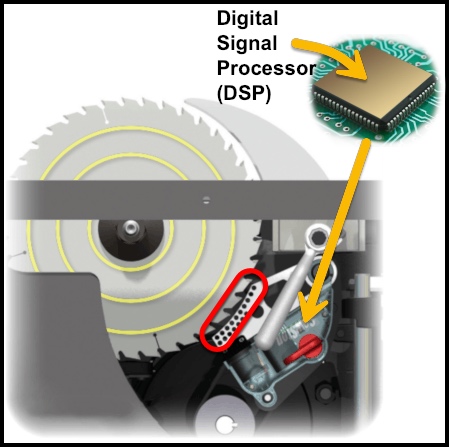
Image Source: thenewbiewoodworker.com
The Crucial Need for Saw Safety Features
Working with power saws, whether for professional carpentry or DIY projects, inherently carries risks. The spinning blade is a powerful cutting tool, and accidental contact can lead to severe lacerations, amputations, and lifelong disabilities. This is why saw safety features are not just optional additions but fundamental requirements for responsible tool operation. A primary concern in power tool safety is the potential for kickback, where the blade binds in the material and violently throws the workpiece or the saw back towards the operator. Another significant danger is accidental contact with the spinning blade. This is where advanced technologies like saw stops come into play, offering a critical layer of protection beyond traditional guards.
Deciphering Saw Stop Technology: A Look at Braking Systems
At its core, a saw stop is an advanced braking system for saws. Unlike simple blade guards that physically prevent contact, saw stops actively intervene when contact is imminent or has occurred. The goal is rapid deceleration of the blade to minimize injury. Various mechanisms are employed, each with its unique method of achieving this swift stop. These systems are designed to be highly sensitive, detecting the slightest contact to initiate the braking action.
The Role of the Pawl and Ratchet Mechanism
One common and effective method of stopping a saw blade involves a pawl and ratchet system. Imagine a wheel with teeth (the ratchet) and a lever or catch that engages those teeth (the pawl). When the saw is operating normally, the pawl is disengaged. However, upon detecting contact, a mechanism releases the pawl, allowing it to immediately engage with the spinning ratchet wheel. This engagement creates a sudden and forceful resistance, bringing the blade to a near-instantaneous halt. The rapid engagement of the pawl with the ratchet teeth is what provides the characteristic “stop” effect. This system is akin to the mechanism found in a bicycle’s freewheel, but engineered for maximum deceleration.
How a Friction Brake Achieves a Swift Stop
Another prominent approach utilizes a friction brake. In this system, a braking surface, often made of a high-friction material, is rapidly pressed against the spinning blade or a component connected to it. This direct contact generates significant friction, converting the blade’s kinetic energy into heat and bringing it to a stop. The effectiveness of a friction brake depends on the material used, the pressure applied, and the speed at which the brake engages. Some systems use spring-loaded pads that are released upon detecting contact, while others might employ an electromagnetic force to apply the braking pressure. The quicker and more forcefully the friction material contacts the blade, the faster the stop.
Magnetic Brakes: Leveraging Electromagnetism
Magnetic brake systems offer a sophisticated, often non-contact or low-contact method of stopping the blade. These systems typically involve an electromagnet and a conductive disc or rotor attached to the blade arbor. When the saw is on, the electromagnet is energized, creating a magnetic field that interacts with the spinning disc. This interaction induces eddy currents within the disc, which in turn generate opposing magnetic fields. These opposing fields create a braking torque, slowing the disc and, consequently, the blade. When the saw stop system detects contact, the electromagnet is de-energized, removing the braking force. Conversely, in some safety configurations, the electromagnet might be energized upon contact, creating a drag that slows the blade. The principle is to harness electromagnetic forces to induce a retarding motion.
Centrifugal Brakes: Speed-Activated Stopping
A centrifugal brake operates based on the principle of centrifugal force, which is the outward force experienced by an object moving in a circular path. In a centrifugal braking system for saws, weighted shoes or blocks are attached to a spinning mechanism connected to the blade arbor. As the blade spins, centrifugal force causes these weights to move outward. Typically, these weights are held in place by springs during normal operation. However, upon detecting contact, a mechanism releases these weights, allowing them to swing outward and engage with a braking surface, often the inside of a drum or housing. The faster the blade spins, the greater the centrifugal force, and the more firmly the weights engage the brake, providing a progressively stronger stopping action.
Anti-Kickback Brake: Addressing a Major Hazard
While not strictly a “saw stop” in the same sense as immediate blade contact detection, an anti-kickback brake is a critical safety feature that addresses a major hazard. Kickback is notoriously dangerous because it happens suddenly and violently. An anti-kickback brake system typically involves a device mounted near the blade that is designed to engage the workpiece or the saw body itself if a sudden backward or upward force (indicating kickback) is detected. This might involve a spring-loaded pawl that digs into the wood or a mechanism that applies a braking force to the blade arbor. Some advanced systems can detect the rapid deceleration or sudden change in blade rotation that accompanies kickback.
The Science Behind Blade Arrestors
A blade arrestor is another term often used in the context of saw safety, and it’s a good way to think about what these braking systems are doing: arresting the blade’s motion. The effectiveness of any saw stop system hinges on its ability to react and apply a stopping force almost instantaneously. This requires sophisticated sensors and rapid-acting mechanical or electrical components. The time from contact to a full stop is measured in milliseconds, a critical window that significantly reduces the potential severity of an injury.
Torque Limiters: Preventing Overload and Jamming
While not a direct saw stop in the context of blade contact, a torque limiter is another vital power tool safety feature. A torque limiter is designed to prevent damage to the tool and injury to the operator by disengaging the power source when the motor encounters excessive resistance. This typically happens when the blade jams in the material or if the user applies too much force. By disengaging the motor, the torque limiter prevents the blade from continuing to spin under extreme strain, which could lead to kickback or mechanical failure. It acts as a protective measure against the conditions that might precede or accompany a need for a blade arrestor.
Combining Technologies for Enhanced Safety
Modern saw stop systems often integrate multiple technologies to ensure reliability and effectiveness across different scenarios. For instance, a saw might have both an immediate contact-sensing system and a system that responds to kickback forces. Redundancy in safety systems is key to minimizing the chances of failure.
Types of Saw Stops Explained
The concept of a saw stop has evolved, leading to different implementations across various types of saws. While the most prominent example is the table saw, the principles can be applied to other cutting tools.
Table Saw Saw Stops: The Leading Example
The most widely recognized and perhaps most impactful application of saw stop technology is found in table saws. These saws are particularly prone to kickback and have large, exposed blades. A typical table saw saw stop system uses a sensor to detect contact with the blade. This sensor can be capacitive (detecting the conductivity of skin) or optical. Upon detection, a cartridge containing a spring-loaded braking mechanism is activated. This mechanism, often a dense alloy disc, is rapidly propelled into the spinning blade, creating immense friction and stopping the blade in as little as 5 milliseconds. The cartridge is usually designed to be a single-use item for safety and requires replacement after activation. The technology is so effective that it has become a defining feature for many modern table saws.
Other Saw Applications and Potential
While table saws are the primary beneficiaries, the principles of saw stops are being explored for other woodworking and metalworking tools.
* Mitre Saws: Similar safety concerns exist with mitre saws, particularly regarding the exposure of the blade and the potential for offcuts to be ejected forcefully. Integrating similar contact-sensing and braking mechanisms could enhance safety.
* Circular Saws: Handheld circular saws also present a significant risk. While they have guards, a more advanced blade arrestor system could provide an additional layer of protection against accidental blade contact.
* Band Saws: Band saws have continuous blades that can be a hazard. Developing systems that can rapidly stop the band if it breaks or if a user comes into contact with it would be a significant safety advancement.
Considerations for Choosing a Saw Stop System
When evaluating braking systems for saws, several factors are important:
* Activation Speed: How quickly does the system stop the blade? The faster, the better.
* Stopping Power: Does it stop the blade completely, or just slow it down significantly?
* False Activation: How prone is the system to activating when it shouldn’t (e.g., when cutting conductive materials like metal)?
* Cost of Replacement: After activation, are the components expensive to replace?
* Compatibility: Does it fit your specific saw model?
The Impact of Saw Stops on Power Tool Safety
The introduction of effective saw stop technology has dramatically improved power tool safety, particularly in woodworking. The reduction in severe injuries associated with table saws is a testament to its efficacy.
Reducing Severe Injuries: A Statistical Reality
Studies and anecdotal evidence consistently show a significant reduction in hand and finger injuries in workshops equipped with table saws featuring active saw stop systems. By preventing contact with the spinning blade, these systems eliminate the most severe types of accidents. This translates to fewer lost workdays, reduced medical costs, and, most importantly, fewer permanently disabling injuries.
Educating Users: Safety is a Shared Responsibility
While technology plays a crucial role, it’s important to remember that power tool safety is a shared responsibility. Even with a saw stop, proper training, the use of push sticks, eye protection, and maintaining a clean and organized workspace are paramount. Saw stops are a powerful safeguard, but they are not a substitute for safe operating practices. They are the last line of defense against catastrophic injury.
The Future of Saw Safety
As technology advances, we can expect even more sophisticated and integrated safety features in power tools. This might include:
* AI-Powered Sensing: Systems that can distinguish between different types of contact and react accordingly.
* Wireless Connectivity: Tools that can communicate their status and potential hazards to a central system or other tools.
* Enhanced Material Detection: Systems that can better differentiate between human flesh and various cutting materials to minimize false activations.
* Integrated Guards and Stops: Seamless integration of physical guards with active braking systems for a comprehensive safety solution.
Frequently Asked Questions (FAQ)
Q1: How fast does a saw stop engage?
A: Most effective saw stop systems engage and stop the blade in 5 to 10 milliseconds. This is incredibly fast, occurring almost instantaneously upon detecting contact.
Q2: Can a saw stop be accidentally triggered by cutting metal or wet wood?
A: Reputable saw stop systems are designed with sophisticated sensors to minimize false activations. For example, capacitive sensors detect the electrical conductivity of human skin. While cutting conductive materials might theoretically pose a risk, modern systems are engineered to differentiate between skin and most common work materials. Always consult the manufacturer’s specifications for your specific saw stop system.
Q3: What happens after a saw stop activates?
A: After activation, the braking mechanism (often a cartridge containing a specially designed disc) is usually spent and needs to be replaced. The saw itself may also require some inspection to ensure no damage occurred during the braking event.
Q4: Is a saw stop a replacement for physical guards?
A: No, a saw stop is a supplementary safety feature. It works in conjunction with, not as a replacement for, physical blade guards, riving knives, and other traditional safety devices. Safe operating practices also remain essential.
Q5: How does a saw stop relate to a torque limiter?
A: A torque limiter prevents motor overload and potential kickback by disengaging the motor when it senses excessive resistance. A saw stop, on the other hand, actively stops the blade itself after detecting contact with the operator. They address different types of hazards but both contribute to overall power tool safety.
Q6: What is a blade arrestor?
A: A blade arrestor is a device designed to stop a spinning saw blade quickly. This term is often used interchangeably with saw stop technology, as the primary function of a saw stop is to arrest the motion of the blade.
Q7: What are the different types of braking systems for saws?
A: Common braking systems include those using a pawl and ratchet, friction brakes, magnetic brakes, and centrifugal brakes, each employing different physical principles to rapidly decelerate the blade.
By embracing and understanding these advanced saw safety features, operators can significantly reduce the risk of serious injury, making their woodworking and other cutting tasks safer and more productive.