
Thomas Jefferson, a pivotal figure in American political history, served two full presidential terms, from 1801 to 1809. During this time, he had two different Vice Presidents: Aaron Burr and George Clinton. This situation arose due to the electoral laws and political landscape of the early American republic, particularly the election of 1800.
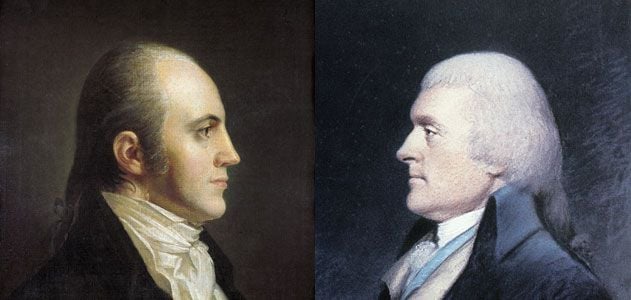
Image Source: th-thumbnailer.cdn-si-edu.com
The Unique Electoral System of the Early Republic
The United States Constitution, in its original form, did not anticipate the development of political parties as we know them today. Article II, Section 1, Clause 3 stipulated that each elector would cast two votes for President, and the person receiving the most votes would become President, while the runner-up would become Vice President. This system was designed to prevent any single faction or region from dominating the presidency.
However, this arrangement quickly led to complications. Electors were not initially required to distinguish between their votes for President and Vice President. This meant that a candidate could receive the highest number of votes for President and, by chance, also receive the second-highest, thus becoming both President and Vice President – a scenario that thankfully never materialized. The more common issue, as seen with Jefferson’s first Vice President, was that electors from the same party would cast their two votes for their leading candidates, inadvertently tying them.
Jefferson’s Vice Presidents: A Closer Look
The individuals who served as Jefferson’s Vice Presidents played significant roles in his administration and in the broader narrative of American governance. Understanding their tenures offers insight into the challenges and dynamics of the early presidency.
Aaron Burr: The Election of 1800 and its Aftermath
The first of Jefferson’s Vice Presidents was Aaron Burr. Burr was a prominent New York politician and a key figure in the Democratic-Republican Party. His nomination as Vice President alongside Thomas Jefferson in the election of 1800 was a strategic move by the party to secure votes in the crucial state of New York.
The election of 1800 was a fiercely contested and transformative event in American political history. It pitted the incumbent Federalist President John Adams against the Democratic-Republican candidate Thomas Jefferson. The Federalists had held power for two terms under George Washington and one under John Adams. However, public dissatisfaction with Adams’s policies, particularly the Alien and Sedition Acts, and his perceived aloofness, paved the way for the Democratic-Republicans.
- The Electoral Tie: The Democratic-Republicans expected Jefferson to win the presidency, and Burr the vice-presidency. However, due to the lack of a clear distinction between votes for President and Vice President, all 73 Democratic-Republican electors cast one vote for Jefferson and one for Burr. This resulted in an electoral tie between the two men, with each receiving 73 votes.
- The House of Representatives Decides: The Constitution dictated that if no candidate received a majority of electoral votes, the decision would fall to the House of Representatives. The House, at that time, was still dominated by Federalists, who harbored a deep distrust of both Jefferson and Burr.
- Federalist Intrigue: Many Federalists preferred Burr to Jefferson, whom they considered a dangerous radical. A faction of Federalists, led by Alexander Hamilton, actively worked to prevent Jefferson’s election, even though Hamilton personally disliked Burr even more. Hamilton believed Burr was an unprincipled opportunist and that Jefferson, while radical, was more committed to the nation’s founding principles.
- Jefferson’s Presidency Begins: After 36 agonizing ballots, Jefferson was finally elected President on February 17, 1801. Burr became Vice President. The election of 1800 was a significant moment as it marked the first peaceful transfer of power between opposing political parties in the United States, a cornerstone of democratic stability.
Despite serving as Vice President, Burr’s relationship with Jefferson soured. His presidential ambitions and his perceived ambition led to a deep rift. This animosity culminated in the infamous duel with Alexander Hamilton in 1804, where Burr mortally wounded Hamilton. This event effectively ended Burr’s political career in the East, and he was not renominated as Jefferson’s running mate in the 1804 election.
George Clinton: The Second Term
Following the disastrous duel and Burr’s subsequent political isolation, the Democratic-Republican Party sought a new candidate to run alongside Jefferson for his second presidential term in the 1804 election. They chose George Clinton, the long-serving Governor of New York and a respected figure within the party.
- The 1804 Election: The 1804 election was a much smoother affair for Jefferson. Running with George Clinton, he secured a decisive victory over the Federalist candidate, Charles Cotesworth Pinckney. Jefferson won 162 electoral votes to Pinckney’s 14.
- Clinton’s Role: George Clinton served as Vice President for Jefferson’s second term, from 1805 to 1809. Unlike Burr, Clinton was a more traditional politician, and his relationship with Jefferson was generally cordial, though less consequential than the dramatic first term. His role was primarily to preside over the Senate and to provide a counterbalance to Jefferson’s intellectual and philosophical leadership.
The Impact of the Twelfth Amendment
The tumultuous election of 1800 and the subsequent tie between Jefferson and Burr highlighted the flaws in the original electoral system. In response, Congress passed, and the states ratified, the Twelfth Amendment to the Constitution in 1804.
The Twelfth Amendment stipulated that electors would cast separate ballots for President and Vice President. This change was crucial for preventing future electoral ties of the kind that occurred in 1800 and ensured that presidential and vice-presidential candidates would be voted for as a team. This amendment significantly altered the dynamics of presidential elections and solidified the role of political parties in the selection of national leaders.
- Key Provisions of the Twelfth Amendment:
- Electors must cast distinct votes for President and Vice President.
- A candidate must receive a majority of electoral votes for both offices.
- If no candidate receives a majority for President, the House of Representatives chooses from the top three candidates.
- If no candidate receives a majority for Vice President, the Senate chooses from the top two candidates.
The Twelfth Amendment, enacted just in time for the 1804 election, ensured that the ticket of Jefferson and Clinton was properly elected under the new rules. It also set the precedent for how presidential and vice-presidential candidates would run together in all subsequent elections.
Presidential Succession and Stability
The concept of presidential succession is vital for the smooth functioning of government. In the early days of the republic, the mechanisms for ensuring this stability were still being refined. The original constitutional framework, as demonstrated by the 1800 election, proved to be less robust than intended.
- Early Presidential Terms: The first few presidential terms were crucial in establishing norms and practices for the executive branch. The experiences of John Adams, Thomas Jefferson, and their Vice Presidents helped shape the future of American presidential appointments and the executive leadership.
- The Vice Presidency’s Evolving Role: Initially, the Vice Presidency was a somewhat undefined office. However, the men who held the position, including Jefferson’s Vice Presidents, contributed to its development. Burr’s active role in the Senate and his political maneuvering, and Clinton’s more passive but stable presence, demonstrated the varied ways the Vice President could engage with the executive and legislative branches.
Jefferson’s presidency, therefore, was a period of significant evolution not only for the executive branch but also for the electoral process itself. The presence of two Vice Presidents over his two presidential terms is a direct consequence of the original electoral system’s quirks and the subsequent reforms that corrected them.
The Election of 1800: A Turning Point
The election of 1800 stands as a watershed moment in American political history. It represented a fundamental shift in the nation’s political direction and a vital test of its democratic institutions.
- Federalists vs. Democratic-Republicans: The election was a stark contrast between the Federalist vision of a strong central government, often favoring commercial interests, and the Democratic-Republican vision of agrarianism, states’ rights, and a more limited federal government.
- The Peaceful Transfer of Power: The fact that the Federalists, despite their reservations, accepted the outcome of the election and facilitated Jefferson’s inauguration set a critical precedent. This peaceful transfer of power, even between deeply opposed factions, demonstrated the resilience of the young republic.
The 1804 Election: A Mandate for Jefferson
The 1804 election cemented Jefferson’s legacy and provided a strong mandate for his policies. The clear victory over Pinckney, with George Clinton as his running mate, signified public approval of Jefferson’s first term.
- A Unified Ticket: The twelfth amendment ensured that Jefferson and Clinton ran as a unified ticket, with clear roles defined for both the presidential and vice-presidential candidates. This streamlined the electoral process and avoided the confusion of the previous election.
- Jefferson’s Second Term: Jefferson’s second term saw significant achievements, including the Louisiana Purchase, which doubled the size of the United States. The stability provided by the new electoral rules contributed to the executive’s ability to focus on national policy.
Presidential Appointments and Political Alignments
Throughout his two presidential terms, Thomas Jefferson made numerous presidential appointments to fill positions within the executive branch and the federal judiciary. These appointments were crucial for implementing his administration’s policies and for shaping the future of the nation.
- Patronage and Merit: The era saw a delicate balance between political patronage, rewarding loyal supporters, and the growing emphasis on merit in public service. Jefferson, despite his criticisms of Federalist appointments, also engaged in the practice of appointing individuals who aligned with his political philosophy.
- The Role of the Vice President in Appointments: While the President holds the ultimate authority for presidential appointments, the Vice President often played a role in advising the President on potential candidates and in navigating the political landscape surrounding appointments. George Clinton, with his extensive experience in New York politics, likely provided valuable counsel to Jefferson.
Legacy of Jefferson’s Vice Presidents
The tenures of Aaron Burr and George Clinton as Vice Presidents under Thomas Jefferson offer a compelling study in the evolution of American political institutions.
- Aaron Burr: Burr’s story is a cautionary tale of ambition unchecked and the consequences of personal animosity in politics. His time as Vice President was marked by political intrigue and, ultimately, a tragic end to his national prominence.
- George Clinton: Clinton’s service was more conventional, representing a stable and experienced hand in the executive branch. His vice-presidency marked a return to a more predictable political dynamic after the turmoil of the 1800 election.
Together, Jefferson’s two Vice Presidents underscore the significant changes in the American political system during its formative years, from the initial design of the electoral college to the ratification of the Twelfth Amendment.
Frequently Asked Questions (FAQ)
Q1: Why did Thomas Jefferson have two Vice Presidents?
A1: Thomas Jefferson had two Vice Presidents, Aaron Burr and George Clinton, because he served two full presidential terms (1801-1809). Aaron Burr served during Jefferson’s first term (1801-1805), and George Clinton served during Jefferson’s second term (1805-1809).
Q2: What was the issue with the election of 1800 that led to Aaron Burr becoming Vice President?
A2: The election of 1800 resulted in a tie between Thomas Jefferson and Aaron Burr for the presidency because electors cast two votes each for President without specifying which vote was for President and which was for Vice President. Both Jefferson and Burr received 73 electoral votes. The decision then went to the House of Representatives, which eventually elected Jefferson as President.
Q3: How did the Twelfth Amendment affect the election of Vice Presidents?
A3: The Twelfth Amendment, ratified in 1804, changed the Constitution to require electors to cast separate ballots for President and Vice President. This prevented electoral ties between presidential and vice-presidential candidates of the same party and ensured that candidates ran as a ticket.
Q4: Who were Jefferson’s Vice Presidents, and what were their terms?
A4: Thomas Jefferson’s Vice Presidents were:
* Aaron Burr: Served from 1801 to 1805 (first term).
* George Clinton: Served from 1805 to 1809 (second term).
Q5: What was the significance of the election of 1800 in American political history?
A5: The election of 1800 was significant because it marked the first peaceful transfer of power between opposing political parties in the United States, moving from Federalist to Democratic-Republican control. It also highlighted the flaws in the original electoral system, leading to the passage of the Twelfth Amendment.