
A typical 120-volt contractor-style table saw uses between 10 to 15 amps when running, and can draw up to 20 amps during startup or under heavy load.
When you’re setting up a new workshop or looking to upgrade your woodworking tools, understanding the electrical needs of your equipment is crucial. The table saw, often the centerpiece of any woodworking shop, has specific table saw electrical requirements that you need to be aware of. This guide will delve into the specifics of table saw amperage, helping you make informed decisions about power, circuits, and safety.
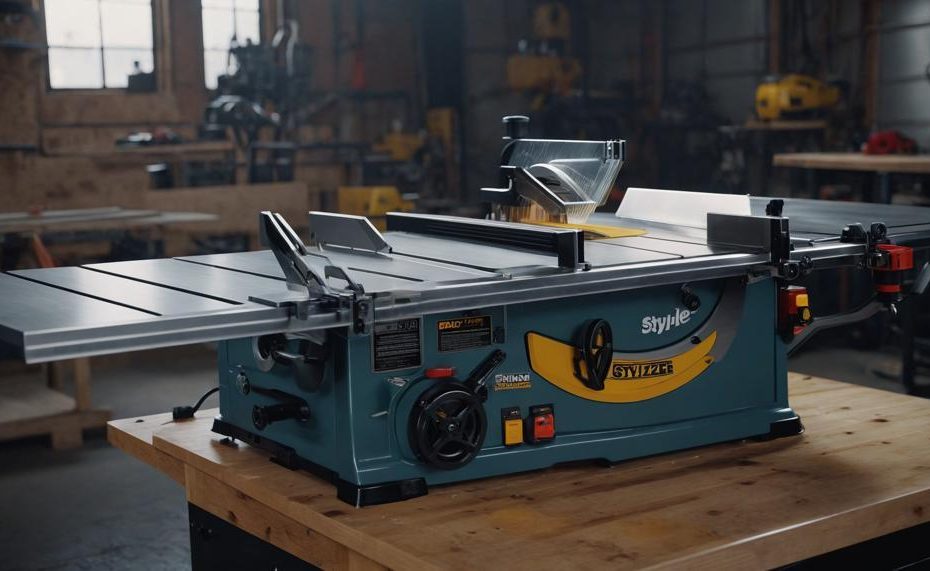
Image Source: www.disposecleverly.com
Deciphering Table Saw Power Consumption
The amount of electricity a table saw uses, commonly referred to as table saw power consumption, varies based on several factors. The primary determinant is the motor’s horsepower (HP). A more powerful motor generally requires more electricity. However, it’s not just about raw power; the design and efficiency of the motor also play a role.
Motor Horsepower and Amperage
- 1 HP Motors: These are usually found in smaller, lighter-duty table saws. They typically draw around 8 to 12 amps at 120 volts.
- 1.5 HP Motors: A common size for contractor-grade saws, these motors often have an amp draw of 10 to 15 amps at 120 volts.
- 2 HP and Higher Motors: More powerful saws, often found in professional or cabinet models, can have motors ranging from 2 HP to 5 HP or even more. These will draw 15 to 20 amps or even higher at 120 volts. For 240-volt models, the amperage is typically halved for the same horsepower, but the overall power draw remains similar.
It’s important to note that the stated horsepower is often the “maximum developed horsepower” rather than continuous running horsepower. This means the motor can produce more power for short bursts, which is relevant during startup or when cutting very dense materials.
Fathoming Table Saw Amp Draw
The table saw amp draw isn’t a constant figure. It fluctuates throughout the operation of the saw.
Startup vs. Running Amps
- Startup Amps: When you first turn on a table saw, the motor draws a significantly higher amount of current for a brief moment. This is known as the “inrush current” or “startup amperage.” This surge is necessary to overcome the inertia of the motor and the blade.
- Running Amps: Once the motor is up to speed, the amperage drops to its normal operating level. This is the figure you’ll typically find listed on the saw’s nameplate, often around 10-15 amps for common contractor saws.
- Load Amps: When the saw is cutting through wood, especially dense hardwoods or when making deep cuts, the motor will work harder, and the amperage will increase. This is the “load amperage.”
Factors Affecting Amp Draw
- Wood Density: Cutting hard materials like oak or maple will cause the saw to draw more amps than cutting softer woods like pine.
- Blade Kerf: Wider saw blades (higher kerf) create more friction and require more power, leading to a higher amp draw.
- Blade Sharpness and Tooth Count: A dull blade or a blade with too many teeth for the material being cut can bog down the motor and increase amperage.
- Depth of Cut: Making deeper cuts requires more motor effort and thus increases the amp draw.
- Feed Rate: Pushing the wood too fast through the blade can strain the motor, leading to higher amperage.
Interpreting Table Saw Electrical Requirements
When setting up your table saw, ensuring you meet its table saw electrical requirements is paramount for safety and optimal performance.
Voltage and Amperage Compatibility
Most portable and contractor-style table saws are designed to run on standard 120-volt household current. These typically come with a cord and plug compatible with a standard 15-amp or 20-amp household outlet.
- 120-Volt Saws: These are the most common for hobbyists and home workshops. They usually have motors rated between 1 HP and 2 HP and draw between 10 to 15 amps when running.
- 240-Volt Saws: Larger, more powerful cabinet saws and some high-end contractor saws are designed for 240-volt circuits. These saws typically have higher horsepower motors (3 HP or more) and draw less amperage than their 120-volt counterparts for equivalent power output. For example, a saw that draws 15 amps at 120 volts might only draw 7.5 amps at 240 volts.
You need to ensure your power supply matches the saw’s requirements. Never try to run a 240-volt saw on a 120-volt circuit, or vice-versa, without the proper adapter and a full understanding of the implications.
Choosing the Right Table Saw Circuit Breaker Size
The table saw circuit breaker size is a critical safety component. It protects your wiring and the saw from overcurrent situations that could lead to overheating and fire.
General Recommendations
- For 15-Amp Saws: If your table saw’s nameplate indicates a running current of 15 amps or less, it’s generally recommended to use a 15-amp circuit breaker. The saw’s plug will likely be a NEMA 5-15P, which fits into a standard 15-amp household outlet.
- For 20-Amp Saws (or Saws with Higher Startup Draw): If your table saw draws closer to 15 amps while running or has a significant startup surge, it’s often advisable to use a 20-amp circuit breaker and a corresponding 20-amp outlet (NEMA 5-20R). This provides a bit more headroom and reduces the likelihood of nuisance tripping. The saw’s plug might be a NEMA 5-20P, which has one blade turned 90 degrees compared to a 5-15P plug.
- Dedicated Circuits: It is highly recommended to run table saws on a dedicated circuit. This means the circuit breaker and wiring for the saw are not shared with other appliances or outlets in your home. This prevents other devices from tripping the breaker when the saw starts up and ensures the saw receives consistent power.
Why a Dedicated Circuit is Important
- Prevents Nuisance Tripping: When multiple high-draw appliances are on the same circuit, the total current can exceed the breaker’s rating, causing it to trip. A dedicated circuit isolates the table saw.
- Consistent Power Delivery: Sharing a circuit can lead to voltage drops when other appliances activate, potentially affecting the saw’s performance and motor life.
- Safety: A dedicated circuit ensures that the wiring is appropriately sized for the saw’s anticipated load and that the breaker is correctly matched to the wiring and the saw.
Calculating Table Saw Wattage
Table saw wattage is the actual power the saw consumes when operating. You can calculate wattage if you know the voltage and amperage. The formula is simple:
Wattage (W) = Voltage (V) × Amperage (A)
For example:
- A 120-volt table saw drawing 15 amps uses: 120 V × 15 A = 1800 Watts (or 1.8 kW).
- A 240-volt table saw drawing 10 amps uses: 240 V × 10 A = 2400 Watts (or 2.4 kW).
Knowing the wattage helps you estimate the running cost of the saw and compare its energy consumption to other appliances.
How Much Electricity Does a Table Saw Use?
The amount of electricity a table saw uses per hour depends on its wattage and how long it is run.
- Average Consumption: For a 1.5 HP saw (approx. 1800 Watts), if run continuously for one hour, it would consume 1.8 kilowatt-hours (kWh).
- Cost Calculation: To estimate the cost, multiply the kWh by your local electricity rate. If electricity costs $0.15 per kWh, running that saw for an hour would cost 1.8 kWh × $0.15/kWh = $0.27.
- Practical Use: Most table saw usage involves intermittent operation (cutting, repositioning, etc.). So, the actual electricity consumed and the cost will be less than continuous operation. However, the power drawn during each cut, especially through hard materials, is substantial.
Identifying the Table Saw Plug Type
The table saw plug type is a visual indicator of the saw’s electrical requirements and the type of outlet it needs. Plugs are standardized by the National Electrical Manufacturers Association (NEMA).
Common NEMA Plug Types for Table Saws:
- NEMA 5-15P: This is the standard plug found on most household appliances. It has two parallel flat blades and a round ground pin. It is rated for 15 amps at 125 volts. Saws with this plug are designed for standard 15-amp household outlets.
- NEMA 5-20P: This plug looks similar to the 5-15P but has one of the parallel blades turned 90 degrees. It is rated for 20 amps at 125 volts. Saws with this plug are designed for 20-amp household outlets, which have one horizontal slot.
- NEMA 6-15P or 6-20P: These plugs are for 240-volt circuits.
- NEMA 6-15P: Rated for 15 amps at 250 volts.
- NEMA 6-20P: Rated for 20 amps at 250 volts.
Saws with these plugs require a 240-volt outlet.
Always match the plug on your table saw to the outlet and circuit breaker. If your saw has a 20-amp plug (NEMA 5-20P) and you only have 15-amp outlets, you cannot simply force the plug in. You will need to have a qualified electrician install a proper 20-amp outlet on a dedicated 20-amp circuit.
Table Saw Voltage: A Critical Consideration
The table saw voltage dictates the type of electrical circuit required to power the saw. As discussed, this is primarily 120 volts or 240 volts.
Why Voltage Matters
- Power Delivery: Higher voltage allows for more power to be delivered with less current. This is why larger, more powerful saws often use 240 volts – it reduces the amperage required, which can mean thinner, less expensive wiring can be used, and it reduces the load on the electrical system.
- Motor Design: Table saws are designed with specific voltage requirements in mind. The motor windings and internal components are calibrated for either 120V or 240V. Using the wrong voltage can damage the motor or cause it to operate inefficiently.
- Outlet Compatibility: As mentioned, plug types are directly tied to voltage. A 120V plug will not fit a 240V outlet, and vice versa, due to different pin configurations.
Table Saw Amperage: A Closer Look
The table saw amperage is the measure of the rate of electrical current flowing through the saw’s motor. It’s often the most commonly referenced specification when discussing a saw’s power draw.
Key Amperage Figures to Note:
- Nameplate Amperage: This is the amperage listed on the saw’s nameplate or in its manual. It typically represents the average running amperage under normal load.
- Maximum Amperage: This is the highest amperage the saw might draw, usually during startup or under a significant cutting load. It’s important to consider this when selecting circuit breaker size.
- Continuous Amperage: This refers to the amperage the saw can safely draw continuously without overheating. Most portable saws are not designed for continuous high-load operation.
Typical Amperage Ranges for Common Table Saw Types:
| Saw Type | Typical HP | Voltage | Typical Running Amps | Potential Startup/Load Amps | Recommended Circuit Breaker | Plug Type |
|---|---|---|---|---|---|---|
| Benchtop Saw | 0.5 – 1.0 | 120V | 5 – 8 Amp | 10 – 12 Amp | 15 Amp | NEMA 5-15P |
| Contractor Saw | 1.0 – 2.0 | 120V | 10 – 15 Amp | 15 – 20 Amp | 15 Amp or 20 Amp | NEMA 5-15P/5-20P |
| Cabinet Saw | 2.0 – 3.0 | 120V | 15 – 20 Amp | 20 – 25 Amp | 20 Amp | NEMA 5-20P |
| Cabinet Saw | 3.0 – 5.0 | 240V | 7.5 – 15 Amp | 10 – 18 Amp | 15 Amp or 20 Amp | NEMA 6-15P/6-20P |
| Industrial Saw | 5.0+ | 240V/480V | 15+ Amp | 20+ Amp | 20 Amp+ (check manual) | Various |
Important Note: Always refer to the specific table saw’s manufacturer’s specifications for the most accurate information. The table above provides general guidelines.
Safety First: Wiring and Circuit Protection
When dealing with the power requirements of a table saw, safety should always be your top priority.
Wire Gauge
The wire gauge used for the circuit feeding your table saw must be adequate for the amperage draw. Thicker wires (lower gauge number) can handle more current without overheating.
- 15-Amp Circuits: Typically use 14-gauge wire.
- 20-Amp Circuits: Require 12-gauge wire.
- 30-Amp Circuits (for 240V saws): Often use 10-gauge wire.
Using wire that is too thin for the load can lead to overheating, melting insulation, and potentially a fire.
Extension Cords
If you need to use an extension cord, it must be heavy-duty and rated for the amperage and voltage of your table saw.
- Gauge: Use a thicker gauge (lower AWG number) extension cord for longer runs or higher amperage. A 12-gauge cord is generally recommended for 15-amp circuits, and a 10-gauge cord for 20-amp circuits.
- Length: Shorter extension cords are always better. The longer the cord, the more resistance it has, leading to voltage drop, which can affect saw performance and motor life.
- Rating: Ensure the extension cord’s amperage rating meets or exceeds the table saw’s requirements.
Using an undersized or damaged extension cord is a significant fire hazard. It’s always best to plug directly into a properly installed outlet if possible.
Frequently Asked Questions (FAQ)
Q1: Can I plug my table saw into a regular household outlet?
A1: Yes, if your table saw is designed for 120-volt operation and its amperage draw is 15 amps or less, you can plug it into a standard 15-amp household outlet. However, it’s highly recommended to use a dedicated circuit for your table saw. If the saw has a 20-amp plug (NEMA 5-20P), you will need a 20-amp outlet on a dedicated 20-amp circuit.
Q2: My table saw keeps tripping the breaker. What should I do?
A2: Several factors could cause a breaker to trip.
* Nuisance Tripping: The circuit may be overloaded with other appliances. Ensure the saw is on a dedicated circuit.
* Startup Surge: The breaker might be undersized for the saw’s startup amperage. Consider upgrading to a 20-amp breaker if the wiring supports it.
* Faulty Motor: A problem with the saw’s motor could be causing it to draw excessive current.
* Worn Breaker: The circuit breaker itself might be failing.
It’s best to consult the saw’s manual and, if unsure, have a qualified electrician inspect the circuit and the saw.
Q3: How do I know if I need a 20-amp circuit for my table saw?
A3: Check the amperage rating on your table saw’s nameplate. If it specifies a running current of 15 amps or higher, or if it has a NEMA 5-20P plug (the one with the sideways blade), you will need a 20-amp circuit and outlet. Even if your saw is rated for 12-14 amps, a 20-amp circuit provides more stability and reduces the chance of tripping.
Q4: Is it okay to use a 15-amp table saw on a 20-amp circuit?
A4: Yes, it is generally safe to plug a 15-amp device into a 20-amp circuit. The 20-amp breaker will still protect the 15-amp saw from overcurrent. The wiring for the 20-amp circuit should be 12-gauge wire, which is robust enough for the saw.
Q5: My table saw is rated at 2 HP. What does that mean for its amperage?
A5: A 2 HP motor on a 120-volt table saw typically draws around 15 to 20 amps when running. The exact amperage will be listed on the saw’s nameplate. This means it will likely require a 20-amp circuit and outlet.
Q6: Can I convert my 120-volt table saw to 240 volts?
A6: While some larger stationary saws are dual-voltage and can be rewired, most contractor and benchtop saws are not designed for this conversion. Attempting to do so without proper knowledge and manufacturer guidance can be dangerous and will likely damage the motor. Always use the voltage specified by the manufacturer.
Q7: What is the difference between table saw amperage and table saw wattage?
A7: Amperage (amps) measures the flow of electrical current, while wattage (watts) measures the total power consumed. Wattage is calculated by multiplying voltage by amperage (W = V × A). A table saw might draw 15 amps at 120 volts, resulting in 1800 watts of power consumption.
By thoroughly understanding these aspects of table saw electrical requirements, you can ensure your equipment operates safely and efficiently, allowing you to focus on the joy of woodworking. Always prioritize safety and consult professionals when in doubt.