
Can you become a Drill Instructor in the Marines? Yes, but it’s a challenging and rewarding path that requires dedication, exceptional performance, and meeting specific criteria. Becoming a DI, as they are commonly known, is one of the most prestigious and demanding roles within the Marine Corps. It’s a significant commitment, impacting the future of every Marine recruit. This guide will walk you through the entire process, from initial requirements to the daily life of a Drill Instructor at a recruit depot.
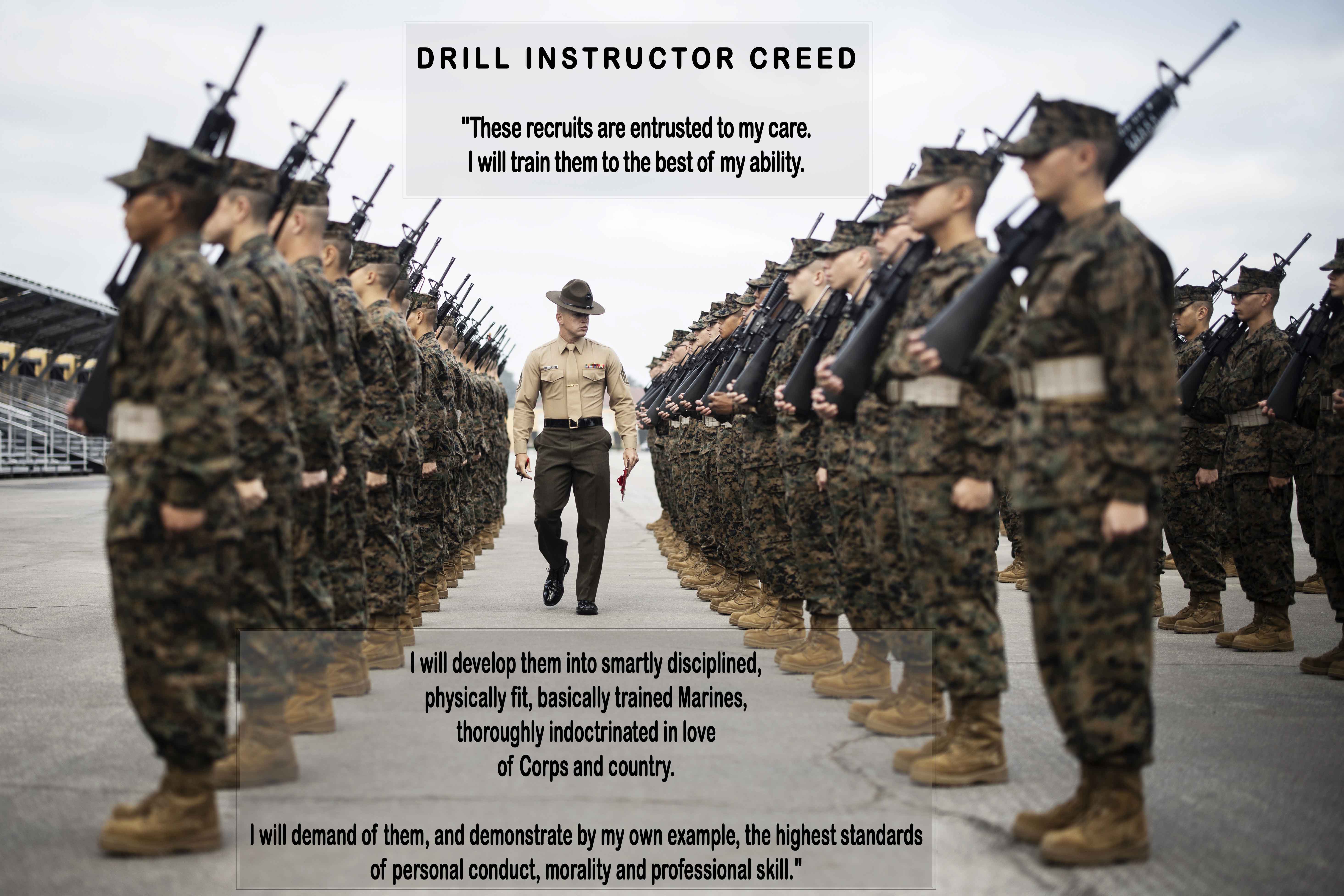
Image Source: www.mcrdsd.marines.mil
The Journey to Becoming a DI
The path to becoming a Drill Instructor in the Marine Corps is not for everyone. It’s a selection process that identifies the absolute best Marines to lead the transformation of civilians into United States Marines. This involves a rigorous application, screening, and training phase.
DI Requirements: The Foundation
Before you can even consider applying, you must meet a set of stringent DI requirements. These are designed to ensure that only the most qualified Marines are entrusted with the critical task of Marine Corps recruit training.
- Rank: Typically, Marines must hold the rank of Sergeant (E-5) or higher. While there can be exceptions, this is the general guideline. You need to have proven leadership potential and experience.
- Time in Service: You generally need to have at least two years of service in the Marine Corps. This ensures you have a solid grasp of Marine Corps culture, traditions, and standards.
- Performance Record: Your Performance Evaluation Reports (PERs) are paramount. You need a history of consistent high performance, demonstrating excellence in every aspect of your military occupational specialty (MOS) and leadership. A history of commendatory marks is essential.
- Physical Fitness: Exceptional DI physical fitness is non-negotiable. You must be able to pass the Physical Fitness Test (PFT) and the Combat Fitness Test (CFT) with high scores. This includes being able to keep pace with recruits, conduct physical training, and maintain a high level of personal readiness.
- Disciplinary Record: A clean disciplinary record is a must. Any significant infractions or adverse actions can disqualify you.
- Professional Military Education (PME): Completion of relevant PME courses demonstrates your commitment to professional development and leadership.
- Moral Character: Drill Instructors are held to the highest moral and ethical standards. They are role models, and their character must be impeccable.
- Volunteer Status: While some Marines may be assigned, the majority of Drill Instructor assignments are voluntary. You must express a strong desire to serve in this capacity.
The Marine Corps Instructor Pipeline
The Marine Corps instructor pipeline is a structured progression that prepares a Marine for the demanding role of a Drill Instructor. It’s not just about being a good Marine; it’s about becoming an elite trainer of Marines.
Phase 1: Initial Application and Screening
The first step is to formally express your interest. This usually involves submitting a package to your command, outlining your desire to become a DI. This package will include:
- A formal letter of intent.
- Copies of your service record book and performance evaluations.
- Letters of recommendation from your chain of command.
- Evidence of meeting all the basic DI requirements.
Your command will then screen your application. If you meet the initial criteria, your package will be forwarded to the recruiting command or the recruit depot you are applying to.
Phase 2: Recruit Depot Assignment and Initial Training
If your application is accepted, you will likely be assigned to one of the Marine Corps recruit depots:
- Marine Corps Recruit Depot Parris Island, South Carolina: Primarily trains female recruits and male recruits from east of the Mississippi River.
- Marine Corps Recruit Depot San Diego, California: Primarily trains male recruits from west of the Mississippi River.
Upon arrival at a recruit depot, you will begin specialized training to prepare you for your duties. This is where the true journey of becoming a DI intensifies.
Drill Instructor School: Forging the Trainers
The pinnacle of the DI training pipeline is Drill Instructor School (DIS). Located at Marine Corps Base Quantico, Virginia, DIS is an intensive, multi-week course designed to equip Marines with the specific skills, knowledge, and mindset required to effectively train recruits at Marine Corps boot camp.
What You’ll Learn at DIS:
- The Drill Instructor’s Creed: Deepening your understanding and embodiment of the DI’s role and responsibilities.
- Drill and Ceremony Mastery: Perfecting your own drill skills and learning how to teach them to recruits.
- Recruit Training Curriculum: Detailed knowledge of every aspect of Marine Corps recruit training, from academic subjects to physical conditioning and combat skills.
- Leadership and Motivation Techniques: Learning how to inspire, discipline, and mold young men and women. This includes psychological aspects of recruit development.
- Instructor Techniques: Developing effective teaching methods to convey complex information clearly and concisely.
- Marine Corps History and Traditions: Ensuring you can instill a deep respect for the Corps’ legacy.
- Counseling and Mentorship: Learning how to identify and address individual recruit needs and challenges.
- Legal and Administrative Procedures: Familiarizing yourself with the rules and regulations governing recruit training.
- Physical Training Methods: Honing your ability to conduct and supervise demanding physical training sessions.
Graduating from Drill Instructor School is a significant achievement, signifying that you are ready to take on the immense responsibility of shaping future Marines.
DI Duties: The Life of a Drill Instructor
Once you’ve graduated from DIS and are assigned to a recruit depot, your DI duties begin in earnest. The life of a Drill Instructor is demanding, often working long hours and dedicating yourself entirely to the mission of recruit development.
The Crucible of Recruit Training
As a DI, you are directly responsible for every aspect of a platoon of recruits’ lives for approximately 13 weeks. This includes:
- Physical Conditioning: Leading recruits through rigorous physical training designed to build strength, endurance, and mental toughness. This is where your own DI physical fitness is constantly on display.
- Drill and Ceremony: Teaching recruits the precise movements and discipline of Marine Corps drill.
- Weapon Handling and Marksmanship: Instructing recruits on the safe and effective use of their service weapons.
- Classroom Instruction: Teaching Marine Corps history, customs, courtesies, and military justice.
- Field Skills: Training recruits in basic combat skills, navigation, and survival techniques.
- Habitability and Personal Hygiene: Ensuring recruits maintain a high standard of cleanliness and order in their living spaces.
- Discipline and Motivation: Maintaining strict discipline while fostering a sense of teamwork, pride, and belonging. You are the embodiment of Marine Corps standards.
- Mental Fortitude: Pushing recruits beyond their perceived limits to build resilience and the ability to perform under stress.
The DI’s Schedule
A typical day for a Drill Instructor starts before dawn and ends late into the night. Your life revolves around the platoon’s schedule. This often includes:
- Early morning physical training.
- Supervising morning routines and inspections.
- Conducting academic and practical instruction.
- Overseeing mess hall periods.
- Leading drill sessions.
- Ensuring recruits are prepared for upcoming milestones.
- Late-night inspections and counseling.
The pace is relentless, and the expectation is perfection, not just from the recruits, but from you as their instructor.
The Three-Hat System
Drill Instructors operate under a “three-hat” system, meaning they are simultaneously:
- A Drill Instructor: Responsible for the physical and mental transformation of recruits.
- A Safety NCO: Ensuring the safety of all personnel under their charge.
- A Personnel Manager: Tracking recruit progress, identifying issues, and reporting on their development.
The Impact of Becoming a DI
Becoming a DI is more than just a job assignment; it’s a transformative experience for the Marine who serves in that role. You will:
- Develop unparalleled leadership and management skills.
- Gain a profound understanding of the Marine Corps’ ethos and values.
- Experience immense satisfaction in shaping the next generation of Marines.
- Build incredible resilience and mental toughness.
- Become a vital part of the Marine Corps’ legacy.
The DI Experience: Beyond the Grind
While the DI duties are undeniably demanding, the experience of being a Drill Instructor is also incredibly rewarding. You are at the forefront of creating and instilling the core values that define every Marine.
The Emotional and Psychological Aspects
Being a DI requires a unique blend of sternness and empathy. You must be the unwavering disciplinarian, the constant motivator, and sometimes, the first sign of encouragement for a struggling recruit. This requires significant emotional intelligence and the ability to compartmentalize.
- Maintaining Composure: Recruits will test your patience. You must remain calm and in control, even in the most stressful situations.
- Building Trust: While you are an authority figure, building a level of trust is crucial for recruits to learn and grow. They need to believe you have their best interests at heart, even when pushing them hard.
- Instilling Pride: You are the living embodiment of Marine Corps pride. Your conduct and attitude will directly influence how recruits perceive the Corps.
Physical Fitness for DIs
Your DI physical fitness is not just about personal health; it’s a fundamental requirement of the job. You need to be able to:
- Keep Pace: You will be on your feet for most of the day, walking, running, and standing for extended periods.
- Lead PT: You must be able to conduct and participate in physical training sessions, setting the example for recruits.
- Demonstrate Skills: Sometimes, you may need to demonstrate proper techniques for drills, exercises, or even weapons handling.
- Maintain Readiness: You are expected to maintain peak physical condition at all times.
Table 1: Comparison of PFT and CFT Standards (Example)
| Test | Marine Corps Recruit (Male) | Marine Corps DI (Male) |
|---|---|---|
| PFT: Pull-ups | Minimum 3, Max 20+ | Minimum 15, Max 23+ |
| PFT: Cruches | Minimum 50, Max 100+ | Minimum 80, Max 100+ |
| PFT: Run (3 mi) | Minimum 28:00, Max 18:00+ | Minimum 21:00, Max 18:00+ |
| CFT: Movement | Minimum 100, Max 240+ | Minimum 160, Max 240+ |
| CFT: Throw/Catch | Minimum 10, Max 20+ | Minimum 15, Max 20+ |
| CFT: Sprint/Drag | Minimum 80, Max 120+ | Minimum 100, Max 120+ |
| CFT: Obstacle | Minimum 1.50, Max 2.20+ | Minimum 1.50, Max 2.20+ |
Note: These are illustrative examples of standards and can vary. Actual DI standards are typically higher than recruit standards.
Professional Development as a DI
Serving as a Drill Instructor is a form of advanced professional development. You will gain invaluable experience in:
- Instructional Design: Learning how to structure and deliver effective training programs.
- Leadership Under Pressure: Mastering the art of leading and motivating diverse groups of individuals in high-stress environments.
- Human Resource Management: Developing skills in assessment, counseling, and personnel development.
- Public Speaking: Becoming a confident and commanding communicator.
The Legacy of the DI
Every Marine who has gone through Marine Corps boot camp has a story about their Drill Instructor. DIs are often remembered for their intensity, their fairness, and their ability to push recruits to achieve things they never thought possible. You become a legend in the eyes of the recruits you train.
Frequently Asked Questions About Becoming a DI
Q: Is it harder to become a Drill Instructor than a Drill Sergeant in the Army?
A: Both roles are highly selective and demanding. The Marine Corps places a strong emphasis on the Drill Instructor as the primary architect of a recruit’s transformation, and the training at Drill Instructor School is extremely rigorous. While specific standards differ between branches, the core expectation of exemplary leadership and performance is universal.
Q: Can I become a Drill Instructor if I’m not a combat arms MOS?
A: Yes. While combat arms Marines often have a strong foundation in physical and mental conditioning, Drill Instructor roles are open to Marines from a wide range of MOSs. What matters most is your performance, leadership potential, and commitment to the standards.
Q: How long do Marines typically serve as Drill Instructors?
A: The typical tour of duty for a Drill Instructor is three years. This is an intensive assignment, and Marines are usually selected for this duty based on their performance and willingness to serve in this capacity.
Q: What happens if I fail Drill Instructor School?
A: Failing Drill Instructor School does not automatically mean you will be discharged from the Marine Corps. However, it will likely impact your future career progression and your ability to be considered for similar leadership development programs. You will typically be reassigned to another duty station based on your MOS and needs of the Marine Corps.
Q: Is the assignment to become a DI voluntary or mandatory?
A: While the Marine Corps can assign Marines to DI duty based on needs, the vast majority of Drill Instructors are volunteers who actively seek out this challenging and prestigious assignment. Expressing your interest and meeting the requirements are key.
Q: Can female Marines become Drill Instructors?
A: Yes. Female Marines serve as Drill Instructors and are crucial to the training of all recruits, including female platoons at MCRD Parris Island, and in supporting roles for male platoons.
Q: What are the key differences between DI duties and regular NCO duties?
A: While both involve leadership, DI duties are hyper-focused on the development and transformation of new recruits. This involves constant supervision, direct instruction across a wide range of subjects, and extreme pressure to instill discipline and Marine Corps values. Regular NCO duties might involve managing a team within an operational unit, which has a different focus.
Q: What is the selection process like for Drill Instructor School?
A: The selection process involves a competitive application package, interviews, and potentially a screening at the recruit depot. Those selected for DIS undergo an extremely demanding course designed to test their leadership, instructional abilities, and mental fortitude.
Q: How important is my physical appearance and bearing as a DI candidate?
A: Extremely important. As a Drill Instructor, you are the visual representation of the Marine Corps. Your personal appearance, bearing, and discipline must be beyond reproach. You must project confidence, authority, and an unwavering commitment to the standards.
Q: What are the benefits of serving as a Drill Instructor?
A: The benefits are significant: unparalleled leadership development, a profound sense of purpose, immense personal growth, respect within the Corps, and the satisfaction of shaping the future of the Marine Corps. It is often considered one of the most impactful assignments a Marine can have.
Conclusion
Becoming a DI is a highly selective and challenging career path within the United States Marine Corps. It requires meeting rigorous DI requirements, excelling in the Marine Corps instructor pipeline, and graduating from Drill Instructor School. The DI duties are demanding, involving the complete transformation of civilians into Marines through intense Marine Corps recruit training. Your DI physical fitness and unwavering commitment to the Corps’ values are paramount. While not everyone can become a Drill Instructor, for those who do, it is an experience that shapes not only the recruits they train but also themselves, forging leaders who will carry the legacy of the Few and the Proud forward.