
Imagine you’re in the middle of a woodworking project, ready to make that perfect cut, but your table saw is struggling. The wood tears, the blade feels dull, and your frustration grows. Does this sound familiar?
Choosing the right blade for your table saw can feel like navigating a maze. There are so many different types, each promising to do a better job. It’s tough to know which one will actually make your cuts clean and precise, or which one will last longer without needing constant sharpening. You want smooth finishes and accurate measurements, but the wrong blade can lead to jagged edges and wasted material, costing you time and money.
But don’t worry! This post is here to help. We’ll break down what makes a table saw blade great and guide you through the choices. By the end, you’ll understand the key differences and feel confident picking the best blade for your needs. Get ready to transform your woodworking experience with sharper, cleaner cuts!
Our Top 5 Blades For Table Saw Recommendations at a Glance
Top 5 Blades For Table Saw Detailed Reviews
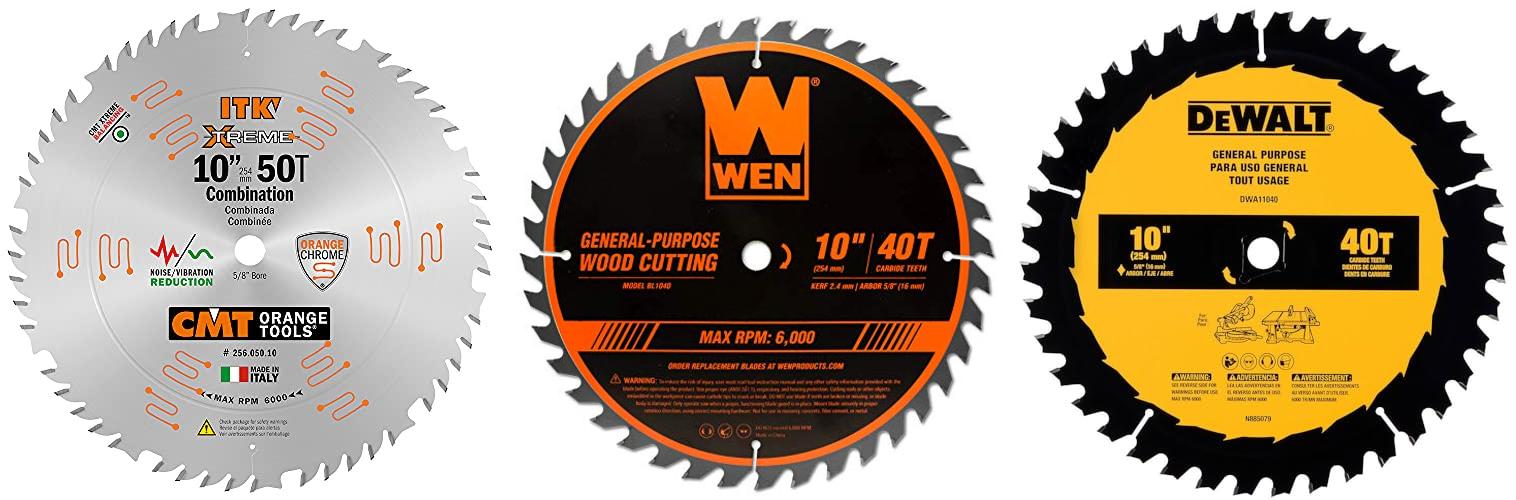
1. CMT 256.050.10 ITK XTreme Industrial Combination Saw Blade

Rating: 9.3/10
The CMT 256.050.10 ITK XTreme Industrial Combination Saw Blade is a powerful tool for any woodworker. This 10-inch blade with 50 teeth is designed for both ripping and crosscutting, making it super versatile. Its special grind and large gullets help it cut through tough materials like solid wood, melamine, and plywood with ease. You can use it on your radial arm saw, miter saw, or table saw. The micrograin carbide teeth make it last a long time and give you smooth cuts every time.
What We Like:
- Versatile: Works great for both ripping and crosscutting different types of wood.
- Smooth Cuts: The special carbide teeth and grind help make very clean cuts.
- Effective Chip Removal: Large gullets mean sawdust doesn’t build up and slow you down.
- Durable: Made with micrograin carbide for a blade that lasts.
- Quiet Operation: Expansion slots in the plate help reduce noise and vibration.
- Wide Material Compatibility: Handles solid wood, melamine, laminates, plywood, and chipboard.
What Could Be Improved:
- Precision for Ultra-Fine Finishes: While good, it might not be the absolute best for the most delicate, furniture-grade finishes where a blade with a higher tooth count might be preferred.
- Blade Thickness: The kerf thickness is standard, but some users prefer thinner kerfs for less material waste.
This CMT blade is a solid choice for demanding woodworking tasks. It delivers excellent performance and durability across a wide range of projects.
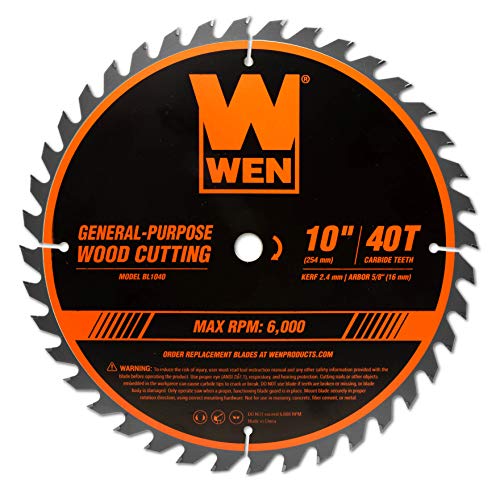
2. WEN BL1040 10-Inch 40-Tooth Carbide-Tipped Professional Woodworking Saw Blade for Miter Saws and Table Saws
Rating: 8.5/10
The WEN BL1040 10-Inch 40-Tooth Carbide-Tipped Professional Woodworking Saw Blade is a fantastic tool for anyone who loves to work with wood. It’s designed to give you clean and precise cuts every time, making your woodworking projects look even better. This blade is ready to tackle a variety of wood types, so you can use it for many different jobs.
What We Like:
- It’s a 10-inch blade with a 5/8-inch hole for your saw.
- It can spin up to 6000 RPM, which is pretty fast!
- It works great on both hard and soft woods.
- The thin kerf means less wood waste and easier cutting.
- Forty carbide teeth are perfect for general wood cutting tasks.
- It fits most 10-inch miter saws, jobsite saws, and table saws.
What Could Be Improved:
- For very fine detail work, a blade with more teeth might be preferred.
- While good for general use, specialized blades might offer superior results for specific, demanding applications.
This WEN saw blade offers excellent performance for its price. It’s a reliable choice for both beginner and experienced woodworkers looking for a versatile and effective blade.
3. DEWALT Table Saw Blade

Rating: 9.3/10
The DEWALT Table Saw Blade, 10″, 40 Tooth, with Fine Finish, Ultra Sharp Carbide (DWA11040) is a fantastic tool for anyone who needs precise and clean cuts. This blade is built to last and designed to make your woodworking projects easier and more professional-looking. It’s a great addition to any workshop, whether you’re a seasoned pro or just starting out.
What We Like:
- UP TO 3X LIFE*: This blade lasts much longer than others. You won’t have to replace it as often, saving you time and money.
- Optimized Tooth Geometry Designed For Increased Accuracy: The teeth are shaped perfectly. This means your cuts will be straight and exact every time.
- Ultra Sharp Carbide for Clean Cutting: The sharp carbide tips slice through wood smoothly. This leaves a clean edge with very little splintering.
What Could Be Improved:
- The “UP TO 3X LIFE*” claim might vary depending on the type of wood and how you use the blade.
- While the fine finish is excellent, for extremely delicate tasks, a blade with even more teeth might be preferred by some.
This DEWALT blade delivers impressive performance and durability. It’s an excellent choice for achieving professional-quality cuts in your woodworking projects.
4. WEN BL1080 10-Inch 80-Tooth Carbide-Tipped Ultra-Fine Finish Professional Woodworking Saw Blade for Miter Saws and Table Saws

Rating: 8.9/10
The WEN BL1080 10-Inch 80-Tooth Carbide-Tipped Ultra-Fine Finish Professional Woodworking Saw Blade is a top-notch tool for woodworkers. It’s built for precision and delivers a super smooth finish on your projects. This blade is designed to make your cutting tasks easier and more accurate, whether you’re a hobbyist or a pro.
What We Like:
- This blade has a 10-inch diameter and a 5/8-inch arbor, fitting most miter saws and table saws.
- It can spin up to 6000 RPM, so it’s ready for tough jobs.
- It cuts through both hard and soft woods with ease.
- The ultra-thin 1/10-inch kerf means less wood waste and cleaner cuts.
- With 80 carbide-tipped teeth, it provides an ultra-fine finish, making your projects look professionally done.
- It’s compatible with many 10-inch miter saws, jobsite saws, and table saws.
What Could Be Improved:
- The 5/8-inch arbor size might not fit older saws that require a different arbor size.
- While it cuts well, very dense hardwoods might require a slower feed rate for the absolute best finish.
This WEN saw blade is a fantastic choice for anyone seeking clean, precise cuts and a beautiful finish on their woodworking projects. It offers excellent performance for its price.
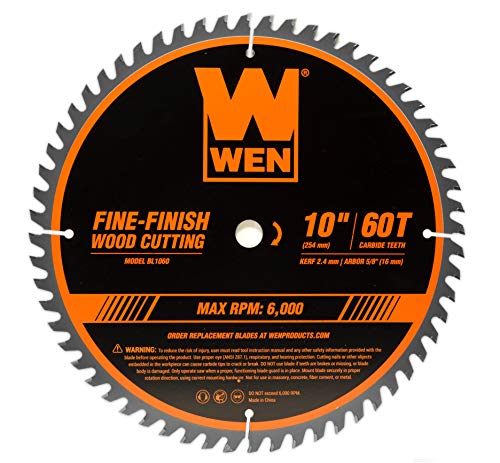
5. WEN BL1060 10-Inch 60-Tooth Fine-Finish Professional Woodworking Saw Blade for Miter Saws and Table Saws
Rating: 8.5/10
The WEN BL1060 10-Inch 60-Tooth Fine-Finish Professional Woodworking Saw Blade is a fantastic tool for anyone serious about woodworking. This blade is designed to give you super clean cuts every time. It’s made to fit most 10-inch miter saws and table saws, making it a versatile addition to your workshop. Whether you’re working with tough hardwoods or softwoods, this blade handles it all with ease.
What We Like:
- It has a 10-inch diameter and a 5/8-inch arbor, so it fits many saws.
- The blade can spin up to 6000 RPM, which means it cuts quickly.
- It’s great for both hard and soft woods.
- The ultra-thin kerf is only 1/10-inch thick, which saves wood and makes cuts cleaner.
- It has 60 carbide-tipped teeth, perfect for making fine-finish cuts.
- This blade works with most 10-inch miter saws, jobsite saws, and table saws.
What Could Be Improved:
- As it’s a professional-grade blade, the price might be a bit higher for beginners.
- While it’s designed for fine finishes, for extremely delicate work, a blade with even more teeth might be considered.
If you’re looking for a saw blade that delivers smooth, accurate cuts and lasts a long time, the WEN BL1060 is a strong contender. It’s a great investment for any woodworker wanting professional results.
Choosing the Best Blades for Your Table Saw
Your table saw is a powerful tool, but its true potential unlocks with the right blade. A good blade cuts smoothly and accurately. A bad blade can make your projects frustrating. This guide helps you pick the perfect blade.
What to Look For: Key Features of Table Saw Blades
- Tooth Count: This is how many sharp points the blade has. More teeth mean smoother cuts, especially on thin materials. Fewer teeth cut faster, good for rough lumber.
- Blade Diameter: Most table saws use 10-inch blades. Make sure the blade you buy matches your saw.
- Arbor Size: This is the hole in the center of the blade. It must fit the shaft of your table saw. Standard arbor size is 5/8 inch.
- Kerf: This is the width of the cut the blade makes. Thin kerf blades remove less wood, saving material and requiring less power from your saw. Standard kerf blades are thicker and more durable.
- Blade Type: Different blades are made for different jobs. You’ll find blades for ripping (cutting with the grain), crosscutting (cutting across the grain), and combination blades that do both.
Important Materials: What Your Blade is Made Of
Most table saw blades have two main parts: the blade body and the teeth.
- Blade Body: This is usually made of high-carbon steel. It needs to be strong and resist bending. Some higher-end blades use special alloys for extra durability.
- Teeth: The teeth are often tipped with tungsten carbide. This is a very hard material. It stays sharp longer and can cut through tough wood. The way the carbide is attached is also important. It should be brazed securely to the blade body.
Factors Affecting Blade Quality
Many things make a blade better or worse.
- Build Quality: A well-made blade has teeth that are perfectly aligned. The blade body is flat and doesn’t wobble. The carbide tips are attached strongly.
- Tooth Geometry: The shape of the teeth matters. Some teeth are angled for faster cutting. Others are designed for cleaner finishes. Look for blades with sharp, well-formed teeth.
- Heat Treatment: How the metal is heated and cooled affects its strength. Good heat treatment makes the blade last longer and perform better.
- Expansion Slots: These are small cuts in the blade body. They help the blade expand and contract with heat. This stops the blade from warping and getting too hot.
User Experience and Use Cases
The right blade makes woodworking easier and more enjoyable.
- For Beginners: A good combination blade is a great start. It works well for most general cuts. It lets you practice different techniques without needing many blades.
- For Ripping Lumber: If you cut a lot of wood along the grain, a ripping blade is best. It has fewer teeth and a more aggressive angle. This cuts through wood quickly.
- For Crosscutting: To get clean cuts across the grain, use a crosscut blade. These have more teeth and a sharper angle. They leave a smooth edge.
- For Fine Woodworking: If you need very smooth cuts for furniture or detailed projects, look for blades with high tooth counts. Some blades have special coatings to reduce friction and heat.
A dull or poor-quality blade can lead to splintering, rough cuts, and even kickback. Kickback happens when the wood is suddenly thrown back at you. This is dangerous. Investing in good blades is investing in your safety and the quality of your work.
Frequently Asked Questions (FAQ) About Table Saw Blades
Q: What is the most important feature on a table saw blade?
A: The tooth count is very important. It affects how smooth your cuts are and how fast you can cut.
Q: Can I use any blade on my table saw?
A: No. You must use a blade with the correct diameter and arbor size for your saw. Using the wrong size can damage your saw or be dangerous.
Q: What does “kerf” mean on a table saw blade?
A: Kerf is the width of the cut the blade makes. A thin kerf blade cuts a narrower slot than a standard kerf blade.
Q: What material are most table saw blade teeth made of?
A: Most teeth are tipped with tungsten carbide. It is a very hard material that stays sharp.
Q: How do I know if a blade is high quality?
A: Look for good build quality. The teeth should be sharp and even. The blade body should be flat. Good expansion slots are also a sign of quality.
Q: What is the difference between a ripping blade and a crosscut blade?
A: A ripping blade has fewer teeth and cuts fast along the wood grain. A crosscut blade has more teeth and makes smooth cuts across the grain.
Q: When should I use a combination blade?
A: A combination blade is good for general use. It can rip and crosscut well enough for many projects.
Q: What is kickback and how can a good blade help prevent it?
A: Kickback is when the wood is thrown back at you. A sharp, well-made blade cuts more easily. This reduces the chance of the wood getting stuck and causing kickback.
Q: How often should I replace my table saw blade?
A: Blades get dull over time. You should replace or sharpen them when you notice rough cuts, splintering, or if the saw struggles to cut.
Q: Are expensive table saw blades worth the money?
A: Often, yes. More expensive blades usually have better materials, sharper carbide, and better construction. This leads to safer, cleaner cuts and longer blade life.
In conclusion, every product has unique features and benefits. We hope this review helps you decide if it meets your needs. An informed choice ensures the best experience.
If you have any questions or feedback, please share them in the comments. Your input helps everyone. Thank you for reading.