
Can you use a radial arm saw for crosscuts? Yes, a radial arm saw is excellent for crosscuts, but it’s also a versatile tool for rip cuts, miter cuts, bevel cuts, and dado cuts. This comprehensive guide will equip you with the knowledge to operate a radial arm saw safely and effectively.
Radial arm saws are powerful tools, and like any powerful tool, they demand respect and proper handling. This guide aims to provide you with everything you need to know, from initial setup to advanced techniques and crucial safety measures, ensuring you can tackle your woodworking projects with confidence.
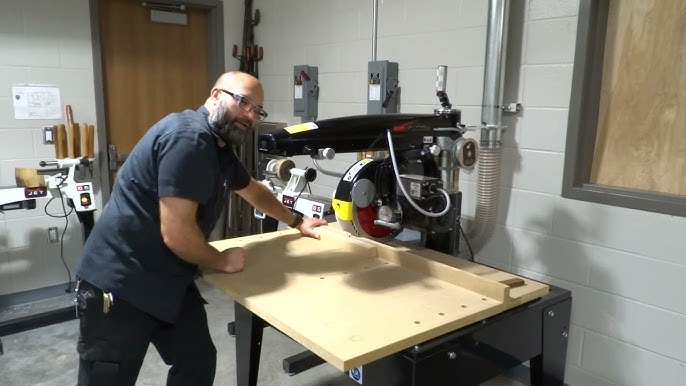
Image Source: i.ytimg.com
Getting Started: Initial Radial Arm Saw Setup
Before you even think about making a cut, proper radial arm saw setup is paramount. This involves ensuring the saw is stable, the blade is aligned, and all safety features are in place.
Choosing the Right Location
- Stability: The saw must be placed on a sturdy, level surface. A dedicated workbench or a heavy-duty stand is ideal. Avoid placing it on unsteady surfaces or where it can easily tip.
- Space: Ensure ample space around the saw for material handling, movement, and access to controls. You’ll need space for the arm to extend and for the material to move freely.
- Power: Connect the saw to a grounded electrical outlet that matches its power requirements. Avoid using extension cords if possible, or ensure they are heavy-gauge and appropriately rated for the saw’s amperage.
- Lighting: Good lighting is essential for visibility. Ensure the work area is well-lit to clearly see the blade, the cut line, and your workpiece.
Assembling and Mounting the Saw
Follow the manufacturer’s instructions for assembling your radial arm saw. This typically involves mounting the saw head to the column and arm. Ensure all bolts and fasteners are tightened securely. If your saw comes with a stand, follow the assembly instructions for that as well.
Blade Installation and Alignment
This is a critical step for both safety and cut quality.
Radial Arm Saw Blade Replacement
When it’s time for radial arm saw blade replacement, or when installing a new blade:
- Disconnect Power: Always unplug the saw before changing the blade.
- Proper Blade Type: Use the correct type and size of blade specified by the manufacturer for your saw and the type of cuts you intend to make. Combination blades are versatile, but specialized blades exist for ripping or crosscutting.
- Blade Orientation: Ensure the blade is installed with the teeth facing the correct direction. Usually, teeth are angled to cut on the downstroke of the blade’s rotation when pulled through the material. Look for an arrow on the blade indicating the direction of rotation.
- Securing the Blade:
- Place the inner flange onto the motor shaft.
- Slide the blade onto the shaft, ensuring it sits flush against the flange.
- Place the outer flange onto the shaft, aligning the pin or keyway with the corresponding slot on the blade.
- Thread the arbor nut onto the shaft and tighten it securely using the appropriate wrench. It should be snug, but don’t overtighten to the point of damaging the blade or arbor.
Blade Alignment (Kerf Alignment)
A misaligned blade can lead to inaccurate cuts and increased safety risks.
- Crosscut Alignment: For perfect crosscuts, the blade’s kerf (the width of the cut) should be precisely perpendicular to the miter slot (if your saw has one) or the fence when the arm is at the 0-degree miter setting.
- With the saw unplugged, swing the arm to the 0-degree miter position.
- Place a known straight edge across the blade.
- Adjust the arm and trunnions (the mechanisms that allow the arm to pivot and tilt) until the blade is perfectly perpendicular to the table’s front edge. Check this with a reliable square.
- Bevel Alignment: For accurate bevel cuts, the blade must be perfectly vertical (0-degree bevel) when the bevel lock is engaged at its nominal setting. Use a precision machinist’s square to verify. Adjust the bevel stops as needed.
Adjusting the Radial Arm Saw Arm
The radial arm saw’s arm can be adjusted for miter and bevel angles.
- Miter Adjustment: Loosen the miter lock handle and rotate the arm to the desired angle. Use the built-in miter scale and ensure the indicator aligns perfectly with the desired degree. Tighten the lock securely.
- Bevel Adjustment: Loosen the bevel lock and tilt the arm to the desired angle. Use the bevel scale and ensure the indicator aligns with the degree mark. Tighten the lock securely.
Guarding and Safety Features
Radial arm saw safety is not just about how you operate it; it’s about the saw’s inherent safety features.
- Blade Guard: The blade guard is your primary defense. Ensure it’s properly fitted, adjusted, and functioning. It should cover the blade as much as possible while allowing for cuts. Never operate the saw without the guard in place.
- Anti-Kickback Pawls: These are designed to grip the workpiece and prevent it from being thrown back at the operator if the blade binds. Ensure they are present and functioning.
- Wheel Brake: Some saws have a brake that slows the blade rotation. Make sure this is operational.
Mastering Radial Arm Saw Cuts
With your saw properly set up, you can begin making cuts. Understanding the different types of radial arm saw cuts and the techniques for each is crucial.
Crosscutting
Crosscutting is the most common use for a radial arm saw.
- Position the Saw: Set the arm to the 0-degree miter position for a straight crosscut.
- Set the Depth of Cut: Adjust the saw’s depth stop so the blade cuts just slightly deeper than the thickness of your material. This minimizes blade exposure above the workpiece.
- Position the Workpiece: Place the material on the table, ensuring it is flat and stable. Use the fence as a reference for positioning.
- Mark Your Cut Line: Clearly mark the line where you want to cut.
- Position the Blade: Bring the blade down to the material without cutting. Position it so the blade’s teeth are on the waste side of your cut line. For precision, you can align the blade’s kerf with your mark.
- Engage the Blade: Ensure the blade is spinning at full speed before it contacts the wood.
- Make the Cut: Pull the spinning blade smoothly through the workpiece. Do not force it. Let the saw do the work.
- Return the Arm: Once the cut is complete, allow the blade to stop rotating or slow significantly before returning the arm to its rest position. Never leave the blade spinning over the workpiece.
- Remove the Workpiece: Carefully remove the cut piece and the offcut.
Safety Tip for Crosscuts: Always ensure the workpiece is held firmly against the fence and the table. For smaller pieces, consider using clamps or push blocks.
Rip Cutting
While radial arm saws are primarily for crosscuts, they can be used for rip cuts with appropriate safety precautions and accessories.
Important Considerations for Rip Cuts:
- Kickback Risk: Rip cutting on a radial arm saw carries a higher risk of kickback than crosscutting. The blade teeth are trying to pull the wood into the blade as it feeds forward.
- Dedicated Ripping Blade: A blade with fewer teeth and a different tooth geometry (like an ATB or FTG grind) is generally better suited for ripping.
- Hold-Downs and Fences: Always use hold-downs and a proper rip fence.
- Avoid Freehand Ripping: Never attempt to rip without a fence.
- Install Rip Fence: Attach the saw’s rip fence to the table.
- Set Blade Height: Adjust the blade to cut just slightly above the thickness of your material.
- Position Workpiece: Place the material against the rip fence.
- Engage Blade: Bring the spinning blade into the material.
- Make the Cut: Push the workpiece through the blade using a push stick and ensure firm contact with the fence. The arm remains stationary.
- Remove Workpiece: Once the cut is complete, turn off the saw and wait for the blade to stop. Remove the cut material.
Radial Arm Saw Jigs: For rip cuts and other specialized operations, using radial arm saw jigs can significantly enhance safety and accuracy. These can include specialized fences, hold-downs, or even jigs for repetitive cuts.
Miter and Bevel Cuts
Radial arm saws excel at making angled cuts.
- Set Miter and Bevel Angles: Adjust the arm to the desired miter angle and the blade to the desired bevel angle using the respective scales and locks.
- Position Workpiece: Place your material against the fence and table.
- Position Blade: Align the blade with your marked cut line, ensuring the blade is on the waste side.
- Make the Cut: Pull the spinning blade through the material smoothly.
- Return Arm and Power Off: Return the arm and turn off the saw.
Safety Tip for Angled Cuts: For wide boards or precise angles, the workpiece might require additional support to prevent it from tipping or shifting during the cut.
Dado Cuts
Creating dadoes (grooves) requires a specialized dado blade set.
- Install Dado Set: Remove the standard blade and install the dado arbor. Mount the dado blades and chippers onto the arbor according to the set’s instructions. Ensure the teeth are facing the correct direction.
- Set Blade Depth: Adjust the saw’s depth stop to achieve the desired depth for your dado.
- Position Workpiece: Place the material on the table, against the fence.
- Engage Blade: Bring the spinning dado blade into the material.
- Make the Cut: Pull the blade through the material. You may need to make multiple passes for wider dadoes depending on the dado set’s width.
- Return Arm and Power Off: Return the arm and turn off the saw.
Important Note on Dadoes: Always check your saw’s manual to confirm it is designed for dado cuts and to determine the maximum width of dadoes it can safely handle. Some saws have specific arbor extensions for dado sets.
Advanced Radial Arm Saw Operations and Accessories
Radial arm saws can be enhanced with various radial arm saw accessories to expand their capabilities.
Radial Arm Saw Dust Collection
Wood dust is a health hazard and can obscure your work. Effective radial arm saw dust collection is crucial.
- Dust Port: Most radial arm saws have a dust port on the blade guard. Connect a shop vacuum or a dust collection system to this port.
- Collection Table: Some users build or buy specialized tables with integrated dust collection systems that can capture dust more efficiently.
- Maintenance: Regularly clean out dust from the saw and the collection system to maintain optimal performance.
Using Radial Arm Saw Jigs
As mentioned earlier, radial arm saw jigs can dramatically improve the precision and safety of various operations. Examples include:
- Dado Jigs: For perfectly spaced and straight dadoes.
- Repeat Cut Jigs: To make identical cuts on multiple pieces.
- Hold-Down Jigs: To secure workpieces that might otherwise be unstable for a particular cut.
- Circle Cutting Jigs: To cut circles or arcs.
Other Useful Radial Arm Saw Accessories
- Featherboards: These provide consistent pressure against the fence or table, preventing the workpiece from lifting or wandering, especially during rip cuts.
- Push Sticks/Blocks: Essential for keeping your hands away from the blade, particularly when working with smaller pieces or making rip cuts.
- Crosscut Fences: Larger, more stable fences can improve accuracy for crosscuts.
- Outfeed Tables: For supporting long pieces of material.
Radial Arm Saw Maintenance and Troubleshooting
Regular radial arm saw maintenance is key to its longevity and safe operation.
Routine Maintenance
- Cleaning: Keep the saw clean. Remove sawdust and debris from the motor housing, arm, table, and blade.
- Lubrication: Lubricate moving parts (arm slides, height adjustments) as recommended by the manufacturer. Use the specified lubricants.
- Blade Inspection: Regularly inspect the blade for dull teeth, damage, or excessive buildup of pitch and resin. Clean or replace blades as needed.
- Cord and Plug Inspection: Check the power cord and plug for any signs of damage.
- Bolt Tightness: Periodically check that all bolts and fasteners are tight.
Radial Arm Saw Troubleshooting
Here are some common issues and their potential solutions:
| Problem | Possible Cause | Solution |
|---|---|---|
| Blade Wobble | Loose arbor nut, damaged blade, warped arbor. | Tighten arbor nut, replace blade, check arbor for damage. |
| Inaccurate Cuts | Misaligned arm, loose locks, worn blade. | Realign arm, tighten miter/bevel locks, replace or sharpen blade. |
| Motor Overheating | Restricted airflow, heavy load, worn bearings. | Clean motor vents, reduce feed rate, have motor serviced. |
| Excessive Vibration | Unbalanced blade, loose components, worn belts. | Balance blade, check for loose parts, inspect and replace belts if worn. |
| Blade Binding / Kickback | Forcing the cut, dull blade, improper feed. | Let the saw do the work, use sharp blades, ensure proper setup, use push sticks. |
| Poor Dust Collection | Clogged dust port, inadequate vacuum. | Clean dust port and hose, use a more powerful vacuum, check for leaks. |
Crucial Radial Arm Saw Safety Precautions
Radial arm saw safety cannot be stressed enough. Here are the fundamental rules to always follow:
Personal Protective Equipment (PPE)
- Eye Protection: Always wear safety glasses or a full face shield.
- Hearing Protection: Use earplugs or earmuffs, as radial arm saws can be loud.
- Dust Mask: Wear a dust mask or respirator when operating the saw, especially if dust collection is not fully effective.
- Clothing: Avoid loose-fitting clothing, jewelry, or anything that could get caught in the blade. Wear sturdy footwear.
Operational Safety Practices
- Read the Manual: Familiarize yourself with your specific saw’s operation and safety features by reading the owner’s manual.
- Never Operate While Tired or Distracted: Maintain full focus on the task at hand.
- Secure the Workpiece: Always clamp or hold your workpiece firmly against the fence and table.
- Use the Correct Blade: Use the appropriate blade for the material and cut type.
- Wait for Blade to Stop: Never reach for the workpiece or offcut until the blade has come to a complete stop.
- Stand to the Side: When making a cut, position yourself slightly to the side of the blade’s path, not directly behind it.
- Avoid Reaching Under the Blade: Never reach under the blade guard to clear debris or retrieve cutoffs while the saw is running or the blade is coasting. Turn off the saw and wait for it to stop completely.
- Don’t Overreach: Position yourself comfortably and safely to make the cut without stretching.
- Clear the Area: Ensure the area around the saw is clear of clutter, scrap wood, and other obstructions.
- No Freehand Cutting: Never cut freehand without a fence or guide.
- Use Push Sticks: Always use push sticks or blocks to feed material through the blade, especially for smaller pieces or rip cuts.
- Two-Handed Operation: Whenever possible, use both hands to guide the workpiece and control the saw arm.
- Be Aware of the Blade Path: Always know where the blade is going to travel.
Frequently Asked Questions About Radial Arm Saws
Q: Can a radial arm saw be used for ripping lumber?
A: Yes, but it’s not its primary function and carries a higher risk of kickback. Special precautions, such as using a rip fence, hold-downs, and potentially a dedicated ripping blade, are necessary. Many experienced woodworkers prefer dedicated table saws for ripping due to better safety features for that specific task.
Q: How do I adjust the radial arm saw for a perfect 90-degree crosscut?
A: Ensure the arm is set to the 0-degree miter position. Then, with the saw unplugged, use a quality square to check if the blade is perfectly perpendicular to the table’s front edge. Adjust the arm’s pivot and tilt mechanisms until it reads 90 degrees. Re-lock all adjustments securely.
Q: What is the ideal blade depth setting for most cuts?
A: The ideal blade depth is typically set so that the bottom of the gullets (the spaces between the teeth) are just shy of the bottom surface of the workpiece. For most crosscuts, this means about one tooth depth below the material. For dadoes, you set it to the desired groove depth.
Q: Is it safe to leave the radial arm saw with the blade extended?
A: No, it is never safe to leave the radial arm saw with the blade extended or spinning. Always return the arm to its resting position and turn off the saw after completing a cut.
Q: How often should I check my radial arm saw’s alignment?
A: It’s good practice to check critical alignments (miter, bevel, and crosscut perpendicularity) periodically, especially if the saw has been moved or subjected to any significant jarring. Many woodworkers check before starting a project requiring high precision.
By following these guidelines, you can ensure your radial arm saw operates safely and effectively, allowing you to create beautiful and accurate woodworking projects for years to come. Always prioritize safety, and never hesitate to consult your owner’s manual for specific details about your model.