
How many watts does a table saw use? Generally, a typical table saw can use anywhere from 1,000 watts to over 2,000 watts, with larger, more powerful models drawing significantly more. This wattage is a crucial factor in determining your electrical needs and understanding your table saw’s table saw power consumption.
When you’re looking to buy a new table saw or trying to figure out if your home’s electrical system can handle your current one, knowing its power usage is key. This guide will delve deep into table saw wattage and explain everything you need to know about table saw power draw. We’ll cover table saw motor size, table saw voltage, table saw amperage, and how these factors influence the overall table saw energy usage.
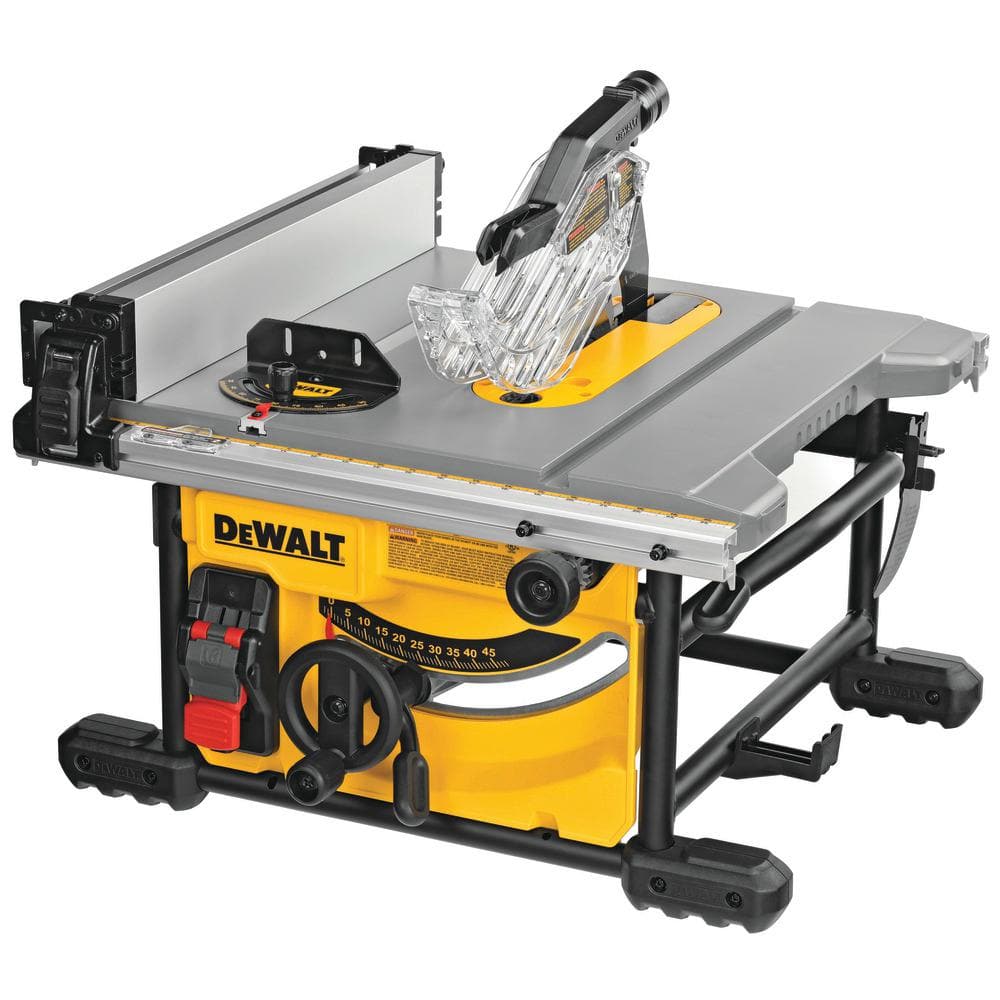
Image Source: images.thdstatic.com
Deciphering Table Saw Power: Watts, Amps, and Volts
To truly grasp table saw wattage requirements, it’s helpful to first understand the relationship between watts, amps, and volts. These are the three fundamental units that describe electrical power.
- Volts (V): Think of volts as the electrical “pressure” or “force” pushing the electricity through the wires. In most homes in North America, the standard voltage is 120 volts for typical outlets, and 240 volts for higher-power appliances.
- Amps (A): Amps, or amperes, measure the “flow rate” of electricity. It’s like the volume of water flowing through a pipe.
-
Watts (W): Watts represent the actual “power” being used. You can calculate watts by multiplying volts by amps. The formula is:
Watts (W) = Volts (V) × Amps (A)
This simple formula is the foundation for understanding how much power does a table saw need.
The Role of Amperage in Table Saw Power
When you look at a table saw’s specifications, you’ll often see its amperage rating. This is a good indicator of its power. A higher amperage rating generally means a more powerful motor, and thus, a higher table saw power consumption.
-
120V Saws: Most smaller or portable table saws run on 120 volts. These typically have motors ranging from 10 to 15 amps.
- A 10-amp, 120-volt saw uses 1200 watts (10A × 120V).
- A 15-amp, 120-volt saw uses 1800 watts (15A × 120V).
-
240V Saws: Larger, contractor-grade, or cabinet table saws often run on 240 volts. These are designed for heavier-duty tasks and have more powerful motors, often drawing 10 to 20 amps or more at 240 volts.
- A 10-amp, 240-volt saw uses 2400 watts (10A × 240V).
- A 20-amp, 240-volt saw uses 4800 watts (20A × 240V).
It’s important to note that these are often running amperages. During startup, motors can draw even more current for a brief moment. This is why circuit breakers are rated for a specific amperage to prevent overload.
Fathoming Table Saw Motor Size and Its Impact on Wattage
The table saw motor size is a primary driver of its wattage. Motors are typically rated in horsepower (HP), and this rating directly correlates to their power output and, consequently, their table saw energy usage.
Horsepower Explained
Horsepower is a unit of power that originated with steam engines. One mechanical horsepower is roughly equivalent to 746 watts. However, motor efficiency plays a role. A motor’s rated horsepower is its output power, not its input power. The input power (what it draws from the wall) will be higher due to energy lost as heat and friction.
- Common Motor Sizes:
- 1 HP: Found in smaller portable saws.
- 1.5 HP to 2 HP: Common in contractor-grade saws.
- 3 HP and above: Typically seen in cabinet saws and industrial models.
Relating Horsepower to Watts
While a direct conversion from HP to watts is possible, it’s more practical to look at the motor’s amperage and voltage ratings as discussed earlier, as these reflect actual electrical draw. However, as a general guideline:
- A 1 HP motor might draw around 10-12 amps at 120V.
- A 2 HP motor might draw around 15-20 amps at 120V, or 10-15 amps at 240V.
- A 3 HP motor would typically require a 240V circuit and draw around 15-20 amps.
When considering table saw wattage requirements, the horsepower of the motor is a strong indicator of the potential power draw. A saw with a more powerful motor will naturally consume more energy.
Assessing Table Saw Energy Usage in Real-World Scenarios
The actual table saw energy usage can vary depending on several factors beyond just the motor’s rating.
Factors Affecting Power Consumption
- Material Being Cut: Cutting dense hardwoods requires more effort from the motor than cutting softwoods or plywood. This increased load leads to higher amperage draw and thus higher wattage.
- Blade Type and Condition: A dull blade or a blade with too many teeth or an inappropriate tooth configuration for the material can increase the load on the motor, leading to higher table saw power consumption.
- Depth of Cut: Cutting thicker material or making deeper cuts will inherently demand more power from the saw.
- Feeder Speed: Pushing material through the blade too quickly or too slowly can strain the motor. A consistent, appropriate feed rate is best for efficient operation and power draw.
- Dust Collection: While not directly part of the saw’s motor, a connected dust collection system also draws power, contributing to the overall table saw electrical needs in your workshop.
Typical Wattage Ranges for Different Table Saw Types
Let’s break down the typical wattage you might expect from various types of table saws. These are approximate figures and can vary by manufacturer and specific model.
| Table Saw Type | Typical Motor HP | Typical Voltage | Typical Amperage (Running) | Estimated Wattage (Running) | Primary Use |
|---|---|---|---|---|---|
| Benchtop/Jobsite | 1.0 – 1.75 HP | 120V | 10 – 13A | 1200 – 1560W | DIY projects, light construction, portability |
| Contractor | 1.5 – 2.0 HP | 120V/240V | 12 – 18A (120V) / 8 – 12A (240V) | 1440 – 2160W (120V) / 1920 – 2880W (240V) | Woodworking, home renovation, semi-pro |
| Cabinet | 3.0 – 5.0 HP | 240V | 12 – 20A | 2880 – 4800W | Professional woodworking, heavy-duty |
| Sliding Table Saw | 4.0 – 7.5+ HP | 240V/480V | 16 – 30+A | 3840 – 7200+W | Precision cabinetry, industrial applications |
Important Note: The amperage listed is typically the full load amperage or running amperage. During startup, the saw might briefly draw 1.5 to 2 times this amount. Always ensure your circuit breaker and wiring can handle this surge.
Your Electrical Panel: Meeting Table Saw Electrical Needs
Understanding your table saw electrical needs is paramount to safe and efficient operation. Plugging a high-draw tool into an overloaded circuit can trip breakers, damage the tool, or even pose a fire hazard.
Circuit Requirements
-
120V Circuits: Standard household circuits are typically 15 or 20 amps.
- A 15-amp circuit can safely handle a continuous load of about 12 amps (80% of the breaker’s rating). A 15-amp saw (drawing around 1800 watts) would max out this circuit.
- A 20-amp circuit can safely handle a continuous load of about 16 amps. A 15-amp saw would have some headroom on a 20-amp circuit.
- Recommendation: For 120V saws drawing 10-15 amps, a dedicated 20-amp circuit is highly recommended. This prevents nuisance tripping, especially if other devices are on the same circuit or if the saw experiences startup surges.
-
240V Circuits: These are typically 20, 30, or even 40 amps, depending on the appliance.
- A 20-amp, 240V circuit is suitable for many contractor-grade saws.
- Larger cabinet saws, drawing 15-20 amps at 240V, would typically require a 30-amp circuit.
- Always consult the table saw’s manual for specific circuit recommendations.
Wire Gauge and Extension Cords
The thickness of the wire (gauge) is crucial for safely carrying electrical current. Thicker wires can handle more current without overheating.
- Extension Cords: If you need an extension cord, use one with the appropriate gauge for the amperage and distance. Using an undersized extension cord is a common cause of voltage drop and can lead to motor damage and reduced performance. The longer the cord, the thicker the wire needs to be.
- For a 15-amp, 120V saw and a cord up to 50 feet, use a 14-gauge cord.
- For longer runs or higher amperages, consider 12-gauge or even 10-gauge cords.
- Never use a lighter-duty cord (like those for lamps) for a table saw.
Understanding Table Saw Voltage Drop
When electricity travels through a wire, there’s a slight loss of voltage, especially over longer distances or with undersized wires. This is called voltage drop.
- Impact on Performance: Significant voltage drop can cause your table saw motor to run hotter, produce less power, and have a shorter lifespan.
- Mitigation: Use the shortest possible extension cord, and ensure it’s of the correct gauge. For 240V saws, ensure your home’s wiring to the outlet is adequate.
Practical Tips for Managing Table Saw Power Draw
To ensure your table saw operates efficiently and safely, consider these practical tips regarding its table saw power consumption.
When Purchasing a Table Saw:
- Assess Your Needs: What kind of woodworking will you be doing? For occasional DIY, a smaller 120V saw might suffice. For serious woodworking or frequent use with hardwoods, a more powerful 240V saw is often necessary.
- Check Your Home’s Electrical Capacity: Do you have sufficient amperage available on your circuits? Do you have the correct outlets for 240V saws?
- Consider Future Needs: If you plan to expand your workshop or take on more demanding projects, it might be wise to invest in a more robust saw and electrical setup from the start.
Optimizing Usage:
- Dedicated Circuits: If possible, run dedicated circuits for your larger power tools, especially table saws, routers, and planers. This simplifies electrical management and prevents overloading.
- Quality Extension Cords: Invest in heavy-duty, properly gauged extension cords specifically designed for tools.
- Blade Maintenance: Keep your saw blades sharp and clean. This reduces motor strain and improves cut quality.
- Avoid Overloading: Don’t try to force material through the blade too quickly. Let the saw do the work at a steady pace.
- Startup Sequences: If you have multiple high-draw tools, consider turning them on one at a time to avoid a large surge in demand on your electrical system.
Frequently Asked Questions About Table Saw Wattage
Q1: How do I find the wattage of my table saw?
A1: The most accurate way is to look at the nameplate on the motor. It will typically list the Voltage (V) and Amperage (A). Multiply these two numbers together (V × A) to get the wattage (W). If only horsepower (HP) is listed, you can estimate wattage by multiplying HP by 1000 (e.g., 2 HP × 1000 ≈ 2000W), but the V × A method is more precise.
Q2: Can I plug my table saw into a regular household outlet?
A2: Yes, if your table saw is designed for 120V and its amperage draw is within the limits of a standard 15A or 20A household circuit. Most portable and jobsite table saws are made for this. However, if your saw requires 15 amps or more at 120V, it’s best to plug it into a dedicated 20A circuit to prevent tripping the breaker. Larger contractor or cabinet saws often require a 240V outlet, which is not standard in most homes.
Q3: What happens if my table saw uses too much power for the circuit?
A3: If your table saw’s table saw power draw exceeds the circuit’s capacity, the circuit breaker will trip, cutting off power to the outlet. In older homes or with improper wiring, it could also cause fuses to blow or, in the worst-case scenario, overheat wiring and pose a fire risk.
Q4: Does a table saw use the same amount of power all the time?
A4: No. A table saw uses less power when it’s idling (motor running but not cutting). Its table saw energy usage increases significantly when the blade engages with the material being cut. The amount of power drawn during a cut depends on the type of wood, the thickness of the cut, and the sharpness of the blade.
Q5: How does the motor size (HP) relate to table saw wattage?
A5: A larger horsepower (HP) motor generally indicates a more powerful saw, which will have a higher table saw wattage requirements and draw more current. While HP is a measure of output power, the amperage and voltage ratings on the motor’s nameplate provide a direct measure of its electrical consumption. A general rule of thumb is that 1 HP is roughly equivalent to 1000 watts of input power, but this is an approximation.
Q6: Is a 240V table saw better than a 120V table saw?
A6: Not necessarily “better,” but 240V table saws are generally more powerful. They can deliver more consistent torque, especially under heavy loads, and allow for more powerful motors (higher HP). They also draw less amperage at the same wattage compared to a 120V saw, which can be beneficial for your home’s electrical system. However, they require a dedicated 240V outlet.
Q7: What is “starting amperage” or “surge amperage” for a table saw?
A7: When an electric motor starts, it requires a momentary surge of extra current to overcome inertia and begin rotating. This is called starting amperage or surge amperage, and it can be significantly higher (often 1.5 to 2 times) than the normal running amperage. It’s crucial that your circuit breaker and wiring can handle this brief surge without tripping.
Q8: How can I reduce my table saw’s energy usage?
A8: While you can’t change the fundamental power requirements of the motor, you can optimize efficiency by:
* Keeping blades sharp and clean.
* Using the correct blade for the material and cut.
* Ensuring proper alignment of the saw.
* Not forcing material through the blade.
* Minimizing idle run time.
* Using properly gauged extension cords to prevent voltage drop.
By paying attention to these details, you can ensure your table saw performs optimally while managing its table saw power consumption.