
What is a table saw sled? A table saw sled is a specialized jig that attaches to your table saw to provide a stable and precise platform for cutting wood, ensuring perfectly square or angled cuts every time. Can you build a table saw sled yourself? Absolutely! Building your own table saw sled is a rewarding DIY project that significantly enhances your woodworking capabilities, especially for achieving repeatable, accurate cuts.
In the world of woodworking, precision is king. Whether you’re crafting fine furniture, building sturdy cabinets, or even just making simple shop projects, the accuracy of your cuts directly impacts the final result. While a table saw is a powerful tool, achieving consistently perfect 90-degree cuts, especially on wider pieces, can be challenging. This is where the humble yet incredibly effective table saw sled comes into play. A well-built table saw sled is one of the most valuable table saw accessories you can have in your shop. It transforms your table saw into a precision cutting machine, allowing you to make flawless crosscuts, dados, and even repeatable miters.
This comprehensive guide will walk you through the process of building your own DIY table saw sled, ensuring you can achieve those crisp, square joints that elevate your woodworking from good to great. We’ll cover everything from material selection to assembly, providing clear instructions and helpful tips along the way. Think of this as your ultimate guide to creating a cutting jig that will become indispensable in your workshop.
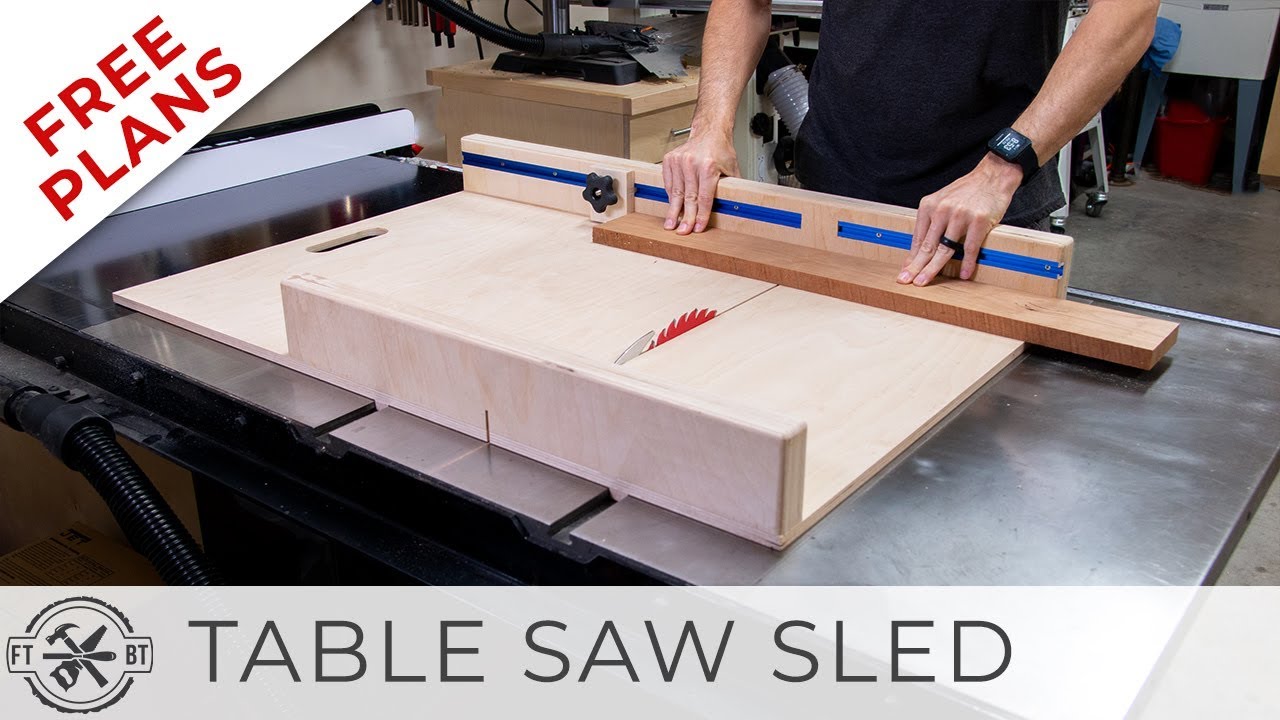
Image Source: i.ytimg.com
Why You Need a Table Saw Sled
Before we dive into the building process, let’s clarify why a table saw sled is so crucial for achieving perfect joints.
- Accuracy: The primary benefit of a sled is its inherent accuracy. Unlike freehand cutting or relying solely on your table saw’s fence, a sled guides the workpiece against a perfectly square fence that runs parallel to the blade. This eliminates saw blade drift and ensures a true 90-degree cut.
- Repeatability: Once your sled is built and calibrated, you can make identical cuts on multiple pieces of wood with confidence. This is essential for projects where consistency is key, like building drawers or shelving units.
- Safety: A sled provides a more stable platform for cutting smaller or irregularly shaped pieces. By holding the workpiece firmly against the sled’s fence and base, you reduce the risk of kickback.
- Versatility: While often thought of as a crosscut sled, a well-designed sled can be adapted for various tasks. With a few modifications, you can create a miter sled or even a tapering jig from the same basic design.
- Perfect Joints: The ultimate goal is to achieve tight, gap-free joints. Whether you’re making butt joints, rabbets, or dadoes, the precision offered by a sled is fundamental to creating professional-looking and strong connections.
Essential Components of a Table Saw Sled
A typical table saw sled consists of a few key components:
- The Base: This is the main surface of the sled that rests on your table saw. It needs to be flat and stable.
- The Fence: This is the crucial element that guides your workpiece. It must be perfectly perpendicular to the blade.
- The Runner: These are strips that fit into the miter slots on your table saw. They keep the sled moving smoothly and prevent it from shifting side-to-side.
- Hold-down Mechanism (Optional but Recommended): A hold down clamp or a similar system secures the workpiece to the sled, preventing movement during the cut.
Materials You’ll Need
Gathering the right materials is the first step towards building a successful shop made jig.
- Plywood: High-quality, flat plywood is essential for the base. ¾-inch Baltic birch plywood is ideal due to its stability and lack of voids. Alternatively, a good quality ¾-inch cabinet-grade plywood will also work.
- Hardwood: For the fence, a stable hardwood like poplar, oak, or maple is recommended. This provides a durable and smooth surface for your workpiece to register against.
- Runners: You can use specialized plastic runner stock (often HDPE or UHMW-PE) designed for jigs, or you can mill your own runners from a stable hardwood. Make sure they fit snugly but glide smoothly in your table saw’s miter slots.
- Wood Glue: A good quality wood glue is necessary for strong, durable bonds.
- Screws: Coarse-thread drywall screws are often used for their holding power. Stainless steel screws are also a good option.
- Sandpaper: Various grits for smoothing edges and surfaces.
- Optional: A zero clearance insert for your table saw can be beneficial to prevent small offcuts from falling through the blade kerf, but it’s not strictly necessary for the sled itself.
Tools You’ll Need
Having the right tools will make the building process much smoother.
- Table Saw: The star of the show!
- Circular Saw or Hand Saw: For breaking down larger sheets of plywood.
- Router: With a straight bit for creating the dado for the fence and a flush trim bit for tidying edges.
- Jigsaw: For cutting out the blade slot.
- Drill/Driver: For pre-drilling and driving screws.
- Clamps: Several good quality clamps are essential for holding pieces together while gluing and screwing.
- Measuring Tape: For accurate measurements.
- Combination Square or Drafting Square: For ensuring perfect 90-degree angles.
- Pencil: For marking.
- Safety Glasses and Hearing Protection: Always prioritize safety.
Building Your Basic Crosscut Sled: Step-by-Step
This will guide you through constructing a fundamental crosscut sled.
Step 1: Prepare the Base
- Cut the Base Panel: From your ¾-inch plywood, cut a piece that is wider than your table saw’s longest crosscut capacity and at least 10-12 inches deep. For example, if your saw has a 30-inch rip capacity, you might cut a 36-inch x 12-inch panel. Ensure all cuts are square.
- Cut the Runners:
- If using plastic runner stock, cut two pieces to the length of your table saw’s miter slots.
- If milling your own, use a stable hardwood. Cut strips about ¾-inch wide and slightly longer than your miter slots. Use a router with a dado blade or multiple passes with a standard bit to mill them to a precise width that fits snugly into your miter slots. They should slide smoothly but without play.
- Attach the Runners:
- Place your base panel on a flat surface.
- Position the runners on the underside of the base panel, aligning them with the edges of the miter slots on your table saw. The goal is to have the runners seated in the miter slots.
- Apply wood glue to the top of the runners.
- Carefully place the base panel onto the runners, ensuring the runners are perfectly parallel to the long edges of the base. This is a critical step for accuracy.
- Pre-drill and screw through the base panel into the runners. Use a few screws along each runner, ensuring they don’t interfere with the table saw blade.
Step 2: Create the Blade Slot
- Position the Sled: Place the assembled base onto your table saw, with the runners seated in the miter slots.
- Mark the Blade Path: With the blade raised to its full height, carefully slide the sled until the blade is positioned about ¾ inch from the fence side of the sled (this will be the solid side). Mark the position of the blade on the top surface of the sled.
- Cut the Slot:
- Lower the blade.
- Set the blade to its full height.
- Using a jigsaw, carefully cut along the line you marked, staying as close to the intended blade path as possible. This slot needs to be wide enough for the blade to pass through freely without binding. You can refine this later.
Step 3: Attach the Fence
- Prepare the Fence: Cut a piece of hardwood for your fence. It should be as long as your base is wide and about 3-4 inches tall. Ensure the bottom edge is perfectly straight and square.
- Position the Fence:
- Place the fence onto the base, ensuring the solid, uncut side of the base is snug against the fence. The fence needs to be perfectly perpendicular to the blade slot.
- Crucial Calibration: This is where accuracy is paramount. Insert a known square object (like a high-quality combination square) or a piece of perfectly square stock into the blade slot and butt it against the fence. Or, you can use a dial indicator attached to a magnetic base to check for squareness.
- Make fine adjustments to the fence position until it is precisely 90 degrees to the blade slot. Use your square or dial indicator to confirm.
- Attach the Fence:
- Once perfectly square, apply wood glue along the bottom edge of the fence where it meets the base.
- Clamp the fence securely in place.
- Pre-drill and screw through the base into the fence from the underside. Use several screws to ensure a strong bond. Ensure the screws do not interfere with the blade’s path or the runners.
Step 4: Refine and Test
- Final Blade Cut:
- With the fence now glued and screwed, run the sled through the table saw blade one last time. This ensures the blade slot is perfectly aligned with the blade, creating a zero-clearance effect for your cut line. The blade should cut a thin kerf precisely down the center of the slot.
- Smooth Edges: Lightly sand all edges of the sled for safety and aesthetics.
- Test Cuts: Take a piece of scrap wood and place it against the fence. Make a cut. Then, flip the scrap wood end-for-end and make another cut. The two cut ends should meet perfectly to form a 90-degree angle.
Enhancements and Variations
Once you have a basic sled, you can explore enhancements for greater functionality.
Adding a Hold-Down Clamp
A hold down clamp is a game-changer for safety and accuracy. It secures your workpiece firmly to the sled, preventing any movement.
- Placement: Decide where you want your clamp to be. It should be positioned to hold the workpiece down firmly against the sled’s base, without interfering with the blade or your hand.
- Installation:
- You can purchase specialized table saw sled hold-down clamps, or you can fabricate your own using a threaded rod, a knob, and some scrap wood or metal.
- Drill a hole through the sled’s base (ensure it’s not in the blade path) and install the clamp mechanism.
- For a homemade clamp, you might drill a larger hole, insert a block of wood with a threaded insert, and then screw a bolt with a knob into the insert. A simple pivoting lever can also work.
Building a Miter Sled
A miter sled allows you to cut precise angles.
- Modify the Fence: Instead of a straight fence, you’ll need a fence that can be set at specific angles.
- Pivot Point: A common method is to attach the fence to the base with screws at one end, acting as a pivot. A stop screw or a locking mechanism at the other end allows you to set and hold angles.
- Angle Guides: You can use a protractor or mark common angles (like 22.5°, 30°, 45°) on the base to guide your fence adjustments. Ensure the pivot point is accurately aligned with the blade.
Creating a Tapering Jig
A tapering jig is used to cut angled sides onto your workpieces, like for table legs.
- Adjustable Fence: This jig requires an adjustable fence that can be set at a specific angle relative to the blade.
- Sliding Mechanism: You’ll need a way to slide the workpiece along this adjustable fence. This often involves a runner that glides in the miter slot and a fence that can be positioned at your desired taper angle.
- Securing the Workpiece: A clamp is usually incorporated to hold the workpiece securely against the fence as it slides through the blade.
Making a Zero Clearance Insert for Your Sled
While not strictly part of the sled itself, a zero-clearance insert integrated into your sled can be beneficial.
- Cut a Blank: Cut a piece of thin material (like ¼-inch plywood or hardboard) the same size as your sled’s base.
- Align and Cut: Position this blank on your sled base and run the table saw blade through it to create a perfect kerf.
- Attach: Glue this thin blank onto the sled’s base, covering the original blade slot. This provides a tighter fit around the blade, reducing tear-out and preventing small offcuts from falling.
Table of Useful Dimensions and Considerations
Here’s a quick reference for common sled dimensions and points to consider:
| Component | Recommended Material | Typical Size | Key Considerations |
|---|---|---|---|
| Base | ¾” Baltic Birch Plywood | 36” wide x 12” deep (adjust for saw capacity) | Must be perfectly flat. Ensure ample overhang for safe operation. |
| Fence | ¾” Hardwood (Poplar, Oak) | 36” long x 3-4” tall | Must be perfectly straight and square to the base. |
| Runners | HDPE, UHMW-PE, or Hardwood | Length of miter slot, precisely milled width | Must fit snugly but glide smoothly in miter slots. Avoid any side-to-side play. |
| Blade Slot | N/A (created by blade) | Slightly wider than table saw blade | Must allow free movement of the blade without binding. |
| Hold Down | Wood, Metal, Threaded Rod | Varies based on design | Positioned for maximum workpiece security without interfering with blade or hands. |
Maintenance and Calibration
Even the best table saw jig needs occasional attention.
- Check for Squareness: Periodically re-check your sled’s fence for squareness to the blade. Wood can expand and contract, and glue joints can weaken over time.
- Clean Runners: Keep the runners clean and free of sawdust. A bit of paste wax can help them glide more smoothly.
- Inspect for Damage: Look for any signs of wear or damage to the base or fence.
Frequently Asked Questions (FAQ)
Q: How wide should my table saw sled be?
A: Your sled should be at least as wide as your table saw’s longest crosscut capacity. It’s generally a good idea to make it a few inches wider to provide a safer margin.
Q: Can I use MDF for my table saw sled?
A: While MDF can be used, it’s generally not recommended for the base. MDF is susceptible to moisture and can warp, compromising the accuracy of your sled. High-quality plywood is a much better choice.
Q: How do I ensure my fence is perfectly square?
A: Use a high-quality combination square or drafting square. Place it against the blade slot and the fence to check for a perfect 90-degree angle. A digital angle gauge or a dial indicator can also be used for extreme precision.
Q: What is the best way to attach the runners?
A: Glue and screws are the most secure method. Pre-drill your holes to prevent the wood from splitting. Ensure the runners are perfectly parallel to the edges of the sled base before you glue and screw them.
Q: My sled feels a bit wobbly. What can I do?
A: The most common cause of wobbling is play in the runners within the miter slots. Ensure your runners are milled to a precise fit or use runner stock that is specifically designed for your table saw’s miter slots. Also, check that the fence is securely attached and not loose.
Q: How do I make cuts longer than my sled?
A: For cuts longer than your sled, you’ll need to use a different approach, perhaps your table saw’s rip fence or a different type of jig. A sled is primarily designed for crosscuts and angled cuts within its dimensions.
Q: Is a zero clearance insert necessary for a table saw sled?
A: While not strictly necessary, a zero-clearance insert can improve cut quality by reducing tear-out and preventing small pieces from falling into the blade kerf. You can create one by attaching a thin piece of material to your sled’s base and running the blade through it.
Building your own table saw sled is a project that pays dividends in woodworking accuracy and enjoyment. By following these steps, you can create a reliable cutting jig that will help you achieve perfectly aligned joints and elevate the quality of all your projects. Whether you’re aiming for a simple crosscut sled or a more advanced miter sled, the principles of precision and stability remain the same. Happy building, and happy cutting!