
Can you drill in extremely confined areas? Yes, with the right tools and techniques, you can effectively drill in tight spaces. What is the biggest challenge when drilling in tight spots? The primary obstacle is the lack of clearance, making it difficult to position standard drills and achieve proper leverage. This article will delve into the best practices and specialized equipment designed to conquer tight spot drilling.
Working in confined areas, whether it’s under a sink, inside a cabinet, or within the tight confines of an engine bay, presents a unique set of challenges for DIYers and professionals alike. Standard drills, with their bulk and often forward-facing chucks, simply won’t fit. Attempting to force them can lead to damage to the surrounding materials or even injury. Fortunately, the tool market offers a variety of solutions specifically designed for these tricky situations. From specialized drill types to clever accessories, mastering tight spot drilling opens up a world of repair and construction possibilities.
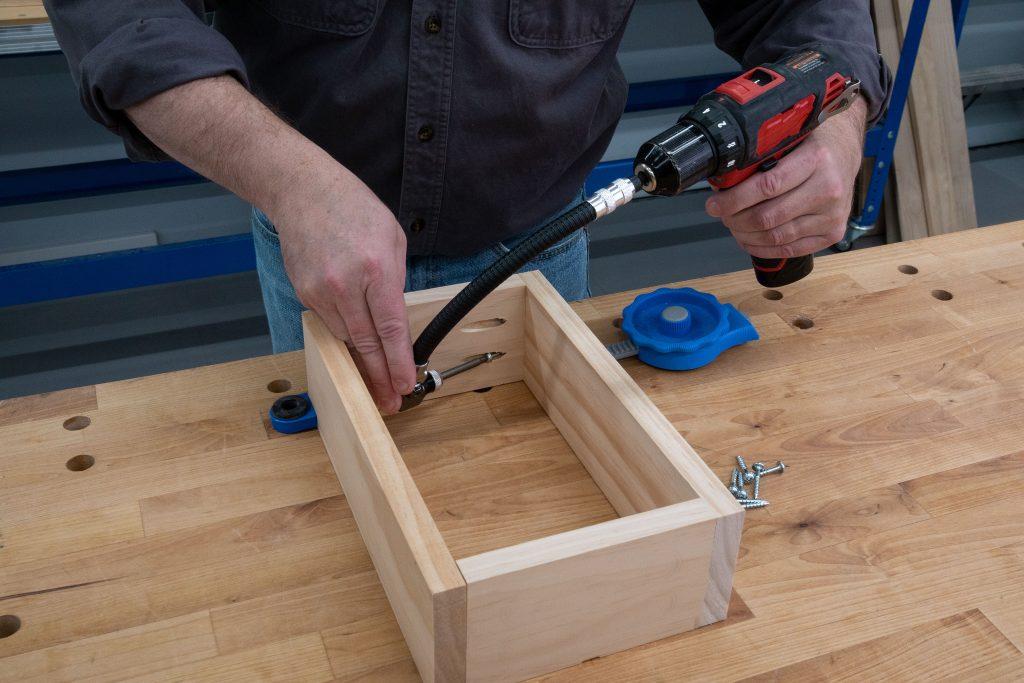
Image Source: learn.kregtool.com
Choosing the Right Drill for Confined Work
The foundation of successful drilling in tight spaces lies in selecting the appropriate drill. A cordless drill is often preferred for its portability and lack of a power cord, which can become a snagging hazard. However, not all cordless drills are created equal when it comes to navigating cramped environments.
Compact Drills: Small but Mighty
Compact drills, often referred to as “stubby” drills, are designed with shorter overall lengths and often shallower head profiles. This makes them incredibly maneuverable.
Key Features of Compact Drills:
- Shorter Barrel: The distance from the back of the motor housing to the tip of the chuck is significantly reduced.
- Lightweight Design: Often powered by smaller battery packs, they are easier to handle for extended periods and in awkward positions.
- Ergonomic Grips: Designed for comfortable use, even when held at odd angles.
These drills are perfect for tasks where you need to get a bit into a space without the bulk of a full-sized drill. They offer sufficient power for most common drilling tasks, such as pilot holes or driving screws.
Low Profile Drills: Slipping into the Smallest Gaps
A low profile drill takes the concept of compactness a step further. These drills are engineered to have an extremely shallow head height, allowing them to fit under obstructions or into cavities where even a compact drill might struggle.
Applications for Low Profile Drills:
- Automotive Repair: Working on engines where space is at a premium.
- Cabinetry and Furniture: Drilling within the narrow spaces of built-in units.
- Plumbing: Accessing pipes in tight wall cavities.
The design often involves a right-angle or offset head, which we will discuss further.
The Right Angle Drill: Navigating 90-Degree Turns
The right angle drill is a specialized tool that excels in situations where the drilling direction needs to be perpendicular to the axis of the drill’s motor. This is a common scenario in tight spaces.
How a Right Angle Drill Works:
A gearbox is incorporated into the drill’s head, turning the rotational force 90 degrees. This allows the chuck to extend sideways from the main body of the drill, making it ideal for drilling into studs from the side or working in corners.
When to Use a Right Angle Drill:
- Stud Framing: Drilling through the narrow edge of a stud.
- Joist Access: Drilling holes through joists where space between them is limited.
- Underneath Appliances: Reaching tight spots beneath dishwashers or refrigerators.
Many right angle drills are designed to be very compact, further enhancing their usability in confined areas.
Mini Drills: The Ultimate in Compactness
For the absolute tightest spots, a mini drill or die grinder with a drilling attachment might be the only option. These are often battery-powered and designed for very light-duty drilling or precision work.
When a Mini Drill is the Best Choice:
- Hobbyist Projects: Miniature models, electronics.
- Detail Work: Drilling small, precise holes in delicate materials.
- Extremely Restricted Access: Situations where even a compact drill is too large.
While they may lack the power of larger drills, their size makes them indispensable for specific tight spot drilling tasks.
Essential Accessories for Tight Space Drilling
Beyond choosing the right drill, a variety of accessories can significantly improve your ability to drill effectively in confined areas. These tools are designed to extend reach, alter drilling angles, and enhance control.
Angled Drill Bits: Bending the Rules
Standard drill bits are straight. When you’re working at an awkward angle, a straight bit can make it impossible to get the drill itself into the correct position. This is where angled drill bits come into play.
Types of Angled Drill Bits and Attachments:
- Right Angle Adapters: These are chucks that attach to the end of your drill and allow you to insert standard drill bits at a 90-degree angle. They are incredibly versatile for use with most cordless drills.
- Flexible Drill Shafts: A flexible drill shaft is a cable that connects to your drill’s chuck and has a small chuck at the other end. This allows you to bend the shaft around obstacles and reach very difficult spots. The flexibility is key for maneuvering in complex environments.
- Offset Drill Chucks: These are specialized chucks that attach to the drill and position the drill bit off to the side, providing a few inches of offset. This can be just enough to clear an obstruction.
Offset Drill Chucks: Gaining That Extra Inch
An offset drill chuck is a clever device that effectively moves the drilling point away from the drill’s main body. It screws into the drill’s chuck and then holds the drill bit. The design is such that the bit sits eccentrically to the drill’s axis.
Benefits of Using an Offset Drill Chuck:
- Clearance: Allows you to drill near a perpendicular wall or obstruction.
- Versatility: Can be used with most standard drills.
- Precise Placement: Helps you hit a specific target that is slightly out of reach.
Magnetic Drill Bit Holders: Keeping Bits Secure
In tight spaces, dropping a drill bit can be a nightmare. Magnetic bit holders attach to your drill and keep the bit securely in place, preventing it from falling out during operation or when repositioning the drill. This is especially useful when working overhead or in inverted positions.
Techniques for Successful Tight Space Drilling
Having the right tools is only half the battle. Applying the correct techniques is crucial for safety, efficiency, and achieving a clean result.
Pre-Drilling and Marking
Before you even pick up the drill, thorough preparation is key.
Steps for Preparation:
- Assess the Space: Carefully examine the area. Identify any obstructions, wiring, pipes, or sensitive components that need to be avoided.
- Mark Your Target: Use a pencil, chalk, or a center punch to precisely mark where you need to drill. A clear mark ensures accuracy, especially when visibility is limited.
- Pilot Holes: For larger holes or harder materials, always drill a pilot hole first. This makes it easier to start the main drill bit and reduces the risk of the bit wandering. The pilot hole should be smaller than the final desired hole diameter.
Controlling the Drill
Maintaining control of the drill in a confined space is paramount.
Tips for Drill Control:
- Two-Handed Grip: Whenever possible, use both hands to hold and guide the drill. This provides greater stability and control.
- Secure Footing/Support: Ensure you have a stable position. If working overhead or at an awkward angle, find a way to brace yourself or the drill.
- Variable Speed Control: Use the drill’s variable speed settings. Start at a slow speed to get the bit started accurately and then increase speed as needed.
- Apply Steady Pressure: Don’t force the drill. Let the bit do the work. Consistent, moderate pressure is more effective than brute force.
Managing Heat and Debris
Drilling in tight spaces can lead to heat buildup and the accumulation of debris, which can hinder progress and potentially damage the drill or surrounding materials.
Strategies for Heat and Debris:
- Withdraw and Clear: Periodically withdraw the drill bit from the hole to clear out shavings and allow heat to dissipate. This is often referred to as “pecking.”
- Lubrication: For metal drilling, using cutting fluid or oil can help reduce friction and heat, extending the life of your drill bit and improving the cut quality.
- Vacuum Assistance: If possible, have a vacuum cleaner running nearby to suck up debris as it’s produced. This keeps the work area clean and improves visibility.
Working with a Flexible Drill Shaft
When using a flexible drill shaft, it’s important to manage its flexibility.
Tips for Using a Flexible Drill Shaft:
- Support the Shaft: Try to support the shaft where it bends to prevent it from kinking or getting caught.
- Minimize Bending: While the flexibility is its advantage, excessive bending can reduce torque and control. Try to keep the bend as gentle as possible.
- Chuck Tightness: Ensure the chuck on the end of the flexible shaft is tightened securely.
The Maneuverable Drill in Action
A maneuverable drill is any drill that can be easily positioned and controlled in tight spaces. This includes compact drills, right angle drills, and drills with offset chucks. The key is its ability to be accurately placed and operated without excessive effort.
Safety First!
Drilling in confined spaces carries inherent risks. Prioritizing safety will prevent injuries and damage.
Essential Safety Precautions:
- Eye Protection: Always wear safety glasses or goggles. Flying debris is a significant hazard.
- Hearing Protection: If using a powerful drill or working in an enclosed space, consider earplugs or earmuffs.
- Gloves: Wear appropriate work gloves to protect your hands from sharp edges and improve grip.
- Disconnect Power: Before making any adjustments, changing bits, or clearing jams, always disconnect the power source (remove the battery or unplug the drill).
- Clear the Area: Ensure there are no flammable materials nearby, especially if working with metal or generating sparks.
- Know Your Limits: If a space is too tight or the risk of damage is too high, consider hiring a professional.
Specific Scenarios and Solutions
Let’s look at some common tight-space drilling scenarios and how to tackle them.
Scenario 1: Drilling into a Stud from Inside a Cabinet
- Challenge: Limited space between the cabinet back and the wall.
- Solution:
- Use a compact drill or a drill with a right angle drill attachment.
- A low profile drill might be ideal if the cabinet is very shallow.
- Ensure your drill bit is the correct length to pass through the stud without hitting anything behind it.
- Use a pilot hole to guide the bit accurately.
Scenario 2: Drilling a Hole Through a Joist Between Other Joists
- Challenge: Very little clearance around the joist.
- Solution:
- A right angle drill is often the best tool here, allowing you to drill from the side.
- If the space is exceptionally narrow, a flexible drill shaft attached to a compact drill can provide the necessary reach and maneuverability.
- Mark the exact center of the joist carefully.
Scenario 3: Drilling in an Engine Bay
- Challenge: Extremely cluttered and tight with many components to avoid.
- Solution:
- A cordless drill is a must for freedom of movement.
- Consider a mini drill or a specialized automotive drill with a very small head.
- A flexible drill shaft is invaluable for reaching bolts or mounts hidden behind other parts.
- Precise marking and slow, controlled drilling are essential to avoid damaging sensitive engine components.
Scenario 4: Drilling in a Crawl Space or Under a Sink
- Challenge: Awkward angles, poor lighting, and limited movement.
- Solution:
- A cordless drill with a comfortable grip and good battery life is crucial.
- If you need to drill into pipes or joists from an awkward angle, a right angle drill attachment or an offset drill chuck can be a lifesaver.
- Ensure you have adequate lighting, such as a headlamp, to see your work clearly.
- Always check for existing plumbing or wiring before drilling.
Tool Comparison: Key Considerations for Tight Spaces
When selecting a tool, consider these factors specific to confined work.
| Feature | Standard Drill | Compact Drill | Right Angle Drill | Low Profile Drill | Flexible Shaft |
|---|---|---|---|---|---|
| Maneuverability | Low | High | Very High | Extremely High | High (with drill) |
| Head Profile | High | Medium | Low (sideways) | Very Low | Low (at tip) |
| Reach | Limited in tight spots | Good | Good (sideways) | Good (low height) | Excellent (bendable) |
| Power (Typical) | High | Medium to High | Medium | Medium | Varies (with drill) |
| Best For | General use | Tight spots, general | Corners, studs, joists | Very tight gaps | Obstructed areas |
Frequently Asked Questions (FAQ)
Q1: What is the most important tool for drilling in tight spaces?
A1: While many tools and accessories help, a cordless drill is generally the most important because it offers portability and freedom from power cords, which are a major obstruction in confined areas. However, the type of drill (compact, right angle, low profile) is equally critical.
Q2: Can I use a standard drill with a right angle adapter?
A2: Yes, most standard drills can accept a right angle drill adapter. This is a cost-effective way to tackle many tight spot drilling tasks without buying a specialized drill.
Q3: How do I prevent my drill bit from slipping when using a flexible drill shaft?
A3: Ensure the chuck on the flexible shaft is tightened securely. Also, start with a pilot hole and apply steady, controlled pressure. Support the flexible shaft where it bends to maintain a straighter line of force.
Q4: What is the smallest drill available?
A4: The smallest drills are typically mini drills, often used for hobby or precision work. They are significantly smaller than even compact drills.
Q5: How do I deal with a drill bit that gets stuck in a tight space?
A5: If the bit is stuck, try reversing the drill’s direction. If that doesn’t work, you may need to carefully maneuver the drill body or use a tool to grip and loosen the bit. If it’s truly jammed, you might have to sacrifice the bit or the surrounding material to free it.
Q6: Are low profile drills powerful enough for most tasks?
A6: For many common tasks like drilling pilot holes or driving screws, low profile drills are sufficiently powerful. However, for heavy-duty drilling into hard materials, a more powerful, though likely larger, drill might be necessary. Always check the specifications of the low profile drill you are considering.
Mastering tight spot drilling is a valuable skill that expands your DIY and repair capabilities. By selecting the right drill, utilizing specialized accessories like angled drill bits and flexible drill shafts, and employing careful techniques, you can confidently tackle even the most challenging confined drilling projects. Remember to always prioritize safety and prepare thoroughly before you begin.