
Can you remove a chuck from a drill press? Yes, you absolutely can remove a chuck from a drill press. This guide will show you how to do it safely and effectively, whether you have a keyless chuck or one that requires a chuck key.
Removing and replacing a drill press chuck is a common part of drill press maintenance. Whether you’re upgrading to a more robust chuck, need to swap out a damaged one, or simply want to clean and lubricate the spindle, knowing the proper procedure is essential. This process isn’t overly complicated, but it does require a bit of know-how and the right tools to avoid damaging your drill press. We’ll cover the different types of chucks and the specific steps for each, ensuring your drill press remains in top working order.
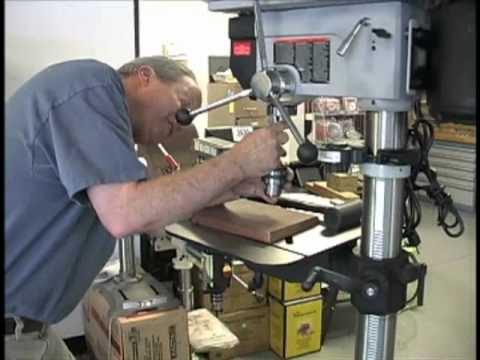
Image Source: i.ytimg.com
Different Types of Drill Press Chucks
Drill presses primarily use two types of chucks: keyless chucks and geared (or Jacobs) chucks. Each has its own method for attachment and removal.
Keyless Chucks
Keyless chucks are favored for their speed and ease of use. They don’t require a separate chuck key. You simply grip the chuck and twist to tighten or loosen it around a drill bit.
How to remove a keyless chuck:
- Loosening the drill chuck: Most keyless chucks have a collar that you grip to tighten or loosen the bit. To remove the chuck itself, you’ll need to loosen it from the drill press spindle.
- Finding the locking mechanism: Look for a small screw or a set screw on the side of the chuck body, often near the base. This screw typically locks the chuck onto the spindle.
- Using the right tool: You’ll need a hex wrench (Allen wrench) to loosen this set screw. The size of the wrench depends on your drill press model.
- Turning the screw: Insert the hex wrench into the set screw and turn it counter-clockwise. You’re not trying to remove the screw completely, just loosen it enough so the chuck can be removed.
- Separating the chuck: Once the set screw is loosened, grip the main body of the chuck and the collar. Turn the collar counter-clockwise. It might require a bit of force. You should feel it start to unscrew from the drill press spindle.
- Complete removal: Keep unscrewing the chuck until it comes free from the spindle.
Geared (Jacobs) Chucks
Geared chucks, often referred to by brand names like Jacobs, are the traditional style. They use a chuck key to engage internal gears that tighten or loosen the chuck jaws around the drill bit.
How to remove a geared chuck:
- Ensure chuck is open: Before attempting removal, make sure the chuck jaws are as wide open as possible. Insert the chuck key and turn it counter-clockwise until the jaws are fully retracted. This makes it easier to grip and maneuver.
- Locate the chuck key slot: Geared chucks have one or more holes where the chuck key is inserted to tighten the jaws. When the chuck is mounted on a tapered spindle, these holes are also used to help remove it.
-
Using the chuck key for removal:
- Single hole chucks: For some geared chucks, you insert the chuck key into one of the holes and tap it firmly with a mallet or hammer. The impact can help break the taper lock between the chuck and the spindle. You may need to try tapping at different angles.
- Three-hole chucks: Many geared chucks have three holes for the chuck key. This design allows you to use a “chuck key removal” technique.
- Insert the chuck key into one of the holes.
- Turn the chuck key counter-clockwise until it stops. This moves the internal gears to their loosest position.
- Hold the chuck key in that position.
- Insert another chuck key (or the same one if you can manage it) into the next hole.
- Turn this chuck key clockwise. This action wedges the chuck against the spindle taper, effectively loosening the chuck from the taper. It might take a good amount of force.
- Once loosened, remove the chuck keys and unscrew the chuck by hand.
-
Dealing with stubborn chucks: If the chuck is particularly tight, you might need to use a rubber mallet to tap the chuck body while trying to unscrew it. Avoid hitting it with a metal hammer directly, as this can cause damage.
Removing a Taper Shank Chuck
Some drill presses, especially older or more industrial models, might have a chuck mounted on a taper shank chuck arbor. This arbor fits into a matching taper on the drill press spindle.
How to remove a taper shank chuck:
- Identify the taper: The chuck will have a cone-shaped base that fits into the drill press spindle. This is the taper.
- Loosening the chuck: The process for loosening a taper shank chuck is similar to the geared chuck.
- Chuck Key Method: Use the chuck key to open the jaws as wide as possible. Then, use the chuck key to attempt to break the taper lock. For chucks with multiple holes, use the method described for geared chucks (turning one key counter-clockwise to loosen and another clockwise to wedge).
- Taper Wedge (if available): Some larger drill presses may have a specialized tool or a slot designed for a wedge to be inserted between the chuck and the spindle to force them apart. This is less common on smaller benchtop models.
- Gentle Tapping: If the chuck key method doesn’t work, you can try gently tapping the edge of the chuck body with a rubber mallet. The vibration can sometimes break the taper’s grip.
- Separating the chuck and arbor: Once the chuck is loosened from the spindle, you’ll unscrew it by hand. If the chuck itself is stuck onto the arbor, you might need a chuck puller, but this is less common for standard drill press chucks.
The Chuck Arbor: A Crucial Component
A chuck arbor is a shaft that has a Morse taper on one end and a threaded end or a different taper on the other end, onto which the drill chuck is mounted. The Morse taper fits into the drill press spindle.
When might you need to remove the chuck arbor?
- Cleaning and Lubrication: Over time, the taper can collect dust and debris, or the lubrication can dry out. Removing the arbor allows for thorough cleaning and re-lubrication, ensuring a secure and precise fit.
- Replacing a Damaged Arbor: If the arbor itself is damaged, bent, or worn, it will need to be replaced.
- Swapping Chucks: If you’re fitting a new chuck that might have a different arbor requirement, or if you need to use a different type of tool in the drill press, you might remove the arbor.
How to remove a chuck arbor:
This process can be a bit more involved and sometimes requires more specialized tools.
-
Remove the chuck first: You must first remove the chuck from the arbor. The method for this depends on how the chuck is attached to the arbor.
- Threaded Arbor: Most common is a threaded arbor. The chuck will screw onto the end of the arbor. With the chuck removed from the drill press spindle, you’ll hold the arbor securely (perhaps in a vise with soft jaws) and unscrew the chuck. This can be very tight.
- Tapered Arbor: Some chucks are pressed or tapered onto the arbor. In this case, you might need a specialized arbor press or a chuck puller to separate them.
-
Remove the arbor from the spindle:
- Taper Fit: If the arbor fits into the spindle via a Morse taper, it’s usually a friction fit. Sometimes, a sharp tap with a rubber mallet on the collar of the arbor can dislodge it.
- Wedge or Drawbar: Some drill presses have a drawbar that passes through the spindle, or a slot in the spindle to accept a wedge.
- Drawbar: If there’s a drawbar, you’ll loosen the nut at the bottom of the spindle, and then thread the drawbar into the spindle from the top. Tightening the drawbar will pull the arbor out of the spindle.
- Wedge: If there’s a slot, you can insert a wedge (or a flat-head screwdriver and tap it with a hammer) into the slot and tap it upwards to push the arbor out from the bottom.
-
Reassembly: When reinstalling, ensure both the spindle taper and the arbor taper are clean and lightly lubricated. For threaded arbors, apply anti-seize compound. For taper fits, a light coat of spindle lubricant is sufficient. Tighten the chuck onto the arbor securely.
Essential Tools for Chuck Removal
Having the right tools makes the job much easier and safer.
- Chuck Key(s): Absolutely essential for geared chucks. Make sure you have the correct size for your chuck.
- Hex Wrench Set (Allen Wrenches): Needed for loosening set screws on keyless chucks.
- Rubber Mallet or Wooden Mallet: Useful for gently tapping stubborn chucks or arbors to break the taper lock. Avoid metal hammers directly on precision parts.
- Soft Jaws for Vise (Optional but Recommended): If you need to secure the arbor or chuck for disassembly, soft jaws prevent marring the metal.
- Safety Glasses: Always wear safety glasses when working with tools and machinery.
- Gloves (Optional): Can provide a better grip and protect your hands.
- Clean Rags: For wiping down parts and cleaning away old grease or debris.
- Penetrating Oil (Optional): For very stubborn chucks, a little penetrating oil applied to the taper threads might help, but use sparingly.
Steps for Successful Chuck Removal
Let’s consolidate the process into clear, actionable steps.
For Keyless Chucks:
- Turn off the Drill Press: Ensure the drill press is completely powered off and unplugged for safety.
- Open the Chuck Jaws: Twist the collar of the keyless chuck counter-clockwise to open the jaws as wide as possible.
- Locate the Set Screw: Find the small set screw, usually on the side of the chuck body near the base.
- Loosen the Set Screw: Insert the appropriate hex wrench and turn the set screw counter-clockwise. You only need to loosen it, not remove it.
- Unscrew the Chuck: Grip the main body of the chuck and the collar. Turn the collar counter-clockwise to unscrew the chuck from the drill press spindle.
- Remove: Once unscrewed, the chuck will be free.
For Geared (Jacobs) Chucks:
- Turn off the Drill Press: Ensure the drill press is completely powered off and unplugged.
- Open the Chuck Jaws: Insert the chuck key and turn it counter-clockwise until the jaws are fully retracted.
- Prepare for Removal:
- Single Hole: Insert chuck key and tap gently with a mallet.
- Three Holes: Insert chuck key into one hole, turn counter-clockwise to the stop. Hold it. Insert a second chuck key into the adjacent hole and turn clockwise to wedge and loosen.
- Unscrew the Chuck: Once loosened, the chuck should unscrew by hand.
- Remove: The chuck is now free from the spindle.
Troubleshooting Common Issues
Sometimes, removing a chuck isn’t as straightforward as it seems.
Chuck Won’t Unscrew
- Reason: The taper lock is very strong, or the threads are dirty or corroded.
- Solution:
- Ensure the jaws are fully open.
- Try tapping the chuck collar more firmly with a rubber mallet while attempting to unscrew it.
- For geared chucks, double-check the three-hole method to ensure you’re properly wedging.
- Apply a small amount of penetrating oil to the seam between the chuck and the spindle (if accessible) and let it sit for a while before trying again.
Chuck Jaws Won’t Open Wide Enough
- Reason: Debris in the chuck mechanism, or the chuck is seized.
- Solution:
- Try working the chuck open and closed a few times with the chuck key to clear minor debris.
- If it’s severely seized, you may need to attempt removal first and then address the chuck mechanism. A bit of light oil might help work the mechanism.
Chuck is Stuck on the Taper Arbor
- Reason: The taper has corroded or fused due to lack of lubrication or contamination.
- Solution:
- This is where a specialized chuck puller might be needed.
- Gentle tapping with a rubber mallet on the side of the chuck might help break the bond.
- If the arbor is threaded onto the chuck and it’s stuck, a pipe wrench with careful application of force might be necessary, but this carries a risk of damaging the chuck or arbor.
Important Considerations for Drill Press Maintenance
Regular drill press maintenance ensures longevity and accuracy. Removing the chuck is a key part of this.
- Cleanliness: Always keep your drill press spindle and chucks clean. Dust, metal shavings, and old grease can cause fitting issues and wear.
- Lubrication: Lightly lubricate the spindle taper and the chuck’s internal mechanisms periodically. Use appropriate lubricants recommended for machine tools.
- Correct Chuck Usage: Use the correct size drill bits for your chuck. Over-tightening or forcing oversized bits can damage the chuck jaws and the spindle.
- Safety First: Always disconnect power before performing any maintenance or part removal.
Table: Common Chuck Removal Problems and Solutions
| Problem | Cause | Solution |
|---|---|---|
| Chuck stuck to spindle | Tight taper lock, dirt, corrosion | Ensure jaws are fully open; use rubber mallet to tap collar while unscrewing; try penetrating oil; use three-hole method for geared chucks; consider a chuck puller if extremely tight. |
| Chuck won’t unscrew | Threads dirty or cross-threaded | Clean threads carefully; try unscrewing slightly then re-tightening a little before attempting to unscrew again; use a gentle rocking motion. |
| Jaws won’t open/close | Debris inside chuck, internal wear/damage | Try working the chuck open/closed with key; clean exposed parts; if severely stuck, removal may be necessary before repair or replacement. |
| Arbor stuck in spindle | Tight taper fit, rust | Remove chuck first; use rubber mallet to tap arbor collar; try a wedge if spindle has a slot; use drawbar if available. |
| Chuck stuck on arbor (threaded) | Over-tightening, rust, damaged threads | Secure arbor in vise with soft jaws; use pipe wrench or strap wrench on chuck, applying steady force counter-clockwise. Consider heat (with caution) if metal is very seized. |
Frequently Asked Questions (FAQ)
Q1: What is the most common reason for removing a drill press chuck?
A1: The most common reasons are to replace a worn or damaged chuck, to swap it for a different type of chuck (e.g., from keyed to keyless), or for thorough cleaning and lubrication of the chuck and the drill press spindle.
Q2: Can I use a regular hammer to remove a stuck chuck?
A2: It’s strongly advised not to use a regular metal hammer directly on the chuck or spindle. Use a rubber mallet or a wooden mallet. Direct impact with a metal hammer can easily damage the precision surfaces of the chuck, spindle, or arbor, leading to runout issues or requiring costly repairs.
Q3: My drill press chuck has only one hole for the key. How do I remove it?
A3: For single-hole geared chucks, open the jaws wide. Insert the chuck key and turn counter-clockwise to the stop. Then, give the chuck key a firm but controlled tap with a rubber mallet. The shock can help break the taper lock. You might need to repeat this a few times, rotating the key to different positions.
Q4: What is a chuck arbor and why would I remove it?
A4: A chuck arbor is an adapter that connects the chuck to the drill press spindle, typically via a Morse taper. You would remove it for deep cleaning, lubrication, replacement, or when switching to a different spindle accessory.
Q5: How tight should I make a new chuck on the arbor or spindle?
A5: For threaded connections, tighten the chuck firmly but avoid excessive force that could strip threads or damage the chuck. For taper fits, the taper itself provides the secure connection; ensure the arbor is seated correctly. If using a chuck key to tighten the jaws on a taper shank, make it snug but not to the point of extreme strain.
Q6: Is it normal for a drill press chuck to feel “stuck” on the spindle?
A6: Yes, especially if it hasn’t been removed for a long time. The Morse taper is designed to create a strong, friction-based grip. Dirt, rust, or the natural compression of the metal over time can make it quite tight. This is why gentle persuasion with a mallet or the correct key technique is often necessary.
Removing a drill press chuck is a manageable task with the right approach. By following these steps, identifying your chuck type, and using the appropriate tools, you can confidently perform this essential drill press maintenance.