
Can you tell if someone has opened your email? Yes, with certain tools and features, you can often ascertain if your email has been seen. This guide will delve into the various methods available, from built-in email client features to sophisticated third-party tracking solutions, helping you gain insights into your email’s journey.
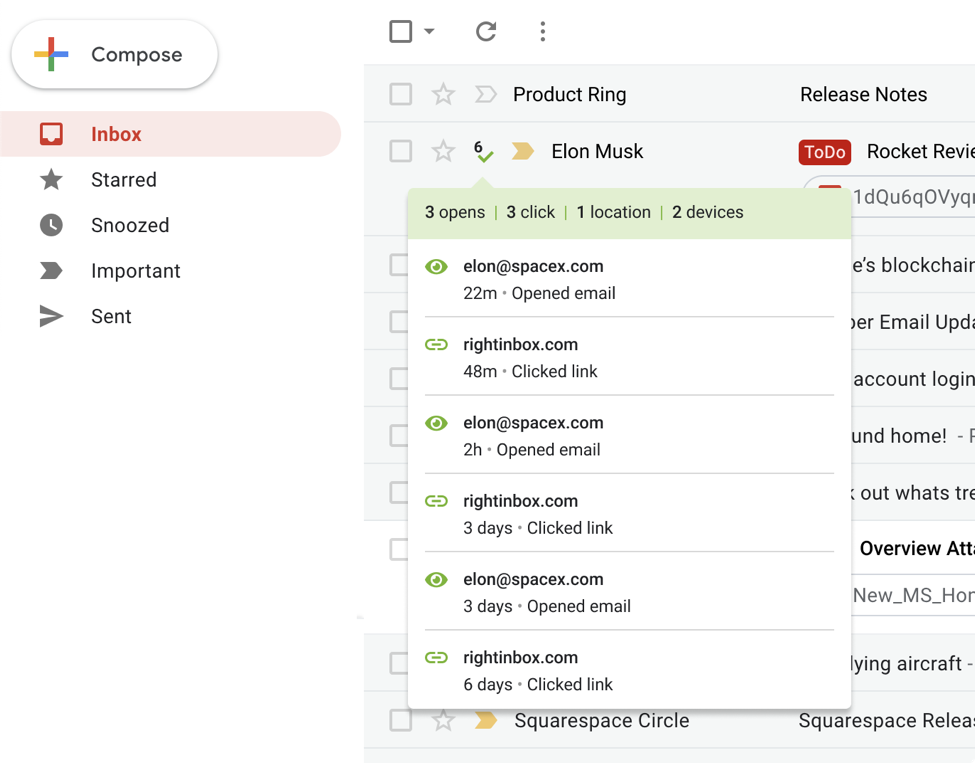
Image Source: www.rightinbox.com
The Quest for Email Visibility
In our increasingly digital world, clear communication is paramount. Whether you’re sending a crucial business proposal, a personal update, or a marketing campaign, knowing if your message has reached its intended audience is often vital. The inability to confirm receipt can lead to uncertainty, missed opportunities, and frustration. This is where the desire to check if someone saw your email truly comes into play, shedding light on the often-opaque nature of digital correspondence. We all want that comforting message confirmation that our carefully crafted words have landed in the recipient’s peek at inbox and, ideally, been acknowledged.
Built-In Email Client Features: The Basics
Many popular email clients offer rudimentary ways to track your messages. These are typically the simplest to use but also the most limited in their capabilities.
Read Receipts: The Classic Approach
Read receipts are perhaps the most well-known method for confirming email delivery and, potentially, readership. When you send an email with a read receipt request, the recipient’s email client may prompt them to send a confirmation back to you once they open the message.
How Read Receipts Work:
- Sender’s Action: When composing an email, you’ll often find an option within your email client (like Outlook, Gmail, or Apple Mail) to request a read receipt.
- Recipient’s Action: The recipient receives your email. Their email client will typically display a notification asking if they want to send a read receipt.
- Confirmation: If the recipient agrees, a small notification or email is sent back to you, indicating that your email has been opened.
Limitations of Read Receipts:
- Recipient Control: Recipients can choose to decline sending a read receipt. This is a significant drawback, as they can effectively block this form of tracking.
- Client Dependency: Read receipts rely on both the sender’s and receiver’s email clients supporting the feature. Compatibility issues can arise.
- Not Always Accurate: Some email clients or security settings might prevent read receipts from being sent even if the email is opened.
- Privacy Concerns: Many people are uncomfortable with read receipts, viewing them as an invasion of privacy, and will actively disable them.
Delivery Receipts: Knowing It Arrived
While not directly telling you if the email was read, delivery receipts confirm that your email successfully reached the recipient’s mail server. This is a step closer to knowing your message is in their digital footprint.
How Delivery Receipts Work:
- Sender’s Action: Similar to read receipts, you can request a delivery receipt when composing an email.
- Confirmation: You receive a notification when your email has been successfully delivered to the recipient’s inbox.
Limitations of Delivery Receipts:
- Doesn’t Indicate Reading: This only tells you the email landed in their inbox, not that it was opened or read.
- Client Support: Like read receipts, delivery receipts are dependent on email client support.
Advanced Tracking: Going Beyond the Basics
For more reliable and detailed insights into your email’s journey, you need to explore advanced email tracking solutions. These tools often use subtle techniques to provide you with an email opened notification.
Email Tracking Pixels: The Invisible Observer
One of the most common methods used by email tracking services is the embedding of a tiny, often invisible, image pixel within the email. This is known as an email tracking pixel.
How Tracking Pixels Work:
- Pixel Embedding: When you use an email tracking tool, it inserts a unique, one-pixel by one-pixel image into your email’s HTML code. This pixel is usually transparent or matches the background color of the email, making it virtually invisible to the recipient.
- Server Connection: Each time the email is opened, the recipient’s email client must load the images within the email. When this happens, the tracking pixel requests the image from the tracking service’s server.
- Data Recording: This request triggers a notification back to the tracking service, which then records that the email has been opened. Key information logged can include:
- Timestamp: When the email was opened.
- Location: Approximate geographical location based on the IP address.
- Device Type: (Sometimes) Whether it was opened on a desktop, mobile, etc.
- Link Clicks: If the tracking tool also monitors links, it can tell you which links were clicked.
Benefits of Email Tracking Pixels:
- Reliable Open Notifications: Generally more reliable than read receipts, as they don’t require recipient interaction.
- Detailed Analytics: Many tools provide detailed reports on who opened your email, when, and how many times.
- Link Tracking: The ability to see if recipients clicked on links within your email is invaluable for gauging interest.
- Automation: Many services integrate with email clients or CRMs, automating the tracking process.
Considerations for Email Tracking Pixels:
- Image Blocking: If the recipient’s email client or security settings block images, the tracking pixel won’t load, and you won’t receive an email opened notification. This is a significant limitation.
- Privacy and Ethics: Using email tracking without informing recipients can be seen as a privacy concern. Many jurisdictions have regulations regarding data collection and tracking.
- Email Client Differences: How different email clients handle image loading can sometimes affect tracking accuracy.
Link Click Tracking: Gauging Engagement
Beyond just knowing if an email was opened, tracking which links a recipient clicks is a powerful way to measure engagement. This provides deeper inbox insights than a simple open notification.
How Link Click Tracking Works:
- URL Redirection: When you use a link tracking feature, the original links in your email are replaced with unique URLs that point to the tracking service.
- Tracking Server: When a recipient clicks on one of these modified links, they are first directed to the tracking service’s server.
- Data Logging: The tracking server logs the click (who clicked, when, which link) before redirecting the recipient to the actual destination URL.
Benefits of Link Click Tracking:
- Interest Measurement: Identifies which content resonates most with your audience.
- Lead Qualification: Helps sales teams understand which leads are actively engaged.
- Campaign Optimization: Provides data to refine future email campaigns.
Considerations for Link Click Tracking:
- Recipient Action: This only works if the recipient actually clicks a link.
- Privacy: Similar to pixel tracking, transparency about link tracking is important.
Third-Party Email Tracking Tools: Your Options
There are numerous services designed to provide enhanced email tracking capabilities. These tools often bundle open and link tracking, along with other features.
Popular Email Tracking Tools:
- Mailtrack: A popular Google Chrome extension that adds read receipts to Gmail. It uses a tracking pixel to notify you when your email is opened.
- Boomerang for Gmail: Offers features like email scheduling, read receipts, and email tracking.
- Yesware: A sales engagement platform that provides email tracking, CRM integration, and template management.
- Mixmax: Similar to Yesware, Mixmax offers advanced sales features including email tracking, engagement analytics, and CRM syncing.
- HubSpot Sales Hub: A comprehensive sales platform with robust email tracking and analytics features.
Comparing Tracking Tools: Key Features to Look For
When choosing a tool, consider these aspects:
| Feature | Description | Importance Level |
|---|---|---|
| Open Tracking | Ability to know when your email has been opened. | High |
| Link Tracking | Ability to know when links in your email have been clicked. | High |
| Real-time Alerts | Instant notifications when your email is opened or a link is clicked. | Medium |
| Reporting | Detailed analytics on opens, clicks, and recipient engagement over time. | High |
| CRM Integration | Seamless connection with your Customer Relationship Management system for data synchronization. | High (for Sales) |
| Platform Support | Compatibility with your primary email client (Gmail, Outlook, etc.). | High |
| Free vs. Paid | Whether a free tier is available or if a subscription is required. | Varies |
| Privacy Compliance | Adherence to data privacy regulations like GDPR and CCPA. | High |
| Unsubscribe Link | A clear way for recipients to opt out of future tracking or emails. | High |
Methods to Check Email Status: A Practical Approach
Let’s break down how you can actively check if your email has been seen, depending on your setup and needs.
Using Gmail’s Built-in (with Extensions)
While Gmail doesn’t have native read receipts in the same way as Outlook, extensions can add this functionality.
Using Mailtrack for Gmail:
- Install Mailtrack: Go to the Chrome Web Store and install the Mailtrack extension.
- Authorize Access: Grant Mailtrack the necessary permissions to access your Gmail account.
- Send an Email: Compose a new email in Gmail. You’ll notice a new icon or button to enable tracking for that specific email.
- Check Notifications: When the recipient opens your email, you’ll receive a notification, and a double-checkmark icon will appear next to your sent email, indicating it’s been read. A single checkmark signifies it’s been delivered.
Using Outlook’s Read and Delivery Receipts
Outlook offers native support for both read and delivery receipts.
Enabling Read and Delivery Receipts in Outlook:
- New Email: Start composing a new email.
- Options Tab: Click on the “Options” tab in the ribbon.
- Tracking Options: In the “Tracking” group, check the boxes for “Read receipt requested” and/or “Delivery receipt requested.”
- Sending: Send your email.
- Receipts: You will receive email notifications when your message is delivered and when it has been read, provided the recipient’s client supports and allows these features.
Checking for Email Opened Notification from Other Clients
Many other email clients, like Apple Mail, Thunderbird, and various webmail services, may also have similar options for requesting read or delivery receipts within their settings or when composing an email. Always explore the “Options,” “Tools,” or “Settings” menus within your email client when composing a message.
Ethical Considerations and Best Practices
While the ability to track email opens and clicks is powerful, it’s crucial to use this capability responsibly.
Transparency is Key
- Inform Recipients: Consider including a subtle note in your email signature or within the email itself, letting recipients know that you use tracking for engagement analysis. For example: “Our emails may use tracking pixels to help us understand engagement and improve our content.”
- Avoid Over-Tracking: Don’t track every single email if it’s not necessary. Excessive tracking can feel intrusive.
- Respect Privacy: Be mindful of privacy regulations in your region and the regions of your recipients.
When to Use Email Tracking
- Sales and Business Development: Essential for tracking prospect engagement and prioritizing follow-ups.
- Important Communications: For critical messages where confirmation of receipt is vital.
- Marketing Campaigns: To measure the effectiveness of your outreach and understand audience behavior.
- Job Applications: To gauge if a hiring manager has reviewed your application (though be mindful of the recipient’s potential reaction).
When to Avoid Email Tracking
- Personal Emails: Generally considered intrusive for casual personal correspondence with friends and family.
- Sensitive Communications: If the content is highly sensitive, tracking might be inappropriate.
- When Not Explicitly Permitted: If you are in a context where tracking is not expected or implicitly forbidden.
How to Prevent Being Tracked
If you prefer to maintain your message visibility and prevent others from knowing when you’ve opened their emails, you can take several steps:
Disable Image Loading
Most email clients have a setting to prevent automatic image loading.
- Gmail: Settings > See all settings > General > Images > Select “Ask before displaying external images.”
- Outlook: File > Options > Mail > Messageбіць > Under “Message format” or “Tracking,” look for options to disable external content or images.
- Apple Mail: Mail > Preferences > Viewing > Uncheck “Display remote content in messages.”
By disabling image loading, you prevent the tracking pixel from being loaded, thus not sending an email opened notification back to the sender.
Use Plain Text Mode
Sending or reading emails in plain text mode strips away all HTML formatting, including tracking pixels and links.
Use a VPN or Proxy Server
While less direct for individual emails, using a VPN can mask your IP address, making it harder for tracking services to pinpoint your location.
Be Wary of Links
If you’re concerned about link tracking, be cautious about clicking links in unsolicited or suspicious emails.
FAQs About Checking Email Status
Q1: Can I see if my email was delivered without read receipts?
A: Yes, many email clients offer delivery receipts that confirm the email reached the recipient’s mail server. However, this doesn’t guarantee it was opened.
Q2: What if the recipient blocks images? Will email tracking still work?
A: No, most email tracking relies on loading an image pixel. If images are blocked, the tracking pixel won’t load, and you won’t get an email opened notification.
Q3: Is email tracking always accurate?
A: Email tracking is generally reliable but not foolproof. Factors like image blocking, email client variations, and aggressive spam filters can affect accuracy.
Q4: Does email tracking work for emails sent to multiple recipients?
A: Yes, tracking tools typically track opens and link clicks for each individual recipient, provided they don’t have tracking disabled. You can often see which of the multiple recipients opened your email.
Q5: Can I track emails sent from my phone?
A: Many mobile email apps and third-party apps offer email tracking features. The specific method will depend on the app you are using.
Q6: Is it legal to track emails?
A: It depends on your location and the specific context. Many privacy laws (like GDPR) require consent for data collection. It’s best to be transparent with recipients about your tracking practices.
Q7: How can I tell if an email has been read versus just delivered?
A: Delivery receipts confirm arrival. Read receipts or email tracking tools that use pixels are needed to confirm if the email was actually opened. Some platforms might show view status if it’s supported and not blocked.
Q8: What is a “read receipt” versus an “email opened notification”?
A: A read receipt is a request sent by the sender, requiring the recipient to actively approve sending confirmation. An email opened notification is typically generated by a tracking pixel embedded in the email, which reports the opening without explicit recipient action (though it can be blocked).
Q9: Can I see the recipient’s digital footprint from their email interaction?
A: Email tracking can provide insights into their digital footprint regarding your specific emails, such as when they opened it and which links they clicked. It doesn’t reveal their broader online activities.
Q10: What are “inbox insights”?
A: Inbox insights refer to the data and analytics you gain about how your emails are being received and interacted with, including open rates, click-through rates, and bounce rates.
Conclusion: Mastering Your Email Reach
Knowing if your email has been seen is no longer a mystery. From the basic read receipts and delivery confirmations offered by many email clients to the sophisticated email tracking capabilities of dedicated tools, you have options. By leveraging these methods thoughtfully and ethically, you can gain valuable inbox insights, improve your communication strategy, and ensure your messages have the impact they deserve, leaving a clear trail of your digital footprint in the inbox. Remember, transparency and respect for privacy are paramount when employing these powerful features.